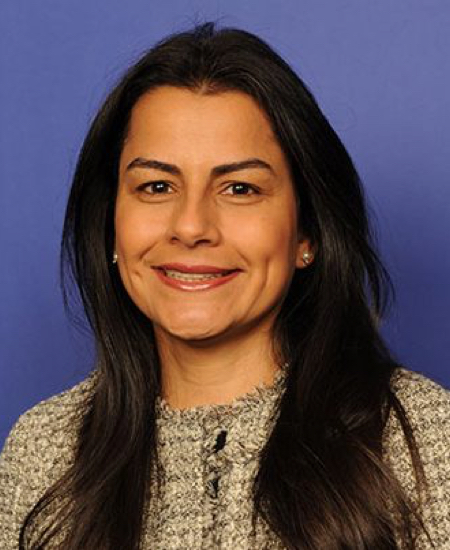
Photo of Nanette Diaz Barragán
D United States House · District 44 · California On the 2026 ballot

Rep. Nanette Diaz Barragán

Compare
Total votes
2,837
all sessions
Attendance
98%
56 missed
Near the chamber average
With party
98%
of cast votes
Higher than 88% of chamber peers
Bipartisan score
1%
crosses aisle rarely
Lower than 89% of chamber peers
Sponsored
2,257
bills & resolutions
Higher than 91% of chamber peers
Committees
4
assignments
2,257 bills and resolutions

Sponsored bills

Total
2,257
Primary
105
Co-sponsor
2,152
This page
2,257
matching current filters
Primary HRES 1545
In committee · Florida House · Lead sponsor
Recognizing the importance of Latino community leadership and engagement in outdoor recreation and conservation activities that protect United States natural resources, and expressing support for the designation of September 12 through September 20, 2026, as "Latino Conservation Week".

Maddy summaryThis House resolution formally recognizes the role of Latino communities in outdoor recreation and conservation efforts that protect U.S. natural resources. It highlights how these groups lead activities such as hiking, community cleanups, and environmental justice initiatives on public lands. The bill specifically supports the designation of September 12 through September 20, 2026, as Latino Conservation Week to celebrate this engagement. As a commemorative measure, it does not create new laws or funding but serves to affirm the importance of inclusive access to nature and the cultural contributions of Latino populations to environmental stewardship.

In committee Sep 16, 2026 0 co-sponsors
Primary HR 10416
In committee · Florida House · Lead sponsor
Housing Tariff Exclusion Act

Maddy summaryThe Housing Tariff Exclusion Act directs the Secretary of Commerce to create a process allowing U.S. companies to request exemptions from tariffs on building materials that are not produced in sufficient quantities domestically. The bill specifically targets products used in residential construction, such as lumber, cement, and fixtures, while excluding rare earth elements and antidumping duties. Requests for "critical homebuilding products" must be decided within 15 days, while other covered articles have a 60-day review period, with all decisions published online for transparency. The legislation includes retroactive provisions to refund overpaid tariffs on goods imported before an exemption is granted and sets a sunset date of October 1, 2029, after which no new exclusions can be issued.

In committee Sep 16, 2026 0 co-sponsors
Primary HR 10415
In committee · Florida House · Lead sponsor
Food for Thought Act of 2026

Maddy summaryThe Food for Thought Act of 2026 establishes a competitive grant program administered by the Department of Agriculture to provide free meals and snacks to low-income college students at eligible institutions, including community colleges, historically Black colleges and universities, and other minority-serving schools. To qualify, an institution must have at least 20 percent of its undergraduate students eligible for Federal Pell Grants, and grants are awarded for a maximum duration of two years with funds restricted to meal preparation, outreach, and limited equipment purchases. Recipients are required to prioritize students who receive Pell Grants or report food insecurity, while also evaluating institutional policies that may create barriers to enrollment and referring students to other federal benefit programs like SNAP. The bill authorizes appropriations for fiscal years 2027 through 2032 and mandates that the Secretary of Agriculture submit reports to Congress on the program's impact on student retention and completion rates.

In committee Sep 16, 2026 0 co-sponsors
Co-sponsor HR 10280
In committee · Florida House · Co-sponsor
9–8–8 Implementation Act of 2026

Maddy summaryThe 9-8-8 Implementation Act of 2026 expands federal funding and mandates insurance coverage for behavioral health crisis services, directly affecting individuals experiencing mental health or substance use emergencies as well as the providers who serve them. The bill authorizes grants to upgrade local lifeline call centers, build new crisis stabilization facilities, and train a larger workforce of behavioral health professionals. It requires Medicare, Medicaid, private group health plans, TRICARE, and other federal insurance programs to cover crisis response services with financial terms no more restrictive than standard medical care. Additionally, the legislation establishes a federal panel to develop training protocols for 9-1-1 dispatchers to better connect callers to appropriate crisis care rather than law enforcement responses.

In committee Sep 16, 2026 1 co-sponsor
Co-sponsor HR 6130
In committee · Florida House · Co-sponsor
ASAP Act

Maddy summaryThis bill would require Medicare to cover early detection screening tests for Alzheimer's disease and related dementias starting January 1, 2028. It defines eligible tests as FDA-cleared genomic blood tests, blood product analyses, or equivalent medical imaging methods (like protein expression or whole genome sequencing) that detect pre-symptomatic or early-stage conditions. Medicare beneficiaries would receive this coverage without cost-sharing for these specific screenings. The bill amends Medicare coverage rules to explicitly include these tests under Section 1861(nnn) of the Social Security Act.

In committee Sep 16, 2026 1 co-sponsor
Co-sponsor HR 2004
Passed · Florida House · Co-sponsor
Tyler’s Law

Maddy summaryHR 2004, titled "Tyler’s Law," requires the Secretary of Health and Human Services to study how often hospital emergency departments test for fentanyl during overdose cases (beyond standard drug tests), including associated costs, patient benefits/risks, and impacts on privacy and patient-physician relationships. The study must be completed within one year of the bill's enactment. Based on the study results, the Secretary must issue guidance within six months on whether emergency departments should routinely test for fentanyl, how to inform clinicians about test contents, and how such testing may affect future overdose risks and health outcomes. This bill directly affects hospital emergency departments and patients experiencing overdoses by shaping future testing protocols.

Passed Sep 16, 2026 1 co-sponsor
Co-sponsor HR 1266
Passed · Florida House · Co-sponsor
Combating Illicit Xylazine Act

Maddy summaryHR 1266, the Combating Illicit Xylazine Act, adds xylazine - a veterinary sedative increasingly found in illicit drug mixtures - to Schedule III of the Controlled Substances Act, regulating its use and trafficking. It directly affects veterinarians, animal owners, and manufacturers by allowing xylazine to be legally dispensed for animal use under specific veterinary prescriptions, while prohibiting non-veterinary human use. The bill includes transition periods (60 days for practitioners, 1 year for labeling) to ease compliance for manufacturers and practitioners, and requires the DEA and FDA to expedite necessary applications. It also mandates two congressional reports on xylazine's illicit use and trafficking patterns, and directs the Sentencing Commission to review penalties for offenses involving xylazine.

Passed Sep 16, 2026 1 co-sponsor
Co-sponsor HR 979
Passed · Florida House · Co-sponsor
AM Radio for Every Vehicle Act of 2025

Maddy summaryThis bill requires all new passenger vehicles manufactured for sale in the U.S. to include AM radio as standard equipment (not an optional add-on) by 2027-2028, depending on manufacturer size. It mandates that AM radio receivers must be easily accessible to drivers and allows compliance through digital AM broadcast technology. During a transition period, manufacturers must clearly label vehicles without AM radio but cannot charge extra for this feature. The bill also mandates a GAO study on AM radio's role in emergency alerts and includes a 10-year sunset provision for the rule. It preempts state laws regarding AM radio access in vehicles.

Passed Sep 16, 2026 1 co-sponsor
Co-sponsor HJRES 216
In committee · Florida House · Co-sponsor
Proposing an amendment to the Constitution of the United States to prohibit the use of slavery and involuntary servitude as a punishment for a crime.

Maddy summaryH.J. Res. 216 proposes a constitutional amendment to eliminate the exception in the Thirteenth Amendment that currently permits slavery and involuntary servitude as punishment for a crime. The resolution would amend the Constitution to explicitly state that neither slavery nor involuntary servitude may be imposed on anyone as a penalty for criminal conduct. This change would directly affect incarcerated individuals by prohibiting forced labor practices within the criminal justice system, while clarifying that voluntary work programs and community service alternatives remain permissible.

In committee Sep 15, 2026 1 co-sponsor
Co-sponsor HR 10398
In committee · Florida House · Co-sponsor
CHC REBASE Act of 2026

Maddy summaryThe CHC REBASE Act of 2026 amends the Medicare program to adjust payment rates for Federally Qualified Health Centers (FQHCs) so that they cover 100 percent of estimated reasonable costs by 2028, effectively removing previous financial caps on these services. To support this change, the bill requires the Secretary of Health and Human Services to convene a working group with stakeholders from health centers, physicians, and CMS to review payment methodologies and recommend further modifications. Additionally, the legislation ensures that telehealth services provided by FQHCs and rural health clinics are paid at standard rates starting in 2027, treating associated costs as allowable expenses. The bill also mandates new guidance for Medicare Advantage plans to streamline "wraparound" payments to FQHCs and requires a Government Accountability Office report on how well these centers are included in insurance provider networks for underserved populations.

In committee Sep 15, 2026 1 co-sponsor
Showing 11 to 20 of 2,257 bills