Maddy summaryThis resolution designates the week of May 10 through May 16, 2026, as Taiwanese American Heritage Week to honor the contributions of the Taiwanese American community. It recognizes over 700,000 Taiwanese Americans who have made significant impacts in fields such as technology, science, and public service, particularly in the semiconductor industry. The measure also highlights the importance of people-to-people ties between the United States and Taiwan, marking the 47th anniversary of the 1979 Taiwan Relations Act.
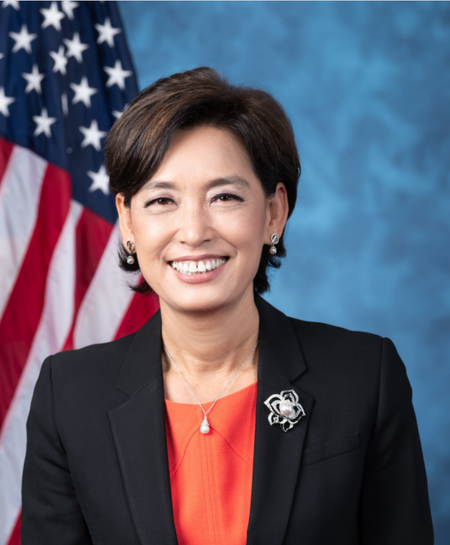
Rep. Young Kim
Sponsored bills
Maddy summaryThe Bereaved Parents Rights Act requires hospitals and birth centers to notify parents of miscarriages or stillbirths about their options for burial, cremation, or hospital disposal. This notification must occur within six hours of the event or the parent's discharge, using a standardized form provided by the government. If parents choose burial or cremation within 72 hours, the facility must follow the same state laws that apply to other fetal deaths. The bill also allows parents to sue in federal court if these notification requirements are not met.
This resolution calls upon the President to prioritize the humanitarian release of five specified individuals (Pastor Jin Mingri, Pastor Gao Quanfu and his wife Pang Yu, Dr. Gulshan Abbas, and Jimmy Lai) and others unjustly detained by China during future engagements with China's President Xi Jinping. The resolution also (1) urges the President to seek verifiable proof of life, access to independent legal counsel, family communication, and medical care for these detainees; and (2) reaffirms the U.S. commitment to defending political and religious freedom and advocating for the release of those unjustly detained for exercising such fundamental freedoms.
Maddy summaryThis bill authorizes the U.S. Secretary of State to provide direct loans and loan guarantees to foreign countries or international organizations for purchasing defense equipment and services. These financial tools are intended to help allies acquire military supplies while ensuring the transactions align with U.S. national security interests. The legislation allows the State Department to set interest rates and repayment terms, provided they comply with existing laws and available funding. Additionally, the bill requires the Secretary to submit annual reports to Congress detailing the loans issued, their recipients, and an assessment of their impact on national security.
Maddy summaryHRES 64 is a non-binding House resolution affirming the U.S.-South Korea alliance. It highlights historical ties (dating to 1882), economic partnerships (including 2023 trade data), and security cooperation (like the 1953 Mutual Defense Treaty), while celebrating Korean American contributions to U.S. society. The resolution formally supports strengthening security, economic, and cultural ties between the two nations and notes the 2025 anniversary of Korean liberation. It does not create new laws or funding, but serves as a symbolic statement of congressional support for the alliance.
Maddy summaryThe YALI Act of 2025 establishes the Young African Leaders Initiative (YALI) to support emerging leaders in sub-Saharan Africa aged 18-35, focusing on business, civic engagement, and public administration. It creates at least four regional leadership centers in Africa for training, expands the Mandela Washington Fellowship (for 25-35-year-olds with demonstrated leadership), and requires annual reports on program outcomes. The bill mandates partnerships with private sector entities to fund networking, entrepreneurship, and leadership development, while requiring the State Department to submit implementation plans within 180 days of enactment. The program expires five years after enactment, with reports assessing its impact on U.S.-Africa relations, including trade, governance, and youth empowerment.
Maddy summaryThis bill would amend federal law to strengthen penalties for organized retail crime by expanding definitions of theft to include digital goods, gift cards, and setting a $5,000 aggregate value threshold for charges over a 12-month period. It would establish a new "Organized Retail and Supply Chain Crime Coordination Center" under Homeland Security to coordinate Federal, State, local, and Tribal law enforcement efforts against cross-jurisdictional theft groups. The Center would share information with retailers, transportation companies, and law enforcement agencies, track crime trends, and produce annual reports on organized retail crime. This legislation directly affects retailers, supply chain businesses, and law enforcement agencies, while targeting organized crime groups responsible for a 93% increase in larceny incidents and rising safety concerns for retail employees. The bill aims to address significant financial losses and supply chain disruptions noted in the National Retail Federation's 2023 data.
Maddy summaryThis resolution reaffirms the House of Representatives' support for the Taiwan Relations Act and longstanding bipartisan U.S. policy toward Taiwan. It highlights key provisions such as maintaining commercial and cultural ties, emphasizing regional peace, and providing Taiwan with defensive arms. The document also reiterates the Six Assurances, which clarify that the U.S. does not set a date for ending arms sales, will not mediate between Taiwan and China, and will not pressure Taiwan to negotiate with China. By restating these principles, the bill aims to reinforce the current framework without introducing new legal obligations or changing existing policy.
Maddy summaryThis bill establishes a task force to identify Chinese military and non-military entities that could support actions against Taiwan, such as blockades or territorial seizures. The task force, led by the State Department and Treasury, will develop strategies for potential sanctions while coordinating with allies to minimize economic impacts on the United States. Importantly, the legislation does not change existing U.S. policy on Taiwan and requires explicit future laws to actually impose any penalties.
Maddy summaryHRES 1256 is a non-binding resolution that formally recognizes May 6, 2026, as National Maternal Mental Health Awareness Day. The bill aims to raise public understanding about maternal mental health issues, such as depression and anxiety, which disproportionately affect women, military families, and medically underserved communities. It highlights the severe risks of untreated conditions, including increased infant mortality and significant economic costs, while encouraging government agencies and citizens to support awareness programs.