

Paycheck Fairness Act This bill addresses wage discrimination on the basis of sex, which is defined to include pregnancy, sexual orientation, gender identity, and sex characteristics. Specifically, it limits an employer's defense that a pay differential is based on a factor other than sex to only bona fide job-related factors in wage discrimination claims, enhances nonretaliation prohibitions, and makes it unlawful to require an employee to sign a contract or waiver prohibiting the employee from disclosing information about the employee's wages. The bill also increases civil penalties for violations of equal pay provisions. Additionally, the Equal Employment Opportunity Commission (EEOC) and the Office of Federal Contract Compliance Programs must train EEOC employees and other affected parties on wage discrimination. The bill directs the Department of Labor to (1) establish and carry out a grant program to provide training in negotiation skills related to compensation and equitable working conditions, (2) conduct studies to eliminate pay disparities between men and women, and (3) make available information on wage discrimination to assist the public in understanding and addressing such discrimination. The bill establishes the National Award for Pay Equity in the Workplace for an employer who has made a substantial effort to eliminate pay disparities between men and women. It also establishes the National Equal Pay Enforcement Task Force to address compliance, public education, and enforcement of equal pay laws. Finally, the bill requires the EEOC to issue regulations for collecting from employers compensation and other employment data according to the sex, race, and national origin of employees for use in enforcing laws prohibiting pay discrimination.
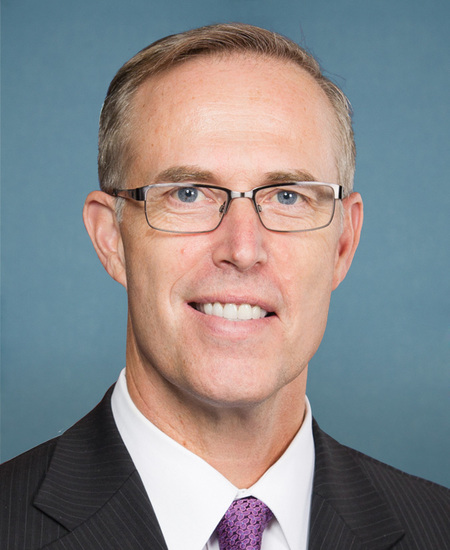
Rep. Jared Huffman
Sponsored bills
Sensible, Timely Relief for America's Nuclear Districts' Economic Development Act of 2021 or the STRANDED Act of 2021 This bill provides resources to communities affected by stranded nuclear waste. The bill defines stranded nuclear waste as nuclear waste or spent nuclear fuel stored in dry casks or spent fuel pools at the site of an eligible civilian nuclear power plant. Specifically, the bill provides a first-time homebuyer tax credit for homeownership in nuclear affected communities. In addition, the bill directs the Economic Development Administration to establish a competitive prize competition to award prizes to affected communities for proposals to carry out alternatives to nuclear facilities, generating sites, and waste sites. The bill also provides grants to nuclear-affected communities to (1) offset the economic and social impacts of stranded nuclear waste on such communities, and (2) support such communities that are facing decreased tax revenues or assessed valuation as a result of decommissioning a civilian nuclear power plant.
This bill directs the Federal Emergency Management Agency (FEMA) to establish a grant program to modify, upgrade, and construct fire and emergency medical services (EMS) department facilities. Grant recipients may use funds received to build, rebuild, or renovate fire and EMS department facilities; upgrade existing facilities to install exhaust emission control systems, install backup power systems, upgrade or replace environmental control systems (such as HVAC systems), remove or remediate mold, and construct or modify living quarters for use by male and female personnel; and upgrade fire and EMS stations or build new stations. The bill sets forth provisions regarding (1) grant fund allocations between career and volunteer fire and EMS departments, and (2) prevailing rate of wage and a requirement for using materials produced domestically for public contracts.
Wastewater Infrastructure Modernization Act This bill requires the Environmental Protection Agency to establish a program to award grants to municipalities for projects at publicly owned treatment works concerning (1) intelligent sewage or stormwater collection systems, or (2) innovative and alternative combined storm and sanitary sewer projects.
Rebuild Rural America Act of 2021 This bill directs the Department of Agriculture (USDA) to establish the Rural Innovation and Partnership Administration and the Rural Future Partnership Fund to provide five-year renewable rural partnership block grants to certified rural regions to implement locally-developed regional revitalization plans. For purposes of these grants, the following areas may constitute a rural region: a micropolitan statistical area (i.e., at least 10,000 but fewer than 50,000 people); a collection of rural census tracts or counties that fall outside of a micropolitan or metropolitan statistical area (i.e., 50,000 people or more) and that demonstrate evidence of economic, social, and cultural cooperation; or an Indian reservation. To be eligible to receive a grant, a rural region must be certified by its state (or in the case of an Indian reservation, approved by USDA) after having formed a rural partnership council made up of representatives from across different sectors. USDA must provide each rural partnership council with training, education, support, and advice to enhance the technical assistance, research, organizational, and other capacities of the council. The bill also establishes a Rural Future Corps to (1) help rural communities expand critical services such as child care, health, nutrition assistance, education, and job training; and (2) strengthen the capacity of local governments and economic and community development organizations.
Armed Forces Transgender Dependent Protection Act This bill expands the policy of the Office of Special Needs within the Department of Defense to address transgender dependents. Specifically, the bill codifies the definition of a medical or educational special need to include gender dysphoria. Under the bill, the policy of the office must prohibit the assignment of a military family with special needs to a permanent duty location where the law restricts medically necessary treatment for a medical or educational special need. A member who is serving at a location when such a law is established may elect to be reassigned.
Smarter Approaches to Nuclear Expenditures Act This bill imposes prohibitions and limitations on funding for various Department of Defense (DOD) and Department of Energy (DOE) weapons programs. Weapons subjected to prohibitions or limitations under this bill include Columbia-class submarines, intercontinental ballistic missiles, low-yield nuclear warheads, and space-based missile defense systems. The bill also requires various reports to Congress, including a joint report from DOD and DOE outlining the estimated cost savings resulting from this bill.
State and Local General Sales Tax Protection Act This bill restricts the source of revenue for airport spending to local fuel excise taxes. Under current Federal Aviation Administration policy, state and local governments must also use general sales taxes collected on aviation fuel for airport spending.
Buy Green Act of 2021 This bill provides for federal procurement of clean energy products. Specifically, the bill establishes a Clean Energy Fund at the Department of Energy (DOE) and authorizes DOE to transfer amounts from the fund to federal agencies for clean energy-related purchases. The bill creates a grant program for state, local, and tribal governments to make such purchases. The bill (1) provides grants to electrify the federal vehicle fleet, to states and municipalities to electrify public transit and school buses, and to design, build, and retrofit buildings to be more energy efficient; and (2) establishes a grant program for U.S. companies to invest in clean energy manufacturing by retrofitting or building facilities that produce clean energy products. The bill (1) establishes specified labor protections applicable to projects funded by grants in this bill and for manufacturers of specified products; and (2) directs 40% of state, local, and tribal grant funding for grants provided by this bill to purchases that benefit frontline, disadvantaged, and vulnerable communities that have been environmentally neglected. The bill establishes within DOE a Green Procurement Oversight Advisory Board. The Government Accountability Office shall conduct oversight of the use of funds and publicly report on program efficacy each year.
Climate Change Financial Risk Act of 2021 This bill addresses climate change risk and its potential impact on the financial system. The Federal Reserve Board must develop financial risk analyses relating to climate change for specified large nonbank financial companies and bank holding companies. Specifically, these entities will be evaluated every two years on whether they have the capital necessary to absorb financial losses that would arise under several different climate change risk scenarios. The bill also establishes the Climate Risk Scenario Technical Development Group to provide recommendations to the board regarding such climate change risk scenarios, and determine the financial and economic risks of these scenarios. The Financial Stability Oversight Council of the Department of the Treasury must establish a committee to assist it in identifying risks and responding to threats to the financial system as a result of climate change.