Rescinding DHS' Waiver Authority for Border Wall Act This bill rescinds the authority of the Department of Homeland Security to waive legal requirements in order to ensure the expeditious construction of barriers and roads in the vicinity of the U.S. border.
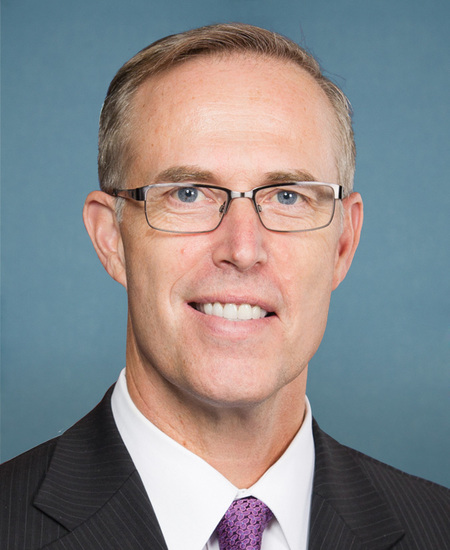
Rep. Jared Huffman
Sponsored bills
Domestic Workers Bill of Rights Act This bill provides rights and protections for domestic workers (e.g., housekeepers, nannies, caretakers, personal assistants, and chauffeurs), including pay and leave rights, and health and safety protections. Specifically, the bill repeals the exemption of domestic live-in employees from certain minimum wage and maximum hour requirements. Employers must provide written notice of termination and provide at least 30 days of lodging and two weeks of severance pay to terminated live-in employees. Live-in employees also must be provided with reasonable access to telephone and internet service during their employment. The bill requires employers to provide domestic workers with a written agreement covering wages, sick leave, benefits, and other matters. Further, domestic workers may request and be granted changes to work schedules due to personal events. The bill also provides domestic workers with certain privacy rights, extends to domestic workers protections against discrimination in employment, and increases the federal medical assistance percentage (FMAP) for certain Medicaid-funded medical services provided by domestic workers. The Department of Labor must (1) award grants for a domestic worker national hotline for reporting emergencies, training on hazards facing domestic workers, and workforce investment activities for domestic workers; and (2) establish a Domestic Worker Wage and Standards Board to investigate standards in the domestic workers industry. Labor must publish online a document that describes the rights and protections for domestic workers under this bill.
Protecting Renters from Evictions Act of 2021 This bill extends through December 31, 2021, the order issued by the Centers for Disease Control and Prevention titled Temporary Halt in Residential Evictions To Prevent the Further Spread of COVID–19 and published on September 4, 2020.
Diversity and Inclusion at the Department of State Act This bill establishes a new position and requires other activities to promote diversity and inclusion in the Department of State. The bill creates the presidentially-appointed position of Chief Diversity and Inclusion Officer in the Office of the Deputy Secretary of State to, among other activities, develop a strategic plan to guide implementation of diversity and inclusion efforts and support State Department personnel from traditionally underrepresented groups. The officer reports directly to the Secretary of State. Additionally, the State Department must establish a Diversity and Inclusion Leadership Council to coordinate applicable strategic plans, initiatives, and policies. The bill also modifies merit selection processes for promotions, performance pay, and related matters to promote diversity and inclusion in the Foreign Service. Specifically, it adds factors (e.g., testimony from peers and subordinates or demonstrated support for diversity and inclusion) that may be considered in recommendations and rankings related to a Foreign Service officer's performance. The State Department must also establish a mentorship program for entry- and mid-level members of the Foreign Service and periodically offer a Senior Executive Service development program to members of the civil service in the top two pay grades. Senior Executive Service members serve as high-level managers within federal agencies. The bill requires the State Department to report on its diversity and inclusion efforts, as well as demographic information about members of boards that make personnel decisions and candidates for the Senior Executive Service.
Extinction Prevention Act of 2021 This bill requires the Department of the Interior to provide financial assistance for the conservation of butterflies and moths in North America; plant species in Hawaii, Guam, American Samoa, and the Northern Mariana Islands; freshwater mussels in the United States; and bony fish found in desert ecosystems in Arizona, California, Colorado, Nevada, New Mexico, and Utah. Among other things, the bill establishes the North America Butterfly Conservation Fund, the Pacific Islands Plant Conservation Fund, the Freshwater Mussels Conservation Fund, and the Southwest Desert Fish Conservation Fund. In selecting projects for assistance, Interior must prioritize projects that conserve threatened and endangered species.
Captive Primate Safety Act This bill limits the trade and possession of nonhuman primates. For example, the bill prohibits most individuals from owning a nonhuman primate as a pet.
Bear Protection Act of 2021 This bill prohibits the import, export, and commerce of bear viscera or related products except for limited acts carried out solely to enforce wildlife protection laws.
Monarch Action, Recovery, and Conservation of Habitat Act of 2021 or the MONARCH Act of 2021 This bill provides support for the conservation of western monarch butterflies (the monarch butterfly population that overwinters along the coast of California and breeds across California, Arizona, Nevada, Washington, Oregon, Idaho, and Utah). Specifically, the bill establishes the Western Monarch Butterfly Rescue Fund. The Department of the Interior must use amounts in the fund to provide grants for the conservation of such butterflies. In addition, Interior must enter into an agreement with the National Fish and Wildlife Foundation to facilitate the implementation of the Western Monarch Butterfly Conservation Plan, which was prepared by the Western Association of Fish and Wildlife Agencies.
Critically Endangered Animals Conservation Act of 2021 This bill provides statutory authority for the Critically Endangered Animals Conservation Fund, which finances a grant program to protect critically endangered species. Specifically, the bill requires the Department of the Interior to establish the fund as a separate account in the Multinational Species Conservation Fund. Critically endangered species means any animal species categorized on the International Union for Conservation of Nature (IUCN) Red List of Threatened Species as either endangered or critically endangered. The term also means any other animals species categorized on such list as data deficient or under a threat category lower than endangered if Interior determines that (1) the most recent IUCN Red List assessment indicates that the population is decreasing, or (2) such species is facing new or emerging threats.
This resolution (1) commits to advancing policies that will end roadway fatalities by 2050, and (2) calls on Congress and the Department of Transportation to commit to working together to achieve zero roadway fatalities by the year 2050.