Maddy summaryThe MISSION Rx Act ensures that military beneficiaries and veterans pay no more for specific negotiated drugs than Medicare Part D beneficiaries do. It achieves this by capping the out-of-pocket costs for TRICARE-covered servicemembers and copayments for veterans at the same levels established under the federal drug price negotiation program. Additionally, the bill requires federal agencies to limit the maximum prices they agree to pay pharmaceutical manufacturers for these same negotiated drugs. These changes apply to existing contracts and new agreements involving drugs selected for federal price negotiation.
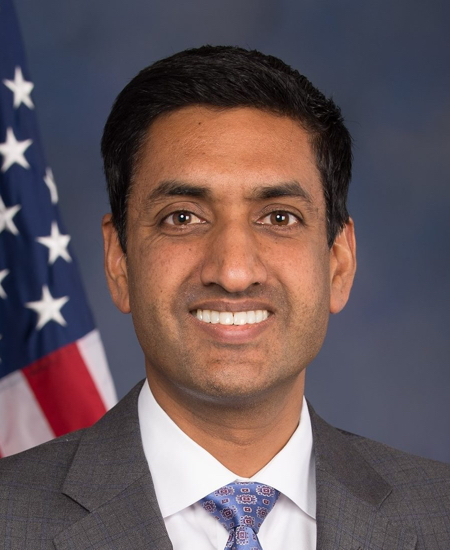
Rep. Ro Khanna
Sponsored bills
Maddy summaryH.R. 1243 is a House resolution that formally recognizes May as Asian American, Native Hawaiian, and Pacific Islander Heritage Month to celebrate the contributions of these communities to U.S. history. The bill highlights the diverse populations, historical milestones, and significant achievements of Asian Americans, Native Hawaiians, and Pacific Islanders in government, the military, and society. It also acknowledges the ongoing challenges faced by these groups, including a rise in hate crimes and historical discrimination. As a commemorative resolution, the measure does not create new laws or funding but serves to express official congressional appreciation and awareness.
Maddy summaryThis resolution commemorates the 51st anniversary of the Fall of Saigon on April 30, 1975, and the subsequent day known as Black April. It formally acknowledges the historical events of that date, including the displacement of millions of Vietnamese people and the U.S. military's evacuation efforts. The document honors the contributions of Vietnamese Americans to the United States and reaffirms support for democracy and human rights in Vietnam. Additionally, it pays tribute to the service and sacrifice of U.S. and South Vietnamese military personnel who fought during the Vietnam War.
Maddy summaryThe PEAT Act of 2026 amends federal regulations to clarify how certain biologic drugs are classified for approval purposes. Specifically, it prevents the Food and Drug Administration from denying approval to a biologic product simply because it contains a protein that does not have a clinical effect. This change ensures that the presence of inactive proteins does not automatically disqualify a drug from being treated as a biological product. The legislation directly impacts pharmaceutical companies developing complex biologics and the regulatory review process for these medicines. By removing this specific barrier, the bill aims to streamline the path to market for drugs that include non-active protein components.
Maddy summaryThe Reward Work Act prohibits companies from buying back their own stock on public exchanges while requiring at least one-third of corporate board members to be elected by employees. Under this bill, corporations would need to hold one-employee-one-vote elections to select these worker representatives, with the Securities and Exchange Commission tasked with creating rules to ensure fair and democratic processes. The legislation specifically targets publicly traded companies and their boards of directors, aiming to increase worker influence in corporate governance through direct election mechanisms.
Maddy summaryThe CHARTER Act aims to ensure that public funds for charter schools are not used to generate profits for for-profit companies. It directly affects charter schools receiving federal money by prohibiting them from contracting with for-profit entities to run, manage, or oversee their daily operations. While the bill allows schools to hire for-profit vendors for specific services like food, supplies, and transportation, it strictly bans contracts where a for-profit company controls the school or takes a cut of its revenue. These rules will only apply to new or renewed contracts made after the law is passed, with full enforcement beginning three years later.
Maddy summaryThis resolution directs the House Committee on Oversight and Government Reform to take legal action in federal court to enforce a subpoena issued to Attorney General Pamela Bondi. The specific goal is to obtain a court order requiring Bondi to provide deposition testimony and documents related to the government's handling of sex trafficking cases and the Jeffrey Epstein investigation. The House Office of General Counsel is authorized to represent the committee in these proceedings and may hire additional private lawyers to assist. If the committee initiates or intervenes in the lawsuit, it must report its actions to the full House of Representatives as soon as possible.
Maddy summaryThis bill, titled the Protecting Human Rights and Public Health in Foreign Assistance Act, aims to cancel specific regulations issued by the Department of State. It directly affects the federal government by prohibiting any department or agency from enforcing, implementing, or proposing rules related to protecting life, combating discriminatory equity ideology, and combating gender ideology in foreign aid programs. The legislation treats these cancelled rules as if they never existed, effectively nullifying their impact on future foreign assistance policies.
Maddy summaryHR 2488 designates the U.S. Postal Service facility at 3817 Marysville Boulevard in Sacramento, California, as the "Grantland Johnson Post Office." This bill updates all federal references in laws, maps, and documents to use the new name for that specific location. It directly affects the postal service facility and any federal records mentioning it. The bill is purely procedural, with no policy changes or financial impacts beyond the name designation.
Maddy summaryThe Living Wage For All Act raises the federal minimum wage in a tiered schedule, requiring large corporations to reach $25 per hour by 2031 while giving smaller businesses a longer timeline to catch up. Once the standard is met, the law automatically indexes the minimum wage to two-thirds of the national median hourly wage to ensure it keeps pace with economic changes. The bill also eliminates the lower minimum wage for tipped employees and youth workers, phasing them out until they match the general standard, and extends similar protections to incarcerated workers. Additionally, the legislation restricts the issuance of special minimum wage certificates for workers with disabilities and mandates that employers provide technical assistance during the transition period.