Maddy summaryThis bill directs the U.S. Mint to create $1 coins honoring deceased U.S. presidents who have not yet been featured on circulating coins, starting 3 years after their death. It also requires the Mint to issue matching bullion coins and bronze medals featuring the spouse of each honored president, with the spouse provision waived if the president had no spouse during their term. The coins will be legal tender and treated as collectible items under existing law. The bill affects the U.S. Mint’s coin production and impacts collectors and the public who purchase these commemorative coins.
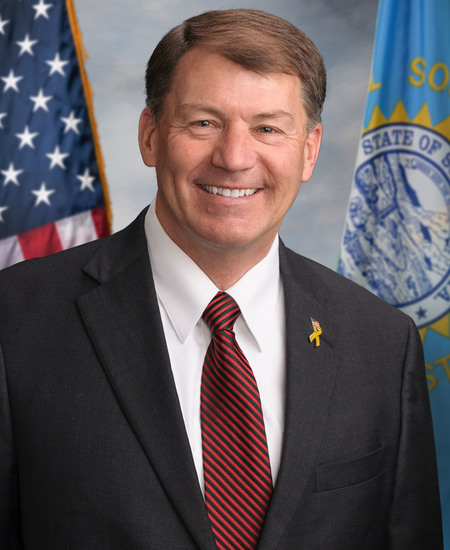
Sen. Mike Rounds
Sponsored bills
Maddy summarySRES 80 is a Senate resolution introduced on February 13, 2025, expressing gratitude to the Joint Congressional Committee on Inaugural Ceremonies, the Architect of the Capitol, the Sergeant at Arms, the Secretary of the Senate, law enforcement officers, emergency personnel, and volunteers. It specifically acknowledges their work during the January 20, 2025 inauguration of President Donald J. Trump, noting their efforts to adapt to cold weather challenges that required relocating events indoors. The resolution has no policy impact and serves solely as a ceremonial acknowledgment of their contributions to the inauguration's security and success.
Maddy summaryThis bill repeals the federal estate tax and generation-skipping transfer tax for estates of people who die on or after the bill's enactment date, directly affecting heirs of large estates (typically valued over $13 million for 2025). It also modifies the gift tax by establishing a $10 million lifetime exemption (adjusted for inflation), replacing the current exemption amount. The bill sets new tax brackets for gifts exceeding this threshold and adjusts the calculation method for gift tax liability. These changes apply to gifts made or estates settled after the bill becomes law, with no impact on existing estate plans or transfers before enactment.
Maddy summaryThis bill amends the Clean Air Act to expand fuel options for retailers and support small refineries. It allows fuel blends containing 10-15% ethanol to meet vapor pressure requirements during high ozone seasons, replacing previous state-specific limits with a nationwide standard. Additionally, it enables small refineries to reclaim retired renewable fuel credits from 2016-2018 compliance years or apply them to future obligations under specific conditions. The changes directly affect fuel retailers selling ethanol-blended gasoline and small refineries participating in the renewable fuel program.
Maddy summaryS 533, the National Right-to-Work Act, eliminates requirements for workers to join a union or pay dues as a condition of employment in private-sector workplaces and railroads. It amends the National Labor Relations Act (NLRA) and Railway Labor Act by removing language that allowed "union security agreements," meaning employers and unions can no longer mandate union membership or financial dues for employees. This directly affects workers in unionized private companies and railroad jobs covered by collective bargaining agreements. The law applies to new or renewed contracts after its enactment, changing how labor agreements can structure financial obligations for employees.
Maddy summaryThis bill prohibits federal agencies (like the Fish and Wildlife Service and Forest Service) from banning lead ammunition or tackle on public lands and waters used for hunting or fishing, directly affecting hunters and anglers who use federal lands. It blocks new federal regulations on lead levels in hunting gear, except in limited cases where a specific area's wildlife decline is linked to lead use and the state wildlife agency approves the restriction. The law requires federal agencies to explain in notices how any exception meets state wildlife department requirements or state law. It does not change existing state laws or allow federal bans on lead where states already prohibit it.
Maddy summaryThis bill establishes a formal U.S.-Israel defense partnership focused on joint development of counter-unmanned systems technology, authorizing $150 million annually from 2026-2030 for a dedicated program. It directly affects U.S. and Israeli defense departments, contractors, and military personnel through collaborative research, joint training, and shared procurement of counter-drone systems. Additional provisions include extending existing anti-tunnel and counter-UAS cooperation with increased funding, creating a new emerging tech program for AI/cybersecurity collaboration, and establishing a U.S. Defense Innovation Unit office in Israel. The bill requires annual reports to Congress on program progress and mandates semiannual financial oversight for all joint activities.
Maddy summaryThis bill imposes new sanctions on foreign entities (including banks, insurers, and logistics companies) that knowingly facilitate Iran's oil, gas, LNG, or petrochemical exports. It blocks U.S. property of sanctioned entities and bars targeted individuals from entering the U.S. via visa restrictions or revocation. Exceptions cover goods imports and certain international obligations, while the President may grant limited 180-day waivers for national security reasons, subject to congressional reporting. The law aims to disrupt Iran's energy revenue streams used for terrorism, weapons programs, and repression, with enforcement coordinated through a new interagency working group.
Maddy summaryThis bill, S 557, repeals Section 704B of the Equal Credit Opportunity Act, which required financial institutions to collect and report detailed data on small business loan applications. It directly affects banks and credit unions - especially smaller community institutions - that previously had to comply with these reporting rules. The key provision removes the data collection and reporting obligations, aiming to reduce administrative costs for lenders. This change would eliminate a specific regulatory requirement without altering how small business loans are issued or approved.
Credit Union Board Modernization Act This bill revises the required frequency of meetings held by a credit union's board of directors. Specifically, new credit unions and credit unions with a low soundness rating must meet monthly. All other credit unions must hold at least six meetings annually, with at least one meeting held during each fiscal quarter. Currently, all credit union boards must meet at least once a month.