Maddy summaryThe AIR PUMP Act requires airlines (air carrier employers) to provide crewmembers - such as flight attendants and pilots - with reasonable break time to express breast milk for up to one year after childbirth and a private, non-bathroom space for that purpose. These accommodations cannot be required during critical flight phases (e.g., takeoff or landing) and must not compromise flight safety, security, or require significant expense (like aircraft modifications). The bill also prohibits airlines from retaliating against employees who use these accommodations or file complaints. Violations would be enforced by the Secretary of Labor under existing Fair Labor Standards Act penalties.
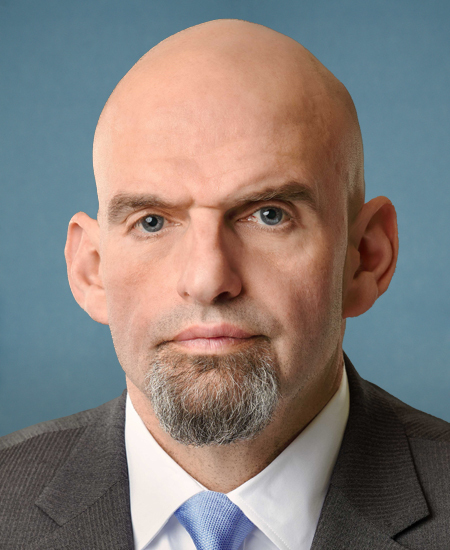
Sen. John Fetterman
Sponsored bills
Maddy summaryThis bill amends the Farm and Ranch Stress Assistance Network program to increase annual funding from $10 million to $15 million for fiscal years 2024-2028, expanding support for farmers and ranchers facing mental health challenges. It adds crisis lines to the program's services and creates new referral pathways to connect individuals with certified community clinics, rural health centers, and other approved healthcare providers. The changes directly affect agricultural workers and their families by improving access to behavioral health counseling and wellness support. Key provisions include updated funding levels and expanded partnerships with specific healthcare facilities to ensure comprehensive mental health care.
Maddy summaryThis resolution designates the week of May 14-20, 2023, as "National Police Week" to honor law enforcement officers who have died in the line of duty. It recognizes 444 officers killed in 2022 (including specific names listed in the resolution) and acknowledges 32 officers killed in 2023, while expressing support for law enforcement personnel. The resolution encourages the public to observe this week by honoring law enforcement officers and promoting awareness of their essential service. As a ceremonial resolution, it does not create new policy or alter existing laws.
Maddy summarySRES 203 is a symbolic Senate resolution recognizing Jewish American Heritage Month (observed in May) as a time to celebrate Jewish Americans' contributions to U.S. society and culture. It does not create new laws or allocate funds but formally acknowledges the community's historical impact and calls on leaders to combat antisemitism. The resolution highlights Jewish Americans' roles in government, arts, science, and their 350-year history in the U.S., while referencing rising antisemitic incidents and Holocaust awareness gaps. It aligns with annual bipartisan Senate resolutions since 2006, emphasizing education and inclusion without proposing concrete policy changes.
Maddy summaryThis bill reauthorizes U.S. Department of Agriculture (USDA) programs to prevent, detect, and respond to foreign animal diseases like foot-and-mouth disease. It allocates $233 million annually from the Commodity Credit Corporation for fiscal years 2024-2028, broken into specific amounts: $10 million for prevention, $70 million for surveillance, and $153 million for rapid response. These funds directly support USDA’s animal health programs, benefiting livestock producers, agricultural markets, and food safety systems by strengthening disease preparedness. The bill updates previous funding levels and timeframes from the 2019-2023 period to cover the next five years.
Maddy summaryS 1665 establishes an Advisory Commission to study mental health challenges faced by college students. The Commission, appointed by the Secretary of Education within 60 days of the bill's enactment, will include 20 members representing students with mental health disabilities, university staff, advocacy groups, and federal agencies. It will examine campus mental health services, policies affecting students, and data on how mental health impacts academic success, then produce a final report with recommendations. The bill does not directly fund services but aims to provide evidence-based guidance to improve support for students with mental health needs across all higher education institutions.
Maddy summaryThis bill creates a new 21-day administrative leave for active-duty service members to obtain reproductive care not provided at military medical facilities (such as abortions or fertility treatments like IVF), or to accompany a spouse or dependent receiving such care. It also authorizes travel and transportation allowances for this care, explicitly covering abortion and assisted reproductive technology. The bill prohibits additional requirements like mandatory counseling or chaplain consultations for requesting this leave, while prioritizing privacy for service members and their families. It defines "non-covered reproductive health care" to include specific procedures like egg retrieval, sperm processing, and in vitro fertilization, ensuring these are eligible for the new leave and travel benefits.
Maddy summary# Summary of Maternal Health Legislation This comprehensive legislative document outlines a multi-faceted approach to improving maternal health outcomes across multiple domains. The bill is structured into 13 titles addressing various critical aspects of maternal care. ## Key Focus Areas 1. **Justice for Incarcerated Moms** (Title VIII) - Prohibits shackling of pregnant individuals in prisons - Establishes model programs in Bureau of Prisons facilities for pregnant and postpartum incarcerated individuals - Creates grant programs for State and local prisons to improve maternal health outcomes for incarcerated individuals 2. **Technology in Maternal Care** (Title IX) - Expands telehealth options for pregnancy and postpartum care - Funds technology-enabled collaborative learning models for maternal health providers - Promotes digital tools to reduce maternal health disparities 3. **Pandemic Response** (Title XI) - Establishes a task force to develop Federal recommendations for respectful maternity care during public health emergencies - Requires data collection and surveillance on maternal health outcomes during public health emergencies - Mandates public health communication strategies for pregnant and postpartum individuals 4. **Climate Change Protection** (Title XII) - Creates a grant program to protect vulnerable mothers and babies from climate change risks - Establishes a NIH Consortium on Birth and Climate Change Research - Develops a strategy for identifying climate change risk zones for vulnerable mothers and babies 5. **Maternal Vaccinations** (Title XIII) - Expands awareness and equity campaigns for maternal vaccinations - Increases funding for vaccination programs targeting pregnant and postpartum individuals ## Cross-Cutting Themes - **Racial and Ethnic Disparities**: The legislation consistently emphasizes addressing racial and ethnic disparities in maternal health outcomes throughout all titles - **Social Determinants of Health**: The bill recognizes the importance of addressing social determinants like housing, transportation, nutrition, and access to care - **Technology Integration**: Multiple provisions focus on leveraging technology to improve maternal health outcomes - **Data Collection and Surveillance**: Strong emphasis on collecting and analyzing demographic data to better understand and address health disparities The legislation includes significant funding allocations across all titles, with annual appropriations ranging from $5 million to $100 million for various programs, all aimed at improving maternal health outcomes, particularly for vulnerable populations.
Maddy summaryThe Universal School Meals Program Act of 2023 would establish a universal school meal program providing free breakfast and lunch to all children enrolled in participating schools, eliminating income-based eligibility requirements that previously limited access to free meals. The bill sets specific payment rates for schools ($2.80 for breakfast and $4.63 for lunch, adjusted annually for inflation) and prohibits schools from collecting debts for unpaid meals or "shaming" students for unpaid charges. It also creates a reimbursement program to cover existing delinquent meal debt, requiring schools to continue accruing debt for reimbursement purposes until the program's effective date. The legislation directly affects all public schools participating in the National School Lunch Program and School Breakfast Program across the country. The bill amends various federal laws to replace references to "free or reduced price" meals with a new measure of economic disadvantage based on student poverty data.
Maddy summaryThis bill creates a new Office of Consumer Protection within the Department of Transportation. The office will monitor compliance with consumer protection and civil rights laws, investigate violations, and issue regulations to safeguard transportation consumers. It will be led by a new Assistant Secretary for Consumer Protection, who must coordinate with legal staff and submit annual reports to Congress analyzing consumer protection trends and challenges. The office directly affects consumers using transportation services and the Department's enforcement of related laws.