

Maddy summaryS 1779, the Electric Motorcycle Parity Act of 2023, expands the federal clean vehicle tax credit to include electric motorcycles and other vehicles with fewer than four wheels. It creates a $3,750 tax credit per qualifying vehicle acquired after December 31, 2022, for buyers purchasing electric motorcycles that meet specific requirements (e.g., capable of 45+ mph, manufactured for public roads, and meeting clean vehicle standards with adjusted battery requirements). The bill directly affects electric motorcycle buyers and manufacturers by extending the same tax incentive previously available only to four-wheeled electric vehicles. It amends the Internal Revenue Code to treat these smaller vehicles as "qualified clean vehicles" under the existing credit framework. This is a concrete policy change that lowers the cost of purchasing eligible electric motorcycles.
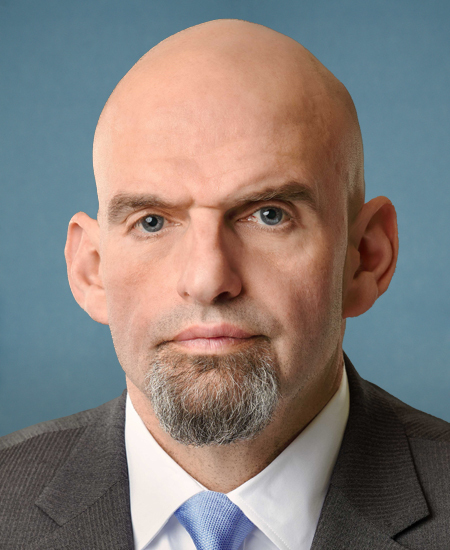
Sen. John Fetterman
Sponsored bills
Maddy summaryThis bill (S 1774, the ASSIST Act) increases federal funding for mental health and substance use disorder services provided in schools and school-based health centers. It raises the federal medical assistance percentage (FMAP) to 90% for eligible state expenditures on these services starting 12 months after enactment, directly benefiting public schools, school-based health centers, and students needing these services. The bill also creates a new grant program through the HHS Secretary to fund eligible entities (like school districts, universities, or tribal schools) to hire more licensed mental health providers, with requirements for cultural competence, reporting on provider numbers and retention, and a ban on using funds for threat assessment teams. These provisions aim to expand access to school-based mental health care without reducing funding for other Medicaid services.
Maddy summaryThis resolution (SRES 209) is a symbolic Senate measure recognizing May as Asian American, Native Hawaiian, and Pacific Islander Heritage Month. It formally celebrates the historical contributions of these communities to the United States, highlighting their diverse cultural impact and achievements. The resolution does not create new laws or policies - it simply encourages the Senate to observe the month with recognition of these communities' roles in U.S. history. It follows longstanding tradition, as May was chosen to honor key milestones including the arrival of Japanese immigrants and Chinese laborers on the transcontinental railroad.
Maddy summaryThe Democracy Restoration Act of 2023 (S 1677) would restore voting rights for most U.S. citizens with criminal convictions who are not serving a felony sentence in prison. It requires states to notify individuals when they regain voting rights, with specific timelines for notification after sentencing or release from custody. The bill prohibits states from requiring payment of fines or fees to restore voting rights, affecting over 4.6 million disenfranchised citizens. It applies only to federal elections and would take effect for elections held after enactment.
Maddy summaryThis bill would create a federal paid family and medical leave insurance program, providing wage replacement benefits for workers who need time off for family or medical reasons. Eligible workers would receive up to $4,000 per month (with a minimum of $580), calculated as 85% of the first $1,257 in monthly earnings, 69% of the next $2,243, and 50% of any amount above that. The program would be funded through 0.2% payroll taxes on both employees and employers, administered by the Social Security Administration. It would directly affect workers who meet income requirements, with benefits available for up to 60 caregiving days per benefit period.
Maddy summaryThis bill removes barriers for people with drug-related convictions seeking government assistance. It amends welfare law (PRWORA) to allow states to provide Temporary Assistance for Needy Families (TANF) benefits to individuals with such convictions through state programs. It also invalidates state rules that deny Supplemental Nutrition Assistance Program (SNAP) food aid based on drug convictions and adds incarcerated individuals scheduled for release within 30 days to SNAP eligibility. The law directly affects formerly incarcerated people seeking welfare or food assistance in states that previously restricted these benefits due to past drug offenses.
Maddy summaryThis bill requires law enforcement agencies to collect and report disability status data during interactions with individuals with disabilities. It establishes an advisory council (with over 50% members having disabilities) to develop standardized data collection methods, which the Bureau of Justice Statistics must implement in its Police-Public Contact Survey. The bill also amends death-in-custody reporting to mandate inclusion of disability status in all federal submissions. These requirements apply to state and federal law enforcement agencies that report to federal databases.
Maddy summaryThe Affordability is Access Act of 2023 requires health insurance plans to cover over-the-counter contraceptives approved by the FDA without cost-sharing (such as copays or deductibles). It directly affects millions of people, especially those who rely on birth control but face cost barriers, including low-income individuals and people in contraceptive deserts. The bill clarifies that insurance coverage must include FDA-approved OTC contraceptives even without a prescription, and it mandates retailers to provide accurate information about these products without interfering with access. Retailers may refuse to sell the product if payment cannot be made, but they cannot block access or spread misinformation.
Maddy summaryThis bill prohibits the use of "unlawful seclusion or restraint" in schools receiving federal funding, including mechanical, chemical, and certain physical restraints that pose risks to students. It requires schools to implement positive behavioral interventions instead of restraint, mandates staff training in crisis intervention, and establishes procedures for reporting and following up after restraint incidents. The bill requires states to create monitoring plans and collect detailed data on restraint use, with specific reporting requirements for schools and Head Start programs. Schools must provide immediate parent notification after restraint incidents and hold meetings to discuss prevention strategies. The bill applies to public schools, special education schools, and other federally funded programs, but does not affect private schools not receiving federal support or home schools.
Maddy summaryThis bill extends Medicare reimbursement rate increases for ground ambulance services through 2028. It adjusts specific payment percentages for ambulance providers: maintaining a 26.7% rate increase for "super rural" ambulance services and setting 4.3% and 3.4% increases for other ground ambulance services during 2025-2028. These changes directly affect Medicare beneficiaries using ground ambulance services and the ambulance providers who serve them, particularly in rural areas. The bill modifies existing Social Security Act provisions to adjust payment rates without altering Medicare eligibility or coverage rules. It provides temporary rate adjustments to help sustain ambulance service availability during this period.