Maddy summaryThis bill prohibits displaying any flag other than the U.S. flag on the exterior of public buildings or in their hallways. It directly affects all federal, state, and local government buildings, including courthouses, libraries, and military installations. Exceptions allow specific flags, such as POW/MIA flags, visiting diplomats' national flags, state flags for congressional offices, military unit flags, tribal flags, and local jurisdiction flags. The bill is procedural, focusing solely on flag display rules without altering other policies.
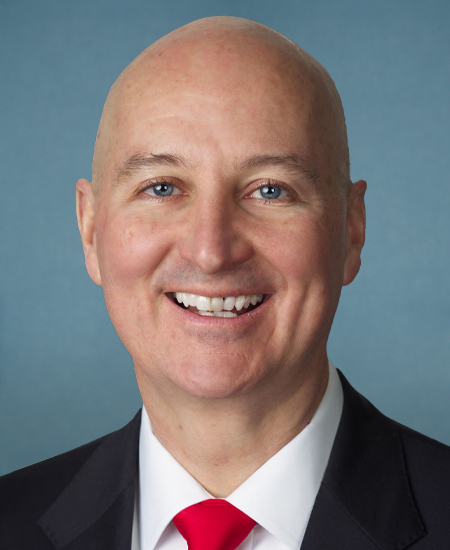
Sen. Pete Ricketts
Sponsored bills
Maddy summaryThe Tanning Tax Repeal Act of 2023 eliminates a federal excise tax on indoor tanning services that was previously imposed under the Internal Revenue Code. This bill directly affects tanning salons and their customers by removing a 10% tax on indoor tanning services performed after the law's enactment. The key mechanism is amending the tax code to repeal Chapter 49, which contained the tanning tax provision. The repeal takes effect for services provided after the bill becomes law, meaning tanning businesses will no longer collect or pay this specific tax.
Maddy summaryThe HERO Act establishes a national data system to track suicide incidence among public safety officers, including firefighters, emergency medical services personnel, and telecommunicators. It requires the CDC to collect detailed annual data (broken down by age, gender, state, occupation type, and volunteer/career status) and publish public reports on suicide trends and effective interventions. The bill also funds peer-support mental health programs within fire and EMS agencies, develops training resources for mental health professionals on public safety culture, and creates evidence-based best practices for treating PTSD in first responders. Crucially, it prohibits using suicide data to deny life insurance or benefits to survivors.
Maddy summaryThis joint resolution (SJRES 31) seeks to block an Environmental Protection Agency (EPA) rule implementing the "Federal Good Neighbor Plan" for ozone air quality standards established under the 2015 National Ambient Air Quality Standards. If approved, it would nullify the EPA rule (published June 5, 2023) that would have required certain states to address ozone pollution crossing state borders. The resolution uses a specific congressional disapproval process under Title 5 of the U.S. Code to prevent the rule from taking effect. This would directly affect states and industries subject to the ozone pollution regulations outlined in the EPA's submitted rule.
Maddy summaryS 1907, the Federal Firearms Licensee Protection Act of 2023, increases penalties for crimes committed against licensed firearm businesses. It amends federal law to impose a maximum 20-year prison term for knowingly violating firearm licensing rules or attempting to do so. If a burglary or robbery occurs on a licensed dealer’s, manufacturer’s, or importer’s business premises, the law mandates minimum sentences of 3 years for burglary and 5 years for robbery. This bill directly affects federal firearms licensees by strengthening criminal penalties for attacks on their business locations.
Maddy summaryThe GRATEFUL Act (S 1887) creates a dedicated visa program for foreign national employees of U.S. government agencies who have provided 15+ years of exceptional service abroad. It directly affects employees of agencies like the State Department, USAID, Defense, and Homeland Security, along with their immediate families, by guaranteeing visa access when regular categories lack availability. The bill sets annual caps of 3,500 visas for fiscal year 2024 and 3,000 visas for subsequent years. To fund this, it temporarily reduces diversity visa allocations, ensuring the new program does not diminish existing visa categories. This is a concrete policy change that expands immigration pathways for long-serving government employees without altering current visa category limits.
Maddy summaryS 1906, the Promising Pathway Act, creates a faster FDA approval pathway for new drugs treating serious or life-threatening conditions, allowing provisional approval within 90 days of application. It requires drug sponsors to establish patient registries tracking usage and outcomes (with 90% participation minimum), mandates insurers to cover these drugs identically to fully approved drugs, and sets 2-year provisional approval periods renewable up to three times (max 8 years total). The bill includes safety monitoring, with withdrawal if serious side effects outweigh benefits or if full approval isn’t sought within 180 days. This directly affects drug manufacturers, patients with serious conditions, and health insurers by altering approval timelines, coverage rules, and post-approval monitoring.
Maddy summaryThis bill requires U.S. agencies distributing foreign aid to publish detailed, award-by-award information online. It mandates that public data include specific searchable details like the country receiving aid, funding agency, sector, total amount, fiscal year, and implementing partners (including subawards). The changes apply directly to U.S. government agencies managing foreign assistance programs. The goal is to make foreign aid spending more transparent and accessible to the public.
Maddy summaryS 1843 (End Child Trafficking Now Act) requires adults (18+) entering the U.S. with minors under 18 to prove a family relationship through documents or a witness, with DNA testing as a last resort if proof is insufficient. If an adult refuses DNA testing or fails to provide valid proof, they may be denied entry and the minor treated as an unaccompanied child. The bill also creates a new federal crime ("recycling of minors") for adults who repeatedly use a minor they aren’t related to for illegal entry, punishable by up to 10 years in prison. This directly affects adults traveling with minors, immigration officers, and law enforcement handling entry-related trafficking cases.
Maddy summaryThis Senate resolution (SRES 234) designates May 2023 as "Older Americans Month" to symbolically honor older adults in the U.S. It encourages public recognition of their community contributions, opportunities for them to share wisdom with younger generations, and acknowledgment of their value to society. The resolution has no legal effect or new policy changes - it is purely ceremonial, aligning with longstanding tradition to highlight seniors' roles without altering programs or funding.