Maddy summaryThe SAFE KIDS Act voids surrogacy contracts between U.S. surrogates and foreign nationals from designated "entities of concern" (like sanctioned countries), with limited exceptions for married U.S. couples. It criminalizes surrogacy brokers who facilitate such contracts, imposing fines or up to one year in prison. If a contract is voided, custody decisions for the child are determined by state courts based on the child's best interests, not the invalid agreement. The law directly affects U.S. surrogates, foreign nationals seeking surrogacy, and surrogacy brokers, targeting exploitation and potential trafficking risks.
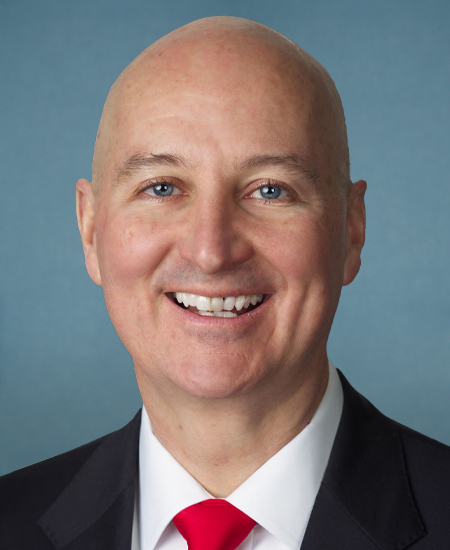
Sen. Pete Ricketts
Sponsored bills
Maddy summaryThis bill amends the Homeland Security Act of 2002 to require federal agencies to detect and identify nitazenes - synthetic opioids - alongside fentanyl and xylazine in drug detection protocols. It directly affects law enforcement agencies and laboratories using federal detection equipment, updating their technical standards to include nitazenes. The key change is adding "nitazenes" to the list of substances covered under existing detection requirements. This is a procedural update to existing law, not a new regulatory mandate.
Maddy summaryThis resolution designates October 2025 as "Substance Use & Misuse Prevention Month" to raise public awareness about substance use and misuse in the United States. It supports existing prevention programs, efforts to address the drug addiction and overdose epidemic, and the designated awareness month. As a symbolic gesture, it does not create new laws or funding but aims to highlight the issue using 2024 statistics (e.g., 73 million people aged 12+ using illicit drugs). The resolution is non-binding and focuses on awareness, not policy changes.
Maddy summarySRES 409 is a symbolic Senate resolution commemorating the 74th anniversary of the 1951 U.S.-Philippines Mutual Defense Treaty. It expresses support for the U.S.-Philippines security alliance amid China's actions in the South China Sea, including territorial claims and confrontations with Philippine vessels. The resolution reaffirms the treaty's application to attacks on Philippine military assets and condemns China's "unprovoked aggression" in the region. As a non-binding resolution, it does not enact new policy but formally underscores the alliance's importance.
Maddy summaryThe Nitazene Sanctions Act (S 3080) targets synthetic opioids called nitazenes, which are significantly more potent than fentanyl and can be produced using widely available chemicals, often linked to Chinese chemical manufacturers. It requires the U.S. State Department and Justice Department to submit a report within 120 days detailing China’s role in producing nitazene precursors and a strategy to address this, including working with Chinese authorities and European allies. The bill amends the Fentanyl Sanctions Act to explicitly include nitazenes in controlled substance definitions and authorizes sanctions against Chinese entities or officials that fail to prevent opioid trafficking or support precursor production. It also extends the Fentanyl Sanctions Act’s enforcement period from 5 to 10 years. The law directly affects Chinese chemical companies, government agencies, and officials involved in precursor production or trafficking, with sanctions potentially targeting financial institutions and government entities.
Maddy summaryS 3076, the Nitazene Control Act, permanently classifies nitazenes and related 2-benzylbenzimidazole opioids as Schedule I controlled substances under the federal Controlled Substances Act. This affects anyone possessing, distributing, or researching these substances, as it bans them without specific exemptions. The bill broadly defines the prohibited substances to cover all structural analogs (including modifications to the molecular structure) and those that activate the mu-opioid receptor. It also removes temporary scheduling for these compounds, making their Schedule I status permanent upon enactment. This policy change aims to prevent new illicit analogs from entering the drug supply and reduce overdose risks linked to these potent synthetic opioids.
Maddy summaryThis bill ensures that critical firearm-related operations continue during government shutdowns by designating them as "excepted" under federal law. It specifically covers the FBI's background check system (NICS), ATF enforcement programs, Commerce Department firearm export licensing, and State Department defense trade controls. These functions would remain operational even if most government services halt, directly affecting firearm background checks and export licensing processes. The policy change prevents temporary disruptions to gun sales and international firearm transactions during shutdowns.
Maddy summaryThis bill ensures military personnel and their support staff continue receiving pay during government funding gaps in fiscal year 2026. It authorizes funds from the Treasury to cover pay and allowances for active-duty service members, reserves, military support civilians (including Coast Guard staff), and qualifying contractors if regular budget appropriations aren't approved. The funding remains available until the earliest of: a new budget passing, a continuing resolution without this funding, or January 1, 2027. It directly affects all active-duty military, reserve components, and civilian/contractor support staff within the Department of Defense and Coast Guard.
Maddy summaryThis bill establishes a U.S. government task force to prepare sanctions against Chinese entities if the People's Republic of China (PRC) takes actions threatening Taiwan's sovereignty, such as military aggression, territorial occupation, or cyberattacks. The PRC Sanctions Task Force, to be created within 180 days of enactment, will identify potential targets, assess existing and needed sanctions authorities, and coordinate with allies to minimize economic impacts on the U.S. and partners. It requires annual classified reports to Congress detailing target entities, potential economic effects, and strategies for imposing sanctions. The bill directly affects U.S. agencies (State, Treasury, Commerce) and could impact PRC entities supporting actions against Taiwan, but it does not authorize sanctions itself - only prepares the framework for potential future action.
Maddy summaryThis bill directs the U.S. State Department to monitor and counter Chinese efforts to pressure Latin American and Caribbean countries that maintain diplomatic ties with Taiwan to sever those relations. It requires establishing a mechanism to track Chinese infrastructure projects in those countries that involve "strategic risks" or opaque financing, and mandates semiannual reports to Congress on nations considering ending ties with Taiwan. The bill also requires annual reports detailing China's influence tactics in the region, U.S. actions to support Taiwan's diplomatic partners, and plans for deepening U.S.-Taiwan coordination on development in the Western Hemisphere. These provisions directly affect countries in Latin America and the Caribbean with formal ties to Taiwan, aiming to protect their sovereign foreign policy choices from coercion.