

Maddy summaryThis bill amends the 2022 Camp Lejeune Justice Act to clarify and improve legal procedures for individuals exposed to contaminated water at Camp Lejeune. It updates the required proof of harm to include "latent or potential harm" and lowers the minimum required presence at Camp Lejeune from 30 consecutive days to any 30 days. The bill also specifies that cases must be filed in the Eastern District of North Carolina (with optional transfer to the 4th Circuit), mandates jury trials upon request, and sets attorney fee caps at 20% for pre-litigation settlements and 25% for cases filed after litigation begins. It directly affects individuals filing claims under the Camp Lejeune Justice Act for health issues linked to water contamination.
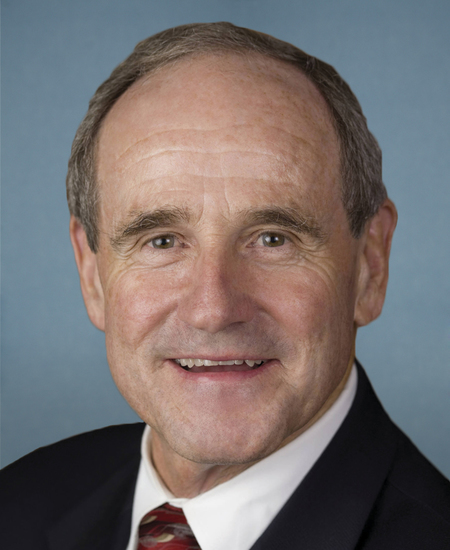
Sen. James E. Risch
Sponsored bills
Maddy summaryThis bill requires the Department of Veterans Affairs (VA) to cover hyperbaric oxygen therapy (HBOT) as a treatment option for veterans diagnosed with traumatic brain injury (TBI) or post-traumatic stress disorder (PTSD) who have already tried at least two other evidence-based treatments. It directly affects veterans with these conditions who are at high risk of suicide or self-harm, as specified in the bill's findings. The key provision mandates that the VA provide HBOT under VA health care programs without requiring prescription drugs, opioids, or invasive procedures. This policy change expands access to a non-drug treatment option for eligible veterans, focusing on proven alternatives for TBI and PTSD management.
Maddy summaryThe Fighter Force Preservation and Recapitalization Act of 2025 increases the minimum required number of Air Force fighter aircraft to 1,900 (from 1,800) and reserve component aircraft to 1,200 (from 1,145) by October 2030, extending the deadline from 2026. It allows temporary reductions in total inventory (down to 1,800) for up to two years to replace older aircraft with new models, requiring congressional notification and detailed quarterly reports on new acquisitions, retirements, and unit assignments. The bill also protects 25 specific Air National Guard fighter squadrons (as of December 2024) from losing aircraft until 2030 and mandates an annual plan for recapitalizing these units, including budget and operational assessments. These provisions directly affect Air Force active, reserve, and Air National Guard units operating fighter aircraft, ensuring a structured transition to newer models like the F-35 and F-16 Block 70.
Maddy summaryThis bill, the Disaster Loan Accountability and Reform Act (DLARA), requires the Small Business Administration (SBA) to improve transparency and oversight of disaster loans. Key provisions include mandating monthly reports on loan funding status (e.g., notifying Congress when unobligated funds drop below 10% of the latest appropriation), requiring detailed budget explanations for disaster loan costs, and prohibiting loan forgiveness without congressional authorization. It also restricts the SBA from issuing rules that increase program costs and mandates reviews by the GAO and SBA Inspector General into recent loan program changes and funding shortfalls. The bill directly affects SBA operations and reporting to Congress, focusing on accountability rather than altering loan eligibility or benefits for borrowers.
Maddy summarySCONRES 8 is a Senate concurrent resolution supporting the Local Radio Freedom Act. It urges Congress not to impose a new fee or charge on local radio stations for playing music over the air, or on businesses like bars and restaurants that play radio broadcasts publicly. The resolution argues that such a fee would disrupt the current system where radio stations provide free promotional support to the music industry and essential local services like emergency weather updates. It claims the existing model has fostered a thriving music and broadcasting sector without harming small businesses or consumers. This resolution does not create law but expresses congressional support for maintaining the current fee-free system.
Maddy summaryThis bill requires the VA Secretary to create rules so veterans can get a physical copy of Form 10-3452 (used for travel expense reimbursement claims) by mail or at any VA medical facility. It directly affects veterans who need to submit this form to claim reimbursement for travel costs related to healthcare. The key provision mandates that VA facilities must accept and process these physical forms submitted in person or by mail, ensuring veterans have accessible options beyond digital methods. This changes how veterans interact with the VA for this specific reimbursement process.
Maddy summaryThis bill amends federal education law to prohibit federally funded athletic programs from allowing individuals assigned male at birth to participate in sports designated for women or girls. It defines "sex" for this purpose as biological sex at birth, based on reproductive anatomy and genetics. The law directly affects schools, colleges, and sports organizations receiving federal funding. Violations would constitute a breach of Title IX, requiring programs to exclude individuals whose sex is male from women's or girls' athletic teams.
Maddy summaryThis joint resolution (SJRES 12) seeks to block an Environmental Protection Agency (EPA) rule that established procedures for a "Waste Emissions Charge" affecting petroleum and natural gas systems. Specifically, it targets the EPA's November 2024 rule (89 Fed. Reg. 91094) which outlined compliance methods like netting and exemptions for emissions charges. If passed, the resolution would formally disapprove the rule under federal law (Chapter 8 of Title 5, U.S. Code), preventing it from taking effect. The bill directly affects the oil and gas industry by removing a specific regulatory framework for emissions reporting and fees. This is a procedural disapproval measure, not a new policy.
Maddy summaryThis bill prohibits the Federal Emergency Management Agency (FEMA) from funding sheltering or facility improvements for U.S. Customs and Border Protection (CBP) short-term holding facilities. It also cancels unobligated funds previously allocated to FEMA for these purposes under two 2023-2024 appropriations acts. The bill directly affects FEMA's budget authority and CBP's operational funding for facilities holding individuals in immigration custody. It does not create new restrictions but terminates existing funding for specific CBP-related sheltering activities. The measure focuses solely on rescinding existing appropriations, not on altering immigration law or eligibility.
Maddy summaryS 796, the Book Minimum Tax Repeal Act, repeals a corporate minimum tax provision in the Internal Revenue Code that previously applied to certain businesses. The bill removes the requirement for corporations to pay a minimum tax based on their alternative minimum taxable income, effectively eliminating this specific tax obligation for affected corporations. Key provisions amend Section 55 of the tax code to delete corporate minimum tax calculations and related references, treating corporations as having a zero tentative minimum tax. This change directly affects corporations that would have been subject to this minimum tax, with the repeal taking effect for taxable years beginning after December 31, 2024.