Maddy summaryThis resolution (SRES 255) is a ceremonial Senate measure honoring former U.S. Senator Christopher "Kit" Bond of Missouri, who died on May 13, 2025. It recognizes his 40+ years of public service, including his roles as Missouri Governor (1973-1977, 1981-1985) and U.S. Senator (1987-2011). The resolution directs the Senate to adjourn briefly as a mark of respect and transmit a copy to his family. It has no policy impact or direct effect on constituents, as it is purely commemorative.
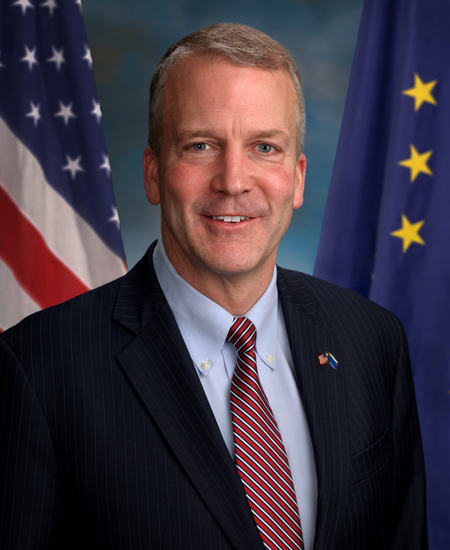
Sen. Dan Sullivan
Sponsored bills
Maddy summarySRES 253 is a ceremonial Senate resolution congratulating Pope Leo XIV on his election as Pope, recognizing him as the first U.S. citizen elected to the papacy. The resolution highlights his global role in promoting peace, justice, and interfaith dialogue, and expresses hope for continued strong U.S.-Holy See relations based on shared values. It does not create policy changes or affect any specific group, as it is a symbolic gesture of goodwill. The resolution was introduced by multiple senators and unanimously adopted by the Senate on May 22, 2025.
Maddy summaryThis bill redefines "private duty nursing services" under Medicaid as "continuous skilled nursing services" requiring licensed nurses (RNs or LPNs) for complex-care patients needing multiple hours of daily nursing. It directly affects Medicaid beneficiaries, particularly "full-benefit dual eligible individuals" (those qualifying for both Medicare and full Medicaid benefits), who rely on these services. Key mechanisms include mandating licensed providers, establishing a working group to develop national quality standards within 180 days, and updating Medicaid program guidelines to include these services by 18 months. The bill also requires states to incorporate these standards into their Medicaid programs and quality measure sets.
Maddy summaryThe Crime Victims Fund Stabilization Act of 2025 amends the law governing deposits into the Crime Victims Fund, adding two new sources: funds from declined criminal prosecutions (without conviction) and certain False Claims Act recoveries (from 2025 through 2030). It specifically excludes two types of False Claims Act funds from these deposits: payments to whistleblowers (qui tam plaintiffs) and reimbursements for government fraud damages. This bill directly affects the Crime Victims Fund, which provides support to victims of crime, and adjusts how federal agencies handle False Claims Act cases. The changes aim to modify the fund's funding sources without altering the False Claims Act itself.
Maddy summaryS 1918, the Access Technology Affordability Act of 2025, creates a new federal tax credit for expenses related to access technology for blind individuals. It allows taxpayers to claim a credit of up to $2,000 per 3-year period for qualified hardware, software, or IT tools that convert visual information into accessible formats for themselves, their spouse, or a blind dependent. The credit amount adjusts annually for inflation starting in 2026 and expires after 2030. This policy directly affects taxpayers who pay for such technology for blind family members, reducing their tax liability for these qualifying expenses.
Maddy summaryThe Veterans Health Care Freedom Act establishes a 3-year pilot program (starting one year after enactment) in at least four VA service networks, allowing eligible veterans enrolled in VA health care to choose their primary and specialty care providers from a broader network of VA facilities and non-VA providers with VA agreements. It removes current restrictions requiring veterans to use providers only in their local VA network or limiting non-VA care to situations where VA care was "unavailable." After the pilot, these expanded choices become permanent, meaning veterans will always be able to select providers without those restrictions and VA will provide care at any VA facility, regardless of the facility's network location relative to the veteran's residence.
Maddy summarySRES 234 is a ceremonial Senate resolution designating May 2, 2025, as "United States Foreign Service Day." It honors current and former Foreign Service officers who serve in the Department of State, USAID, and related agencies, recognizing their work in diplomacy, security, humanitarian aid, and promoting U.S. interests globally. The resolution calls for public reflection on their service and sacrifices, including those who died in the line of duty, but does not create new laws or policies. This is a symbolic gesture with no direct impact on legislation or affected individuals.
Maddy summaryThe COUNTER Act (S 1793) amends U.S. military law to clarify and expand authorities for responding to drone threats. It allows the Secretary of Defense to delegate drone mitigation actions to combatant commanders and exempts related technology and protocols from public disclosure under federal and state laws. The bill specifies that certain federal laws (like those covering cybercrime and aviation) do not apply to military drone mitigation efforts conducted outside the United States. It also updates reporting deadlines and adds new definitions for military commands involved in drone threat response, with key provisions extending until 2030. This bill directly affects Department of Defense and Coast Guard operations related to unmanned aircraft system threats.
Maddy summaryThis bill reinstates a tax deduction for personal casualty losses (such as property damage from crimes, scams, or disasters) that was suspended after 2017. It directly affects taxpayers who experienced qualifying losses but couldn't claim the deduction on past returns due to the suspension. The key provisions are: (1) removing the suspension of the deduction for future years, and (2) extending the deadline to file for refunds for past years where the deduction was suspended. The extension allows taxpayers to claim refunds related to these losses until the filing deadline for the tax year that includes the bill's enactment date.
Maddy summaryS 1766, the Protect Our Heroes Act of 2025, creates new federal crimes for killing or assaulting law enforcement officers, firefighters, and judicial staff (including those funded by federal grants from state/local agencies) during or related to their official duties. It mandates minimum 10-year sentences for killing such officers (life imprisonment if death results) and imposes tiered prison terms for assaults (2-20 years based on injury severity), with enhanced penalties for using deadly weapons or luring victims. The law applies when attacks involve interstate travel, commerce, or weapons crossing state lines. This bill directly affects federally funded public safety personnel nationwide by strengthening federal prosecution for targeted violence against them.