Maddy summaryThis bill requires the Department of Defense to ensure military identification and eligibility facilities are located within 30 miles of every major city (population 300,000+). Each facility must be staffed at least two days per week during business hours to assist active-duty service members and their eligible dependents with military ID systems like DEERS and ADEERS. It mandates these facilities be physically accessible near large population centers, directly affecting service members and families needing routine ID services. The law specifies exact location and staffing requirements but does not alter eligibility rules or create new benefits.
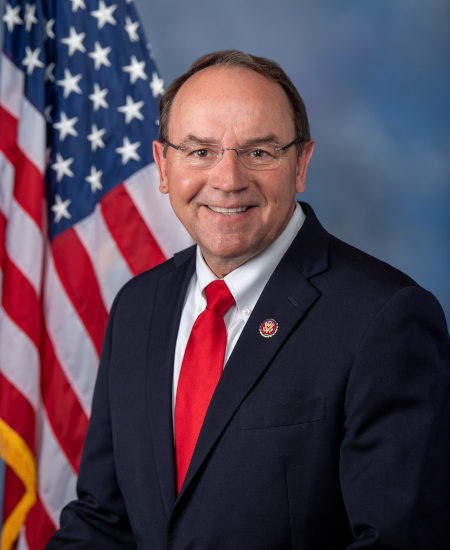
Rep. Thomas P. Tiffany
Sponsored bills
Maddy summaryHRES 842 is a non-binding resolution expressing the House's support for placing a statue of Charles "Charlie" James Kirk in the Capitol's House wing. It honors Kirk, founder of Turning Point USA and a conservative political figure assassinated in 2025, for his advocacy of free expression, civic engagement, and conservative principles. The resolution directs the House Fine Arts Board to accept the statue and display it permanently by January 2, 2027, though actual placement remains subject to the Board's approval. This is a symbolic gesture to commemorate Kirk's legacy, not a new law with policy impacts.
Maddy summaryThis bill ensures that critical firearm-related government operations continue during federal shutdowns. It designates background checks (via the FBI's National Instant Criminal Background Check System), Bureau of Alcohol, Tobacco, Firearms and Explosives enforcement, and firearm export licensing (handled by Commerce and State Departments) as essential services that must remain operational. These functions would be treated as "excepted" under federal law, meaning their employees would continue working even if other government services halt. The bill affects how background checks and firearm export licenses are processed during shutdowns but does not change gun ownership laws or eligibility.
Maddy summaryHR 5815, the District of Columbia Medicaid Fairness Act, adjusts federal Medicaid funding for Washington D.C. by setting a specific Federal Medical Assistance Percentage (FMAP) for the district. It directly affects D.C. residents enrolled in Medicaid by guaranteeing a minimum federal funding share: 70% for fiscal years before 2027, gradually decreasing to 55% by 2029. For fiscal years 2030 and beyond, D.C. will receive the standard FMAP rate calculated under the Social Security Act, without the special adjustment. This change ensures D.C. receives a higher federal share than it would under the standard formula until 2029, after which it aligns with other states. The bill modifies Section 1905 of the Social Security Act to implement these funding adjustments.
Maddy summaryHR 5791, the BLOOD Centers Act, creates a 30-day expedited approval process for blood centers seeking to add apheresis collection devices to existing biologics licenses. It directly affects blood centers operating under FDA biologics licenses that already manage multiple locations or hold accredited status. The bill requires the FDA to approve such applications within 30 days unless safety concerns exist at the specific location or the center has systemic safety failures elsewhere. This streamlines the process for expanding blood collection capabilities without compromising safety standards.
Maddy summaryThis bill would require all states to recognize valid concealed carry permits issued by other states, allowing permit holders to carry concealed handguns (excluding machine guns) in any state that either issues such permits or doesn't prohibit concealed carry. It directly affects law-abiding gun owners with valid permits from their home state, ensuring they can carry in states with similar permit systems or no prohibitions. Key provisions include treating valid permit documents as proof of legal carry (reducing officer stops), shifting the burden of proof to prosecutors if challenged, and allowing civil lawsuits for violations with attorney's fee awards. The bill does not override state laws restricting firearms on private property or government land, nor does it affect federal gun restrictions like those in section 922(q).
Maddy summaryHRES 719 is a House resolution honoring Charles "Charlie" James Kirk, the founder of Turning Point USA who was assassinated on September 10, 2025. The resolution condemns his assassination and all political violence, extends condolences to his family, and calls on Americans to reject violence while promoting civil discourse. It specifically recognizes Kirk's legacy as a defender of constitutional principles and his role in inspiring youth through free speech and faith-based civic engagement. As a commemorative resolution, it does not enact policy changes but formally expresses the House's stance on honoring his life and legacy.
Maddy summaryThis bill (HR 5431) prohibits the use of federal taxpayer money to pay reparations ordered by international courts or bodies for violations of international law. It directly affects the U.S. federal government, blocking any payment from existing federal funds for such reparations. The key mechanism requires Congress to pass a new law approving any specific reparations payment after this bill takes effect. The bill does not block existing international agreements but prevents automatic federal funding for new reparations awards.
Maddy summaryThis symbolic resolution expresses the House's opposition to China's historical claims about World War II in Asia, which the resolution states downplay the Republic of China's (ROC) role in defeating Japan. It commemorates the ROC's wartime contributions as a U.S. ally and acknowledges Japan's postwar efforts to promote peace in the Indo-Pacific. The resolution directs the U.S. government to counter China's historical narrative through diplomatic efforts, accurate history education, and UN advocacy. It also recognizes Japan's security cooperation with the U.S. and supports Taiwan's international engagement under existing law.
Maddy summaryHR 5258, the Lawsuit Abuse Reduction Act of 2025, amends federal civil procedure rules to strengthen sanctions against attorneys who file frivolous or abusive lawsuits. The bill requires courts to automatically impose sanctions - including compensating the harmed party for reasonable legal expenses and fees - when attorneys violate rules governing pleadings. It directly affects attorneys and their clients by increasing accountability for baseless filings in federal court. Key provisions mandate that courts must order payment for actual costs incurred due to the misconduct, with additional sanctions like dismissing a case permitted if needed. The bill does not restrict new legal claims or defenses under existing laws.