

Essential Caregivers Act of 2025 This bill prohibits certain health care facilities from limiting the access of essential caregivers to residents of those facilities, including during designated emergency periods. Specifically, the bill generally prohibits Medicare skilled nursing facilities, Medicaid nursing facilities, Medicaid intermediate care facilities, and associated inpatient rehabilitation facilities from restricting the access of essential caregivers to residents of the facilities, including during emergency periods in which visitation rights are otherwise restricted. During emergency periods, facilities may restrict access for an initial period of up to seven days and for one additional maximum seven-day period (if the additional period is approved by the state health department). Facilities may restrict access for a total of 7 days (or 14 days with the approval of the state health department) during an emergency period. Essential caregivers must agree to comply with any safety protocols set by the facility, which may be no more stringent for caregivers compared to those for staff. Caregivers who fail to comply with these requirements may be denied access, subject to an appeals process.
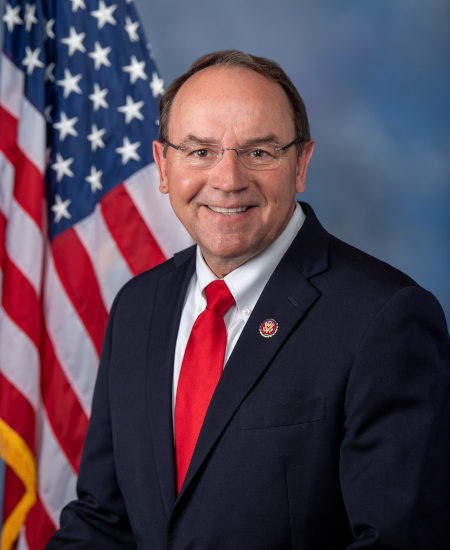
Rep. Thomas P. Tiffany
Sponsored bills
Miracle on Ice Congressional Gold Medal Act This act provides for the award of Congressional Gold Medals to the members of the 1980 U.S. Olympic men's ice hockey team in recognition of the team's achievement at the 1980 Winter Olympic Games.
Maddy summaryThe CARE Act of 2025 limits refugee resettlement by prohibiting the U.S. government from resettling refugees in any state or locality that has formally disapproved resettlement through its governor, state legislature, or local government officials. It amends the Immigration and Nationality Act to block resettlement funding in jurisdictions with such formal disapproval actions during any fiscal year. The bill directly affects refugees seeking resettlement and state/local governments that take formal opposition to refugee arrivals. Key provisions require explicit disapproval by elected officials at the state or local level to restrict resettlement, without exceptions for federal oversight. This policy change creates a new administrative barrier to refugee resettlement based on local political decisions.
Maddy summaryThis House resolution (HRES 907) honors the six victims of the November 21, 2021, Waukesha, Wisconsin, Christmas parade attack - Wilhelm Hospel, Virginia Sorenson, LeAnna Owen, Tamara Durand, Jane Kulich, and Jackson Sparks - and extends condolences to their families. It recognizes the community’s healing efforts, including existing memorials like the 2023 parade memorial and 2025 park sculpture, while applauding first responders and the "Waukesha Strong" resilience. The resolution has no policy or funding provisions - it is purely ceremonial, acknowledging past tragedy and community response without creating new government action.
Maddy summaryThis bill directs the U.S. Secretary of State to develop a strategy advocating for Taiwan's membership or observer status in Interpol and to formally request it on Taiwan's behalf. It requires the U.S. to work with Interpol member states to support Taiwan's participation, addressing Taiwan's current lack of access to Interpol's global communications system (I-24/7) for crime-fighting coordination. The bill mandates a 90-day report to Congress detailing this strategy and the U.S. efforts to secure Taiwan's inclusion in Interpol and other international organizations.
Maddy summaryThis bill requires commercial motor vehicle drivers to demonstrate English proficiency to pass knowledge tests or receive certification. Starting two years after enactment, drivers must understand English traffic signs, communicate with safety officers (like border patrol), and exchange directions in English while operating vehicles. It bans administering these tests in any language other than English and mandates the Transportation Secretary to update related regulations within two years. The law directly affects commercial drivers seeking certification or renewing licenses under federal rules.
Maddy summaryThis bill renames a U.S. Postal Service facility at 202 South Chestnut Avenue in Marshfield, Wisconsin, as the "Army Corporal Gordon 'Gordy' Richard Schmoll Post Office Building." It directly affects the postal facility and all official U.S. government documents referencing it. The key provision updates all federal references - such as laws, maps, and records - to use the new name. This is a commemorative designation honoring Army Corporal Gordon Schmoll, with no policy changes beyond the building name.
Maddy summaryThis bill amends the Immigration and Nationality Act to add new grounds for deporting non-citizens. It makes any non-citizen deportable if they have been convicted of a felony or two misdemeanors (under either state or federal law) after entering the United States. The key provision expands deportation eligibility beyond previous standards by explicitly including state misdemeanor convictions alongside federal offenses. This change directly affects non-citizens with specific criminal records, potentially increasing deportation risks for those with certain convictions. The policy alters the legal standard for removal but does not change sentencing or enforcement procedures.
Maddy summaryThis resolution (HRES 869) commemorates the 50th anniversary of the November 10, 1975, sinking of the Great Lakes freighter S.S. Edmund Fitzgerald, which resulted in the loss of all 29 crew members. It honors the memory of the 29 crew members who died in the tragedy and recognizes the enduring contributions of Great Lakes shipping to the U.S. economy and cultural heritage. The resolution also acknowledges efforts by historians, museums, and communities to preserve the ship's legacy and promote maritime education. As a commemorative resolution, it has no binding policy impact and serves solely to mark this historical event.
Maddy summaryHR 5934, the Major Thomas D. Howie Congressional Gold Medal Act, authorizes the posthumous award of a Congressional Gold Medal to Major Thomas D. Howie for his bravery and service during the Battle of Normandy in World War II. The medal, to be struck by the U.S. Mint, will be presented to his nephew, Tom Howie, or his next of kin, and then displayed at The Citadel Museum. This bill is purely commemorative and does not create new legal requirements or funding obligations. It honors Major Howie’s leadership in capturing St. Lo, France - a pivotal moment in liberating Western Europe from Nazi occupation - based on his documented sacrifice during the 1944 campaign.