Maddy summaryThis bill requires the Federal Housing Finance Agency (FHFA) to revert mortgage guarantee fees for single-family homes to the rates in effect before May 1, 2023, effectively undoing a 2023 fee increase. It prohibits fees based on a borrower’s debt-to-income ratio and restricts future fee adjustments without following standard federal rulemaking procedures. The bill directly affects mortgage borrowers (particularly middle-class homeowners) and lenders who pay these fees, as it changes how mortgage finance agencies charge for loan guarantees. A GAO study will also examine the FHFA’s previous fee changes and their economic impact, with a report due within 14 months.
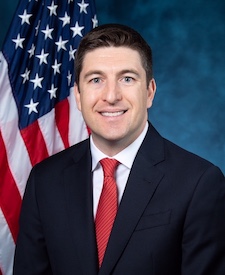
Rep. Bryan Steil
Sponsored bills
Maddy summaryHR 4457, the Protect American Voters Act, requires the Election Assistance Commission to create voluntary guidelines for state election officials on using "nonvoting election technology" (like electronic pollbooks, online voter registration, and result reporting systems) by December 2026. These guidelines must address security, accuracy, and usability, developed with input from a Standards Board and technical experts. States can use existing federal election security grant funds to adopt or upgrade compliant technology until 2024. The bill directly affects state election officials and focuses on setting non-binding standards for election support systems that do not handle ballot casting or counting.
Maddy summaryHR 3425 creates federal grants to community colleges and college consortia with agriculture programs, helping them expand workforce training, education, and research in farming and related fields. The bill prioritizes colleges partnering with local farms for hands-on student training and allows grant funds to cover equipment, faculty development, and apprenticeships. It authorizes $20 million annually from 2024-2029 for these programs and requires a 3-year evaluation report to Congress. The law directly affects community colleges offering agriculture-focused education, aiming to strengthen their capacity to serve students and the agricultural industry.
Maddy summaryHJRES 44 is a congressional resolution seeking to block a 2021 rule by the Bureau of Alcohol, Tobacco, Firearms, and Explosives (ATF). The rule classified firearms with stabilizing braces as "short-barreled rifles," which would have required additional licensing and regulation. This resolution uses a specific legal process (under Title 5, U.S. Code) to formally disapprove the ATF rule, meaning the rule would no longer be in effect. It directly affects firearm owners, manufacturers, and dealers who would have been subject to the rule’s requirements.
Maddy summaryHR 277 would require Congress to approve major federal regulations before they take effect. Major rules are defined as those with significant economic impact ($100 million+ annually), major cost increases for consumers or industries, or significant adverse effects on competition, employment, or innovation. Agencies must submit detailed information about these rules to Congress, including cost-benefit analyses, before they can take effect. Congress would have 70 session days to approve the rule with a joint resolution; if they don't act within that timeframe, the rule would not take effect. This would increase congressional oversight of federal regulations and require more detailed information about proposed rules before they become law.
Maddy summaryHR 4212, the Middle Class Mortgage Insurance Premium Act of 2023, increases the income limit for deducting mortgage insurance premiums on federal income taxes. It raises the cap from $100,000 (or $50,000 for married filing separately) to $200,000 (or $100,000 for married filing separately), making this deduction permanent. This change directly benefits middle-income homeowners who itemize deductions and pay mortgage insurance premiums, allowing them to deduct more of these costs. The bill applies to taxable years beginning after December 31, 2023.
This resolution expresses support for keeping AM radios in cars. (Several car manufacturers announced plans to remove AM radio options from some or all of their models.)
Maddy summaryHR 3910, titled "Dillon’s Law," amends federal public health grants to prioritize states that permit trained individuals to carry and administer epinephrine during severe allergic reactions (anaphylaxis). States receiving these grants must certify they have civil liability protection laws shielding trained individuals who provide emergency aid. The bill defines "trained individual" as someone with approved medical training in epinephrine use and clarifies it does not alter existing liability protections under other laws. This policy change directly affects state governments seeking federal public health funding by linking grant eligibility to specific state-level regulations on emergency epinephrine access.
Maddy summaryThis bill amends the definition of "accredited investor" under securities law to expand who qualifies. It adds four new categories: individuals with net worth over $1 million (excluding primary residence value), those with high income ($200,000 individually or $300,000 jointly), licensed financial professionals, and individuals with verified investment expertise. The bill requires the SEC to update Regulation D to reflect these changes, with the $1 million net worth threshold adjusted for inflation every five years. This directly affects investors seeking to participate in certain private securities offerings by lowering the accreditation barriers for qualified professionals and high-net-worth individuals.
Maddy summaryHR 3792 extends U.S. security funding for Israel through 2028 (Section 3) and expands energy cooperation to include advanced nuclear technologies and carbon capture (Section 5). It requires annual reports on regional security partnerships involving Israel (Section 6) and ensures countries in the Abraham Accords can access U.S. development programs (Section 8). The bill also mandates reports on diplomatic efforts against ICC investigations targeting the U.S. and Israel (Section 10) and encourages people-to-people programs to strengthen the Abraham Accords (Sections 7, 9). These provisions directly affect Israel’s diplomatic engagement, security partnerships, and economic cooperation in the Middle East.