Maddy summaryH.J.Res. 66 disapproves a specific rule issued by the Consumer Financial Protection Bureau (CFPB) regarding small business lending under the Equal Credit Opportunity Act (Regulation B). The resolution, if passed, would prevent this CFPB rule from taking effect by declaring it "have no force or effect." The rule in question (88 Fed. Reg. 35150) aimed to clarify how lenders must evaluate small business loan applications under existing equal credit laws. This disapproval directly affects the CFPB's regulatory authority and would block the rule's implementation for small business lenders and financial institutions.
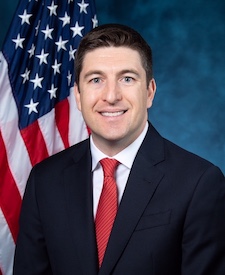
Rep. Bryan Steil
Sponsored bills
Maddy summaryHRES 793 is a resolution passed by the U.S. House of Representatives calling on Hamas to immediately release all 199 hostages taken during Hamas' October 7, 2023 attack on Israel. The resolution condemns Hamas for the attack, the taking of hostages, and threats against hostages, while stating that holding hostages violates international humanitarian law under the Geneva Conventions. It demands the immediate release of all hostages and expresses sympathy for victims and their families. As a symbolic resolution, it does not create legal obligations but formally expresses the House's position.
Maddy summaryHRES 884 is a non-binding House resolution honoring the six victims killed and 62 injured in the November 21, 2021, Waukesha, Wisconsin, Christmas parade attack. It specifically recognizes Wilhelm Hospel, Virginia Sorenson, LeAnna Owen, Tamara Durand, Jane Kulich, and Jackson Sparks, while acknowledging their community roles and the Waukesha community's healing efforts. The resolution offers condolences to families, applauds first responders, and recognizes the community's resilience through memorials like a 2023 parade memorial and blue-light tributes. As a commemorative resolution, it has no legislative effect but formally honors the victims and community response.
Maddy summaryHRES 848 is a symbolic House resolution (not a bill) urging Americans to connect with active-duty service members and veterans to support their transition from military service. It encourages individuals to reach out directly - through conversation and referrals - to help those dealing with mental health challenges, invisible wounds like traumatic brain injury, or isolation. The resolution cites rising suicide rates among active duty personnel (377 in 2020) and veterans (6,261 in 2019) as context for its call to action. It does not create new programs or funding but formally encourages personal engagement to promote access to existing support systems.
Maddy summaryThis bill would authorize the U.S. government to confiscate Russian sovereign assets held in U.S. jurisdiction and use those funds to support Ukraine's reconstruction and humanitarian needs following Russia's invasion. It prohibits releasing these blocked assets until Russia fully compensates Ukraine or agrees to an international compensation mechanism. The bill establishes a "Ukraine Support Fund" to hold confiscated assets and requires regular congressional reporting on how these funds are allocated for Ukraine's recovery. It also includes provisions for international coordination with allies on sanctions and asset management related to Russia's invasion of Ukraine.
Maddy summaryThe SHIP Act imposes sanctions on foreign entities that knowingly handle Iranian petroleum, targeting those involved in port operations, transportation, refining, or ship-to-ship transfers of Iranian oil. Starting 90 days after enactment, the President must block assets, deny visas, and impose penalties on individuals or companies engaging in these activities, including family members or owners of sanctioned entities. It requires annual reports tracking Iran's oil exports, revenues, and key players like shipping companies and ports. The sanctions terminate if the President certifies Iran has stopped supporting terrorism and dismantled weapons programs.
Maddy summaryHR 340, the "Hamas and Other Palestinian Terrorist Groups International Financing Prevention Act," imposes sanctions on foreign individuals, entities, and governments that provide significant financial, material, or transactional support to Hamas, the Palestinian Islamic Jihad, or their affiliates. The bill requires the President to identify those supporting these groups and mandates sanctions including restrictions on exports, defense sales, and financial transactions over $10 million, while exempting humanitarian assistance like medicine and food. It also requires regular reports on foreign countries that host or support these groups' financial networks and mandates actions to disrupt their fundraising and money laundering activities. The legislation terminates after 3 years or if Hamas and Palestinian Islamic Jihad are no longer designated as terrorist organizations under U.S. law.
Maddy summaryThe Train More Nurses Act (HR 6122) requires the Secretaries of Health and Human Services and Labor to jointly review all federal grant programs supporting the nursing workforce. Within one year of enactment, they must submit a report to Congress with recommendations to improve these programs. The report must specifically address three goals: increasing nurse faculty in underserved areas, creating pathways for experienced nurses (with 10+ years of clinical work) to become faculty, and expanding opportunities for licensed practical nurses to become registered nurses. This bill does not change existing programs but mandates a review and report to inform future policy decisions.
Maddy summaryHRES 798 is a House resolution condemning support for Hamas, Hezbollah, and other terrorist organizations at colleges and universities. It states such support may create a hostile environment for Jewish students, faculty, and staff, citing incidents like blaming Israel for the October 7 Hamas attack. The resolution urges the Secretary of Education to direct the Office for Civil Rights to investigate and take action where appropriate. This non-binding resolution expresses the House's position but does not create new law or policy changes.
Maddy summaryHR 6201, the Iranian Sanctions Enforcement Act of 2023, creates the Iran Sanctions Enforcement Fund to cover costs related to seizing and forfeiting property from Iran or its designated proxies (like Hezbollah or the Revolutionary Guard Corps) that violate U.S. sanctions. The fund, initially $150 million, pays for investigative costs, property management, informant rewards, and equipment for federal, state, and local agencies involved in enforcement. It also establishes an Export Enforcement Coordination Center within Homeland Security to improve interagency cooperation on enforcing export controls targeting Iran. The bill requires annual reports on fund usage and mandates repayment of the initial $150 million by 2034, unless waived for national security reasons.