Maddy summaryHR 5408, the Faster Labor Contracts Act, requires employers to begin negotiating a first contract with a newly certified union within 10 days of written request. If no agreement is reached within 90 days, the parties must seek mediation, and if unresolved after 30 days of mediation, the dispute moves to binding arbitration by a three-member panel. The arbitration decision, based on factors like employer finances, industry standards, and cost of living, becomes binding for two years. This bill directly affects newly certified unions and their employers during initial contract negotiations, aiming to reduce delays that currently average 465 days.
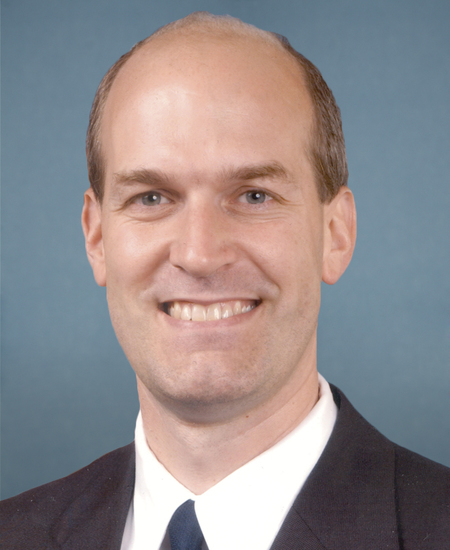
Rep. Rick Larsen
Sponsored bills
Maddy summaryThe BLANCHE Act of 2026 prohibits the United States government from entering into settlement agreements with the President that result in the President or a third party receiving any payment, including cash, goods, or legal fees. This rule applies to claims filed by the President or individuals who assumed office while a claim was pending, ensuring no such agreements are valid unless a federal court explicitly approves them. To gain court approval, the agreement must be proven to be between adverse parties, not collusive or fraudulent, and in the interest of justice, requiring a formal hearing with evidence presented by both sides. The law also mandates that the President file the proposed terms with the court if no separate civil action has already been initiated. These provisions aim to prevent potential conflicts of interest and ensure transparency in any legal settlements involving the highest office in the land.
Maddy summaryHR 2860 reauthorizes the Northwest Straits Marine Conservation Initiative through 2032, continuing a program focused on protecting Puget Sound's marine ecosystem in Washington State. It maintains the existing Northwest Straits Advisory Commission (composed of local county representatives, Tribal governments, and state officials) and requires it to coordinate habitat restoration, monitor water quality, and collaborate with Tribal nations on conservation efforts. The bill authorizes $10 million annually (2026-2031) for the Commission to carry out its duties, including developing science-based restoration plans and reporting progress on benchmarks like habitat protection and water quality. It emphasizes collaboration with local communities, Tribal governments, and federal agencies like NOAA, without granting regulatory authority.
Maddy summaryThe BUILD America 250 Act authorizes billions of dollars in funding for highways, bridges, transit, and rail programs through fiscal year 2031 to support infrastructure construction and safety improvements across the United States. Key provisions include establishing new competitive grant programs for rural and urban areas, increasing funding for bridge repairs, and creating a pilot program that allows certain states to receive transportation funds as a single lump sum. The bill also streamlines environmental reviews and project approvals to speed up construction while adding specific requirements for safety, accessibility, and disadvantaged business enterprise participation. Additionally, the legislation introduces new fees on electric and hybrid vehicle registrations to generate revenue for the Highway Trust Fund and sets stricter standards for roadside safety hardware.
Maddy summaryThis joint resolution seeks to officially reject a final rule issued by the Department of Education regarding federal student loan programs. If passed, the measure would prevent the new regulations from taking effect, leaving the previous rules in place. The bill directly impacts borrowers, lenders, and the Department of Education by nullifying the specific changes outlined in the "Reimagining and Improving Student Education" proposal. It is a procedural action that uses the Congressional Review Act to disapprove the agency's policy without altering the underlying law.
Maddy summaryThis bill allows rural hospitals serving military and tribal families to be designated as critical access hospitals even if they do not currently meet standard financial criteria. Starting in October 2026, facilities can qualify for this status if they serve at least three specific conditions, such as deriving a significant portion of their revenue from TRICARE-covered patients or being located on an Indian reservation. The legislation also permits these hospitals to establish psychiatric and rehabilitation units without being limited by the usual bed count restrictions. These changes aim to improve healthcare availability for service members, their dependents, and veterans living in rural areas by expanding the number of eligible facilities.
Maddy summaryThis bill authorizes the U.S. Mint to produce commemorative $5 gold and $1 silver coins marking the 25th anniversary of the September 11, 2001, terrorist attacks. The coins must feature designs honoring victims and first responders (including the inscription "Never Forget") and will be sold only during 2027-2028. All surcharges ($35 per gold coin, $10 per silver coin) collected from sales will fund the National September 11 Memorial and Museum at the World Trade Center, with no net cost to the federal government. The coins are legal tender but primarily intended for collectors, not circulation.
Maddy summaryThe No Taxpayer-Funded Settlement Slush Funds Act of 2026 prohibits the use of federal money to pay specific settlements involving high-ranking government officials and their close associates. It bars payments to the President, Vice President, their immediate families, cabinet members, senior executive staff, political appointees, and individuals connected to these roles, as well as any entity owned by the President or Vice President. Additionally, the bill restricts settlements related to claims about the January 6 Capitol attack, foreign election interference, or previously dismissed lawsuits, while requiring Treasury reports for large settlements and allowing the government to seek repayment if rules are broken.
Dental Care for Veterans Act This bill expands eligibility for veterans for dental care provided by the Department of Veterans Affairs (VA). Specifically, the bill makes all veterans who are enrolled in the VA health care system eligible for VA-provided dental services. Currently, only veterans who have a service-connected dental issue or meet other narrow criteria are eligible for certain dental services. The bill phases in eligibility over four years based upon existing eligibility, degree of service-connected disability or other disability, prisoner of war status, award of a Purple Heart, financial need, or VA health care eligibility.
Maddy summaryThe Protecting Our Democracy Act is a comprehensive legislative bill designed to prevent abuses of presidential power, restore checks and balances, and defend elections against foreign interference. Key provisions include prohibiting the President from granting self-pardons, requiring congressional oversight for pardons involving the President or their family, and banning the President from accepting payments from individuals who have received clemency. The bill also strengthens enforcement of the Hatch Act and ethics rules for political appointees, mandates greater transparency in presidential tax returns and campaign finances, and restricts the use of federal property for political conventions. Additionally, it expands reporting requirements for foreign contacts in federal campaigns and imposes stricter penalties for violations of election laws.