Maddy summaryThis bill creates an Advisory Committee under the Financial Stability Oversight Council to study how Chinese military actions toward Taiwan could impact U.S. financial markets. The committee, composed of market experts and participants, will annually assess vulnerabilities like banking risks, market volatility, and potential losses from such scenarios, then recommend resilience strategies. It requires an annual public report detailing these findings and actionable steps for regulators - such as improving circuit breakers or coordinating responses - to strengthen market preparedness. The bill does not enact new regulations but mandates ongoing analysis and reporting on this specific geopolitical risk.
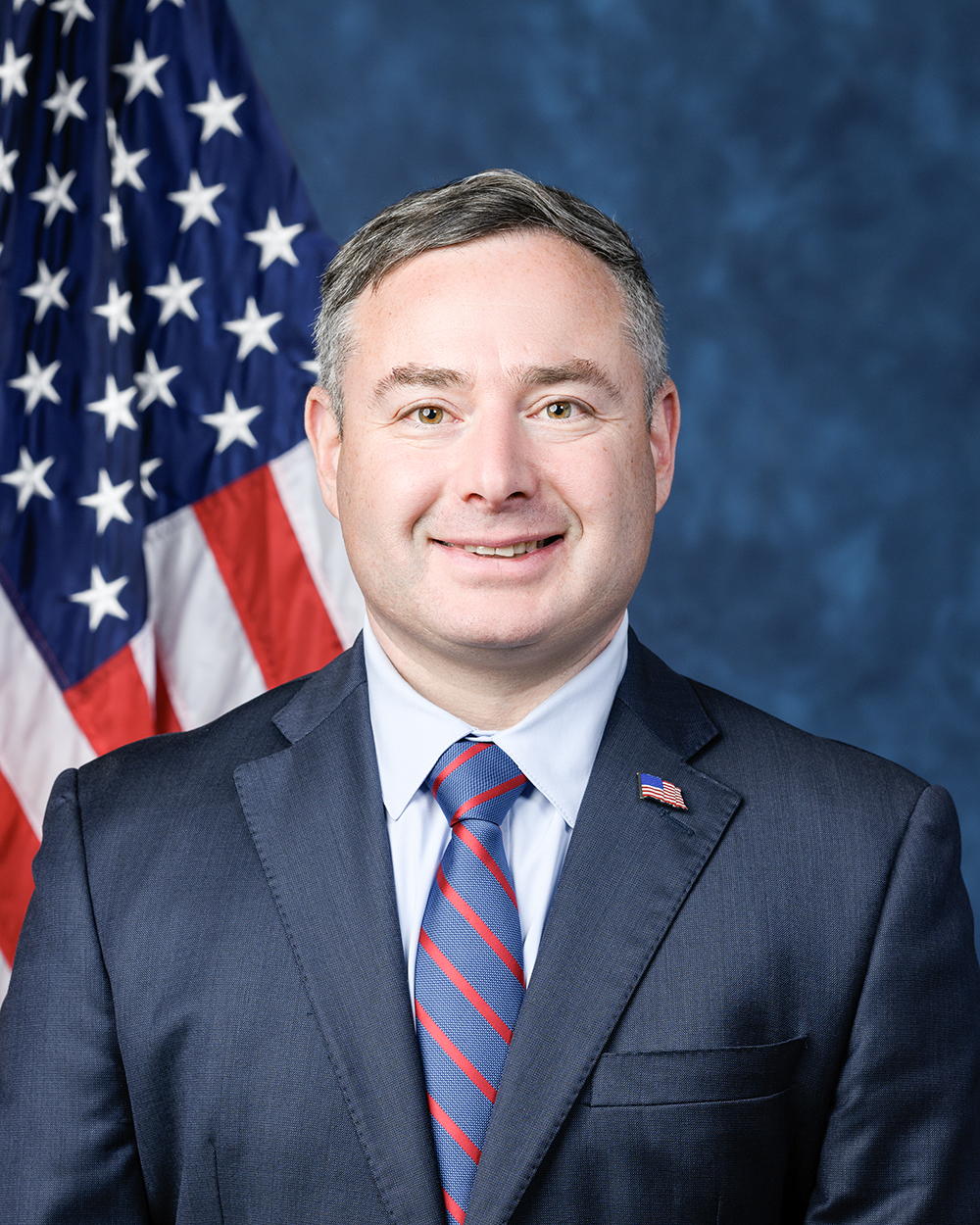
Rep. Eugene Simon Vindman
Sponsored bills
Maddy summaryHR 3180, the Taiwan Representative Office Act, would rename the Taipei Economic and Cultural Representative Office in Washington, D.C., to the "Taiwan Representative Office." This change would apply to all U.S. government references, documents, and official purposes, ensuring consistency in communications. The bill explicitly states it does not restore formal diplomatic relations with Taiwan or alter U.S. policy on Taiwan’s international status, aligning with the Taiwan Relations Act and Six Assurances. It directly affects the operational name of Taiwan’s unofficial U.S. representative office and requires the Secretary of State to negotiate this name change with Taiwan’s office. The policy aims to provide Taiwan with practical diplomatic treatment equivalent to other foreign entities, without changing the U.S. stance on Taiwan’s sovereignty.
Maddy summaryHR 3204, the BASIC ACT, increases tax incentives for semiconductor manufacturing. It raises the advanced manufacturing investment credit from 25% to 35% for qualifying semiconductor production facilities and extends the deadline for claiming the credit from 2026 to 2030. The bill directly affects companies building or expanding semiconductor manufacturing plants in the U.S. The changes apply to property placed in service after the bill's enactment date. This provides longer-term financial support for domestic semiconductor investment.
Community Services Block Grant Improvement Act of 2025 This bill reauthorizes the Community Services Block Grant (CSBG) program through FY2032 and makes certain changes to the program and associated eligibility requirements. The CSBG program supports various antipoverty activities, primarily through formula-based allotments to states, tribes, and territories, the majority of which must be made available in grants to eligible local entities. Specifically, the bill permanently sets the measure of eligibility for services, assistance, or resources provided directly to individuals or families under the program at 200% of the poverty line. (Under current law, the eligibility measure is temporarily set at 200% of the poverty line, an increase from the previous measure of 125% of the poverty line.) The bill also makes certain changes to the permitted uses of funding, including by allowing CSBG funds to be used to facilitate low-income individuals’ and communities’ access to high-speed broadband, digital literacy training, technical support, and other services. States may also use certain funds allocated for training and technical assistance to assist eligible entities in responding to statewide and regional conditions that create economic insecurity, including emergency conditions. The bill also expands requirements for the plans that states must submit to the Department of Health and Human Services in order to receive CSBG funds (e.g., transparency assurances), and sets deadlines by which states must make funds available to eligible entities. Finally, the bill repeals a provision that allowed states to use CSBG funds to offset revenue losses associated with state charity tax credits.
Maddy summaryThis bill creates a federal grant program to help cover medical costs for retired Federal working dogs (like police or military K9s). It authorizes $1 million annually (2026-2030) for eligible nonprofits with a two-year history of providing such care to dogs that have received official retirement letters and are now with their handlers. The grants allow these organizations to pay for veterinary expenses, directly supporting retired service dogs and their handlers. The program is administered through the Department of Homeland Security under existing grant authority.
Maddy summaryThe Understanding the True Cost of College Act of 2025 requires colleges and universities to provide students with a standardized financial aid offer that clearly explains college costs, grants, scholarships, and loans in plain language. The form must display direct and indirect costs of attendance, net price after grants/scholarships, and detailed loan terms including repayment options and interest rates. It mandates institutions to disclose information about private loan alternatives, Federal education benefits for veterans, and provide links to repayment calculators. All institutions receiving federal financial aid must use this standardized form starting after the Secretary of Education finalizes the required format.
Maddy summary# Summary of the SHIPS for America Act This comprehensive legislation focuses on strengthening the U.S. maritime industry, shipbuilding capacity, and maritime workforce to enhance national security and economic competitiveness. ## Key Areas of Focus 1. **Shipbuilding & Maritime Infrastructure** - Establishes a United States Center for Maritime Innovation to accelerate adoption of commercial technologies - Creates a National Shipbuilding Research Program - Requires an annual survey of anticipated commercial vessel construction - Includes provisions for streamlined environmental reviews of maritime infrastructure 2. **Workforce Development** - Establishes the United States Merchant Marine Career Retention Program to maintain mariner qualifications - Creates Centers of Excellence for Domestic Maritime Workforce Training and Education - Implements military-to-maritime transition programs - Establishes a Maritime Career and Technical Education Advisory Committee 3. **Education & Training** - Expands educational assistance for merchant mariners - Creates eligibility for Naval Postgraduate School for merchant mariners - Establishes maritime education programs from K-12 through higher education - Provides for international exchanges for mariners and naval architects 4. **National Security & Strategic Readiness** - Requires reports on National Defense Reserve Fleet utilization - Includes measures to de-risk the maritime sector from Chinese influence - Enhances shipbuilding capacity for national security needs - Establishes programs to ensure sufficient mariner workforce for national defense 5. **Funding Mechanisms** - Authorizes appropriations from the Maritime Security Trust Fund - Includes funding for workforce programs, education, and shipbuilding initiatives - Establishes specific funding levels for various programs over multiple fiscal years The legislation aims to create a sustainable domestic maritime industrial base that supports both commercial shipping and national defense requirements, with a particular emphasis on developing and retaining a skilled U.S. maritime workforce.
Maddy summaryThe SALUTE Act establishes a 5-year pilot program to provide supplemental insurance for military members and their TRICARE-eligible dependents who face uncovered cancer-related costs. It requires the Secretary of Defense to partner with up to two insurance companies to offer fixed indemnity plans that pay direct cash benefits for cancer screening, diagnosis, and treatment expenses not covered by standard military health benefits. These plans must operate separately from existing coverage, be available through TRICARE's online portal, and be funded entirely by enrollee premiums with no government subsidies. The program targets active-duty service members (Army, Navy, Marine Corps, Air Force, Space Force) and their TRICARE-enrolled dependents facing out-of-pocket cancer costs.
Maddy summaryHR 3165, the Student Loan Tax Elimination Act, repeals origination fees charged when borrowers receive new federal direct student loans. This directly affects new borrowers taking out federal direct loans under part D of Title IV of the Higher Education Act. The bill removes an upfront fee paid at loan disbursement, reducing the initial cost for these borrowers. The change applies to loans with first disbursement or consolidation applications received on or after July 1 following the bill's enactment.
Fentanyl Awareness for Children and Teens in Schools Act or the FACTS Act This bill establishes grant programs and requires strategies and studies to address the misuse of synthetic opioids (i.e., laboratory-derived substances such as fentanyl and its derivatives) among youth. The bill requires the Department of Health and Human Services (HHS) to award grants to partnerships between educational and health organizations for prevention, treatment, and recovery efforts related to the use of synthetic opioids by middle and high school-aged children. It also allows school-based health centers to use existing HHS grants to purchase naloxone to reverse the effects of opioid overdoses and to establish programs to address misuse of synthetic opioids. Also, the bill authorizes state educational agencies to use certain Department of Education (ED) grant funds to provide training to school personnel on addressing students’ misuse of synthetic opioids. State and local educational agencies must also address such misuse in their educational plans in order to qualify for certain ED grants. Finally, the bill (1) establishes an interagency taskforce to coordinate federal efforts to address synthetic opioid misuse among youth, (2) requires an evaluation of the State Unintentional Drug Overdose Reporting System’s effectiveness in identifying the specific synthetic opioids causing youth overdoses, (3) expands the data reported by the National Center for Education Statistics to include information about the use of synthetic opioids in schools, and (4) requires two recurring HHS surveys to include questions on youth exposure to synthetic opioids.