

Transformation to Competitive Integrated Employment Act This bill addresses employment standards for individuals with disabilities. The bill directs the Department of Labor to award grants to states and certain eligible entities to assist them in transforming their business and program models to support individuals with disabilities by providing competitive integrated employment, assisting disabled individuals in finding and retaining work in such employment, providing integrated employment and integrated community participation and wraparound services for such individuals, and ensuring that such services comply with federal regulations for individuals receiving home and community-based services. The bill also prohibits the issuance of new special certificates that allow payment of subminimum wages to disabled individuals and phases out existing certificates over a four-year period. The bill directs Labor's Office of Disability Employment to award grants to provide technical assistance and other strategic support to employers transitioning from special certificates to competitive integrated employment for disabled individuals. Labor must contract with a nonprofit entity to conduct an evaluation of the impact of these transitions.
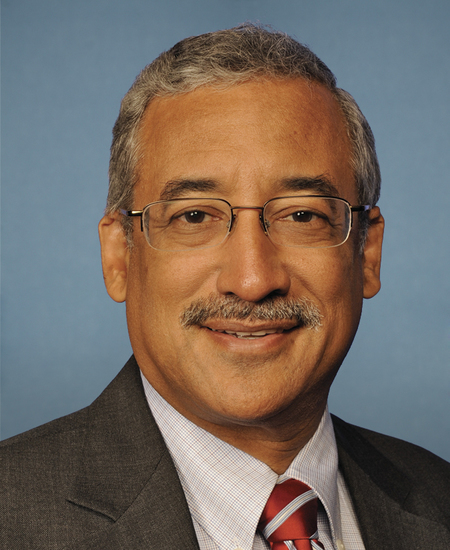
Rep. Robert C. "Bobby" Scott
Sponsored bills
Automatic Voter Registration Act This bill provides for automatic voter registration of individuals through state motor vehicle authorities. Specifically, the bill requires each state motor vehicle authority, upon receiving specified identifying information regarding an individual who requests services from the authority, to transmit the identifying information to the appropriate state election official. The state election official must then notify the individual that the individual shall be automatically registered to vote in federal elections unless the individual declines to be registered to vote, does not meet voter registration eligibility requirements, or is already registered to vote. The bill provides an individual with a 21-calendar day period to opt out of automatic voter registration. A state may only use identifying information regarding an individual's citizenship status for determining whether the individual is eligible to vote in federal elections.
Resident Physician Shortage Reduction Act of 2021 This bill increases the number of residency positions eligible for graduate medical education payments under Medicare for qualifying hospitals, including hospitals in rural areas and health professional shortage areas. Current law provides for an increase of up to 200 positions per fiscal year beginning in FY2023, with a total increase of 1,000 positions; each hospital may receive up to 25 additional positions. The bill provides for an additional increase of 2,000 positions per fiscal year from FY2023-FY2029; during this period, each hospital may receive up to 75 additional positions in total under the bill and current law. Additionally, one-third of the positions that are made available under the bill must be allocated to hospitals that are already operating above applicable resident limits. The bill also requires the Government Accountability Office to report on strategies to increase the diversity of the health professional workforce, including with respect to representation from rural, low-income, and minority communities.
Willie O'Ree Congressional Gold Medal Act This bill provides for the award of a Congressional Gold Medal to Willie O'Ree or, if unavailable, to a member of his family, in recognition of his contributions and commitment to hockey, inclusion, and recreational opportunity.
This bill requires the Joint Committee on the Library to enter into an agreement to obtain a statue of Shirley Chisholm, the first African American woman elected to Congress. The committee shall place the statue in a permanent public location in the U.S. Capitol.
Emmett Till and Mamie Till-Mobley Congressional Gold Medal Act of 2021 This bill provides for the posthumous presentation of a Congressional Gold Medal in commemoration of Emmett Till and Mamie Till-Mobley. After the award the medal shall be given to the National Museum of African American History and Culture.
Focused Reduction of Effluence and Stormwater runoff through Hydrofracking Environmental Regulation Act of 2021 or the FRESHER Act of 2021 This bill addresses stormwater runoff from mining, oil, or gas operations. Specifically, it eliminates a prohibition on the Environmental Protection Agency from requiring a permit under the National Pollutant Discharge Elimination System for discharges of certain collected, uncontaminated stormwater runoff from mining operations or oil and gas operations. In addition, the Department of the Interior must study stormwater runoff associated with oil or gas operations, including an analysis of (1) measurable contamination, (2) groundwater resources, and (3) the susceptibility of aquifers to contamination from stormwater runoff associated with the operations.
CLEANER Act of 2021 or the Closing Loopholes and Ending Arbitrary and Needless Evasion of Regulations Act of 2021 This bill eliminates the exemption of waste associated with the exploration, development, or production of crude oil, natural gas, or geothermal energy from regulations governing the disposal of hazardous waste. Within a year of enactment, the Environmental Protection Agency (EPA) must determine whether such waste meets the criteria for hazardous waste, promulgate regulations concerning the disposal of such waste if the EPA determines it is hazardous, and revise regulations applicable to solid waste management and disposal facilities (e.g., landfills) to address such waste that is nonhazardous.
This resolution expresses congressional disapproval of the rule submitted by the Equal Employment Opportunity Commission (EEOC) that revises the EEOC settlement process to provide employers with the factual and legal basis that the EEOC relied on to make a reasonable cause finding of a discriminatory practice.
This joint resolution eliminates the deadline for the ratification of the Equal Rights Amendment, which prohibits discrimination based on sex. The amendment was proposed to the states in House Joint Resolution 208 of the 92nd Congress, as agreed to in the Senate on March 22, 1972. The amendment shall be part of the Constitution whenever ratified by the legislatures of three-fourths of the states.