Maddy summaryThis bill removes a barrier preventing most low-income students from accessing SNAP benefits. It amends the Food and Nutrition Act to explicitly allow students enrolled at least half-time in recognized higher education programs to qualify for SNAP, reversing a prior exclusion. The key change eliminates the previous requirement that students meet specific exceptions (now deleted) and adds a new eligibility category under Section 3(m)(5). This directly affects low-income undergraduate and graduate students at colleges and training programs who were previously ineligible. The changes take effect January 2, 2026.
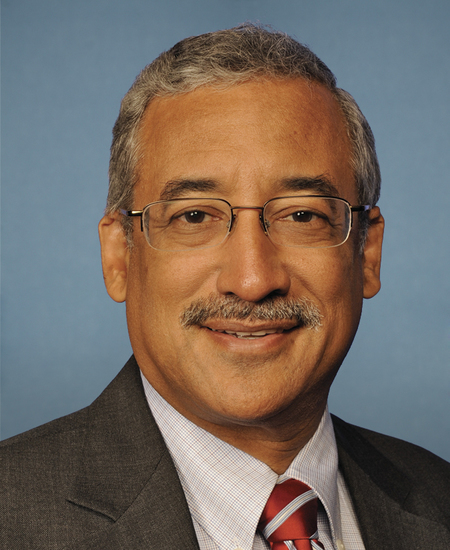
Rep. Robert C. "Bobby" Scott
Sponsored bills
Fix Our Flooded Basements Act of 2025 This bill expands the disaster assistance provided to individuals and households for repairs to and property in flood-damaged basements. It also expands eligibility and coverage for certain group flood insurance. Under current law, the Individual Assistance (IA) program of the Federal Emergency Management Agency (FEMA) limits home repair assistance for flood-damaged basements to damage affecting the safety, sanitation, or functionality of the home (e.g., structural damage, hazardous conditions). The bill allows home repair assistance for disaster-caused mold, mildew, and moisture damage in basements regardless of whether the damage affects safety, sanitation, or functionality. Additionally, flood-damaged basements are eligible for home repair assistance even when the basement is not required for occupying the dwelling. Also, currently, IA assistance for flood-damaged personal property in basements is limited to washers, dryers, and property essential for occupying the dwelling. The bill expands IA personal property assistance to more broadly cover property damaged by disaster-caused flooding in basements. The scope of such assistance must at least equal the coverage for such damage by a standard policy under the National Flood Insurance Program (e.g., covering air conditioning units and freezers in basements). Additionally, FEMA must expand the eligibility and coverage of the group flood insurance it provides to IA recipients, including increasing the maximum coverage and expanding coverage for basements. The bill also excludes from the maximum for IA housing assistance expenses for (1) hazard mitigation measures in flood-damaged basements, and (2) premiums for group flood insurance policies.
Maddy summaryThis bill transitions individuals with disabilities from segregated employment under special certificates (which allow subminimum wages) to competitive integrated employment with fair wages. It creates grant programs for states and employers to facilitate this transition, requiring employers to pay at least minimum wage (increasing over time) and providing necessary supports. The bill phases out special certificates entirely within 4 years, while ensuring individuals with disabilities receive ongoing support during the transition. It also establishes evaluation requirements to track progress and ensure compliance with the new standards.
Maddy summaryThis resolution (HRES 592) expresses the U.S. House of Representatives' support for Nelson Mandela International Day, designated by the United Nations on July 18. It honors Nelson Mandela's legacy as an anti-apartheid leader, global symbol of reconciliation, and advocate for peace, human rights, and democracy. The resolution urges all U.S. citizens to reflect on his values of tolerance and democracy but has no legal effect or direct impact on policies or individuals. As a ceremonial resolution, it does not create new laws or obligations.
Maddy summaryThis bill establishes federal worker heat protection standards to prevent heat-related illness and injury. It requires employers to provide a workplace free from heat stress hazards, including access to cool water, scheduled rest breaks, shaded cooling areas, and training on heat illness symptoms. The Secretary of Labor must create these standards within one year, incorporating evidence-based practices like engineering controls (e.g., ventilation), administrative measures (e.g., adjusted schedules), and employer-paid personal protective equipment. The law directly affects all employers in high-heat work environments - such as construction, agriculture, and manufacturing - and strengthens whistleblower protections for workers reporting safety violations.
Maddy summaryThe Child Care for Working Families Act creates a federal program to provide affordable, high-quality child care for working families with children under age 6. It would provide direct child care assistance through certificates or grants to parents, with no copayment required for families at or below 85% of state median income. The program requires states to implement quality standards for child care providers, including a tiered quality system and minimum wage requirements for staff (at least a living wage equivalent to elementary educators). The bill appropriates $20 billion for the program over five years, with additional funding for quality improvement initiatives and universal preschool services.
Maddy summaryHRES 575 is a symbolic resolution designating July 10th as "Journeyman Lineworkers Recognition Day." It honors lineworkers who face significant risks daily - working at heights near live wires and responding to disasters like hurricanes and wildfires. The resolution specifically references Henry Miller, an early leader of the International Brotherhood of Electrical Workers, who died on July 10, 1896, while troubleshooting an outage. It encourages the public to recognize these workers' contributions but does not create new laws or allocate funding.
Maddy summaryThe No Secret Police Act of 2025 requires U.S. Immigration and Customs Enforcement (ICE) and other Department of Homeland Security officers working on border security or immigration enforcement to visibly display their official badges or uniforms and provide identification during detentions or arrests. It prohibits officers from wearing face coverings that conceal their face during these interactions. The bill also mandates that the Department report to Congress about tactical gear policies and research technology to improve badge visibility in different conditions like weather or lighting. These changes aim to increase transparency in immigration enforcement encounters.
Maddy summaryThis resolution (HRES 549) is a non-binding House measure expressing support for designating June 26 as "LGBTQI+ Equality Day." It commemorates three landmark Supreme Court rulings on June 26 (2003, 2013, and 2015) that ended criminalization of same-sex intimacy, struck down marriage discrimination, and established marriage equality. The resolution encourages public celebration of this day to honor these milestones and educate about ongoing discrimination faced by LGBTQI+ communities. It also acknowledges the need for future legislation to address discrimination in areas like employment, housing, and public accommodations. As a symbolic resolution, it does not create new legal requirements but formally recognizes these historical court decisions.
Maddy summaryHR 4212, the SHADE Act, establishes a federal grant program to plant trees in historically underserved urban areas. It directly affects cities and communities in "redlined areas" (low-income neighborhoods historically denied loans) or "intra-urban heat islands" (city zones with high temperatures and low tree cover). The bill authorizes $50 million annually (2026-2036) for grants to states, local governments, tribes, or qualifying nonprofits to fund tree planting, maintenance for 5 years, and community engagement plans. Grants prioritize projects that avoid displacing residents and require planting non-invasive tree species suited to the local environment.