Maddy summaryHR 1310 (SHARE Act) requires the FBI to share criminal history records with state licensing agencies when needed for professional licensing checks across state lines through existing interstate compacts. It directly affects state licensing boards (like those for nurses or contractors) and individuals applying for licenses in multiple states. The bill mandates that states use this data *only* for license applications and prohibits sharing it with other agencies or the public, while allowing a simple "pass/fail" notification to the compact’s governing body.
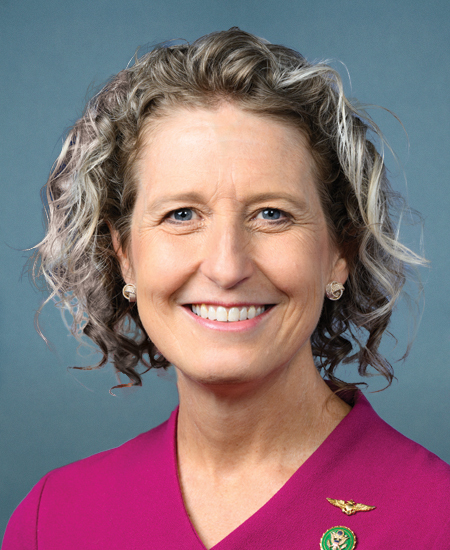
Rep. Jennifer A. Kiggans
Sponsored bills
Maddy summaryThis bill establishes pay equity for federal firefighters by adjusting how their retirement benefits are calculated and setting a standard workweek. It requires retirement annuities to include overtime hours worked as part of a firefighter's regular schedule (e.g., overtime during standard shifts), rather than excluding them. The bill also mandates a maximum 60-hour regular workweek for federal firefighters, set by the Office of Personnel Management within one year of enactment. These changes directly affect federal firefighters, aiming to improve pay comparability with municipal firefighters and other federal employees while supporting recruitment and retention.
Maddy summaryHR 1200, the National Right-to-Work Act, prohibits requiring workers to join a union or pay dues as a condition of employment in both private-sector workplaces (covered by the National Labor Relations Act) and railroad industries (covered by the Railway Labor Act). The bill amends key sections of these laws to eliminate provisions that allowed union security agreements, meaning workers in unionized settings would no longer be forced to pay dues to retain their jobs. This directly affects employees in unionized workplaces across the U.S., particularly those in industries with existing union contracts that included mandatory dues. The law changes the legal framework to ensure union membership and dues payment remain voluntary for all workers.
Stop CCP Fentanyl Act This bill imposes sanctions on various Chinese government officials and entities. It also establishes a cause of action against China’s government or Chinese government officials for certain harms stemming a fentanyl-related overdose. Specifically, the bill requires the President to impose visa- and property-blocking sanctions on (1) the president of China, (2) the chairman of the Chinese Communist Party (CCP), (3) China’s State Council, and (4) China’s Politburo Standing Committee. The President may waive the sanctions upon certifying that (1) China’s government and the CCP have taken all reasonable measures to prevent the flow of fentanyl produced in China into the United States, and (2) the intelligence community has determined that amount of fentanyl from China and the deaths resulting from overdoses of such fentanyl has dropped 98%. This bill also authorizes a U.S. national or lawful permanent resident to sue certain Chinese government officials or the Chinese government for the death of an immediate family member caused by an overdose by fentanyl (or fentanyl analogue) manufactured using fentanyl precursors from China. Property blocked pursuant to sanctions under this bill may be used to satisfy a judgment from such a lawsuit.
Maddy summaryThe RISEE Act of 2023 creates a National Oceans and Coastal Security Fund to support coastal communities and ecosystems. It allocates 37.5% of offshore wind revenue directly to eligible coastal states using a formula based on tidal shoreline length, coastal population density, and distance from offshore wind projects. States must use these funds for coastal protection, habitat restoration, infrastructure, or fisheries research, with strict annual reporting requirements to the Department of the Interior. The bill prohibits using these funds for litigation or creating marine monuments, ensuring resources directly support coastal community needs.
This resolution expresses the sense of the House of Representatives that Medicare should be strengthened and should not be used to finance Democrats' policies.
Maddy summaryThe HELP Copays Act (HR 830) changes how health insurance plans calculate patient cost-sharing. It requires that payments made by third parties (like pharmacies, charities, or discount programs) toward medical costs count toward a patient's deductible, copay, or out-of-pocket limit. This directly affects insured individuals who receive financial assistance, discounts, or product vouchers for healthcare expenses. The law ensures these external payments reduce the patient's actual out-of-pocket costs more quickly, aligning with existing Affordable Care Act and Public Health Service Act requirements.
Maddy summaryThis bill expands health care coverage under TRICARE for military dependents. It eliminates a separate premium for young adults aged 21-26 enrolled in the TRICARE Young Adult Program, meaning they will no longer pay an extra fee for coverage. The bill also removes an eligibility restriction that previously limited coverage for some dependents in this age group. These changes directly affect military service members' adult children and spouses who rely on TRICARE Young Adult coverage. The policy update simplifies enrollment and reduces out-of-pocket costs for these beneficiaries.
Maddy summaryThis bill authorizes a single Congressional Gold Medal to honor all U.S. Army Dustoff crews who served during the Vietnam War (1962-1973). It recognizes their critical role in evacuating nearly 900,000 wounded personnel, including U.S., South Vietnamese, and allied forces, under extreme combat conditions. The medal, designed with input from the Secretary of Defense, will be presented to the U.S. Army Medical Department Museum for permanent display. Duplicate bronze medals may be sold to cover costs, but the primary action is the commemorative recognition of these crews' service.
Maddy summaryHR 987 authorizes the U.S. Mint to produce commemorative coins honoring Golda Meir, Israel's first female Prime Minister, and the 75th anniversary of U.S.-Israel relations. It specifies three coin types: $5 gold coins (max 50,000), $1 silver coins (max 400,000), and half-dollar clad coins (max 750,000), with detailed weight and composition requirements. All coins will include Golda Meir's image, her name, and commemorative inscriptions, and will be sold during 2026. A surcharge ($35 for $5 coins, $10 for $1 coins, $5 for half-dollars) will be paid to the American Friends of Kiryat Sanz Laniado Hospital Inc. to support its hospital operations.