Maddy summaryHRES 481 is a symbolic resolution condemning recent antisemitic attacks in the U.S., specifically referencing the June 1, 2025, Boulder, Colorado, assault on a Jewish community gathering and other incidents like the May 2025 Washington, D.C., embassy shooting. It formally recognizes a pattern of violence targeting Jewish individuals and institutions, including attacks during religious events. The resolution calls on law enforcement to thoroughly investigate and prosecute such incidents and urges elected officials to publicly oppose antisemitism and politically motivated violence. As a non-binding resolution, it does not create new laws or allocate funding but serves to affirm congressional stance against antisemitism.
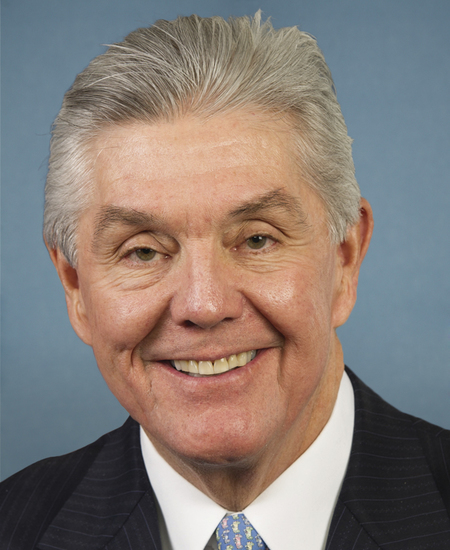
Rep. Roger Williams
Sponsored bills
Maddy summaryThis concurrent resolution (HCONRES 36) commemorates the 100th birthday of former First Lady Barbara Pierce Bush by honoring her life, achievements, and public service, particularly her advocacy for literacy through founding the Barbara Bush Foundation for Family Literacy and supporting the National Literacy Act. It does not create new laws or policies but serves as a symbolic recognition of her contributions to public service during her time as First Lady and Second Lady of the United States. The resolution is non-binding and focuses solely on acknowledging her legacy.
Maddy summaryHRES 478 is a symbolic House resolution designating the month of July as "American Patriotism Month." It does not create new laws or policies but encourages voluntary observance through ceremonies, educational activities, and community events celebrating American history and values. The resolution highlights historical events like Independence Day, Pearl Harbor, and 9/11 as examples of patriotism, while urging schools, organizations, and communities to participate in commemorations. It has no binding effect on citizens or government operations and merely requests the President issue an annual proclamation. This is purely a ceremonial recognition with no direct impact on individuals or policy implementation.
Maddy summaryHR 1642, the Connecting Small Businesses with Career and Technical Education Graduates Act of 2025, requires Small Business Development Centers (SBDCs) and Women’s Business Centers (WBCs) to help small businesses connect with career and technical education (CTE) programs. Specifically, SBDCs must provide small businesses with information on hiring CTE graduates and relevant programs, while WBCs must do the same for women-owned businesses. The bill also directs these centers to connect businesses with CTE programs to help students and graduates find jobs. This directly affects small businesses (and women-owned businesses for WBCs), CTE programs, and their graduates by creating formal pathways for hiring. The policy change mandates new duties for existing centers under the Small Business Act, without altering funding or creating new programs.
Maddy summaryHRES 447 is a non-binding House resolution condemning antisemitism and honoring Yaron Lischinsky and Sarah Milgrim, two Israeli Embassy employees killed during a peace-focused panel discussion in 2023. The resolution specifically condemns all forms of antisemitism - including violence, vandalism, and online harassment - and remembers the victims, who were killed by a far-left activist affiliated with the Party for Socialism and Liberation. It calls for enforcing existing hate crime laws and protecting religious freedom, without creating new legislation. This resolution symbolically supports Jewish communities and victims of antisemitic violence but does not alter legal requirements.
Maddy summaryHCONRES 30 is a symbolic resolution expressing congressional support for local law enforcement officers. It does not create new laws or policies but formally recognizes their work through four non-binding actions: thanking officers and families for service, honoring those who died in the line of duty, and encouraging community-law enforcement collaboration. The resolution directly addresses Congress's acknowledgment of law enforcement efforts, not any specific group affected by a policy change. It has no legal effect or funding implications, serving solely as a statement of appreciation. This is a procedural resolution, not a legislative bill with concrete policy changes.
Maddy summaryHR 1286, the Simplifying Forms for Veterans Claims Act, requires the Department of Veterans Affairs (VA) to simplify forms sent to veterans filing claims. Within 30 days of enactment, the VA must hire an independent research center (FFRDC) to assess these forms, working with veterans' groups, legal experts, and the VA itself. The VA must then report the assessment to Congress within 90 days and implement approved changes - like clearer language or better organization - within two years. This directly affects veterans navigating VA claims by aiming to reduce confusion in the application process.
Maddy summaryHR 3463 (COUNTER Act) expands the U.S. military's authority to counter drone threats by allowing the Department of Defense and Coast Guard to neutralize unmanned aircraft systems without being restricted by certain federal laws. It exempts related technology, procedures, and protocols from public disclosure requirements under federal and state laws, and permits military commanders to delegate these actions. The bill applies to both domestic and overseas operations, clarifying that other federal laws do not apply to U.S. military or Coast Guard activities mitigating drone threats abroad. Key changes include broadening legal authority beyond previous restrictions and extending reporting deadlines for related activities.
Maddy summaryHR 3437, the Insurance Data Protection Act, prevents duplicate data collection from insurance companies by requiring federal financial regulators to coordinate with state insurance regulators before gathering data already available through other channels. It reinforces confidentiality by ensuring that sharing nonpublic data with federal regulators does not waive privacy protections under federal or state law, and maintains existing confidentiality agreements. The bill also establishes that data shared with regulators can only be provided to state regulators through new agreements that comply with privacy laws. This directly affects insurance companies (as "covered entities"), federal financial regulators, and state insurance regulators. The key change is creating a formal process to avoid redundant data requests while strengthening data privacy for the insurance industry.
Maddy summaryThis bill changes the governance structure of the Consumer Financial Protection Bureau (CFPB) from a single Director to a 5-member commission. The commission would require at least 2 members with private sector financial experience and at least 1 member with State bank supervision experience, all appointed by the President with Senate confirmation. The bill updates references to "Director" throughout various laws to "Commission" or "Chair" to reflect this new structure. These changes aim to create a more balanced leadership model for the Bureau while maintaining its regulatory authority over consumer financial products and services.