

Health Force, Resilience Force, and Jobs to Fight COVID-19 Act of 2021 This bill establishes and expands programs to bring on individuals to perform public health functions, such as contact tracing and vaccine administration, to respond to the COVID-19 (i.e., coronavirus disease 2019) emergency and meet future public health needs. The bill provides funding for the Centers for Disease Control and Prevention (CDC) to establish a Health Force. The funds are designated as an emergency requirement, which exempts the funds from discretionary spending limits and other budget enforcement rules. To establish the force, the CDC must award grants within 30 days to state, tribal, territorial, and local governments and community health centers to recruit and train individuals for roles in public health and health care. The Federal Emergency Management Agency (FEMA) must hire and train additional individuals for its Cadre of On-Call Response/Recovery Employees. These employees may be detailed to certain federal agencies or to state, local, or tribal governments to support response efforts related to COVID-19 or other disasters or emergencies.
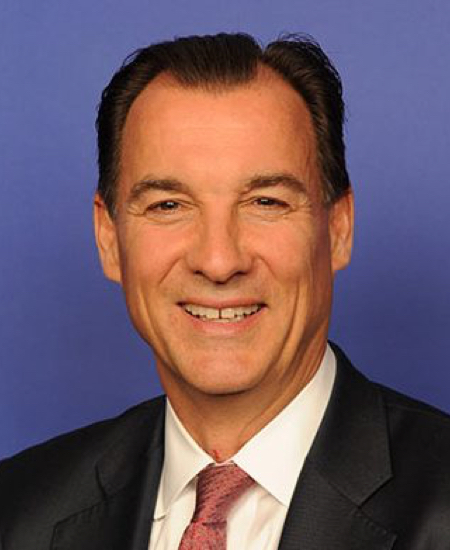
Rep. Thomas R. Suozzi
Sponsored bills
This resolution identifies women's cardiovascular health as an important health care issue and supports gender-specific cardiovascular health research, prevention, and treatment.
Child and Animal Abuse Detection and Reporting Act This bill requires the Children’s Bureau of the Administration for Children and Families to disseminate information through the National Clearinghouse on Child Abuse and Neglect Information about the incidence of cases of child abuse that involve abuse to animals.
This resolution expresses support for a National Day of Mourning for the lives lost as a result of COVID-19 (i.e., coronavirus disease 2019).
USPS Fairness Act This bill repeals the requirement that the U.S. Postal Service annually prepay future retirement health benefits.
CHampioning Apprenticeships for New Careers and Employees in TECHnology Act or the CHANCE in TECH Act This bill requires the Department of Labor to enter into contracts with industry intermediaries to promote the development of and access to apprenticeships in the technology sector. The Department of Education (ED) may issue CHANCE in TECH Awards for 21st Century Schools to secondary schools or junior or community colleges that demonstrate high achievement in providing students necessary skills to compete in the 21st century workforce. In making an award, ED must consider the availability of science, technology, engineering, and mathematics (STEM), career and technical education, and computer technology courses at the schools.
Anti-Racism in Public Health Act of 2021 This bill establishes within the Centers for Disease Control and Prevention (CDC) a National Center on Antiracism and Health and a law enforcement violence prevention program. Among other activities, the new center must declare racism a public health crisis, collect and analyze data, and administer research and grant programs to address racism and its impact on health and well-being. Additionally, the bill specifically directs the CDC's National Center for Injury Prevention and Control, in coordination with the Department of Justice and other relevant stakeholders, to carry out the law enforcement violence prevention program by conducting research and supporting other activities pertaining to law enforcement violence and public health.
Emergency Water is a Human Right Act This bill creates a grant program, administered by the Department of Health and Human Services, to provide funds to states and Indian tribes to assist low-income households that pay a high proportion of household income for drinking water and wastewater services. Further, any entity receiving financial assistance under this grant program must ensure that no home energy service or public water system service is or remains disconnected or interrupted during the COVID-19 (i.e., coronavirus disease 2019) public health emergency.
COVID HCBS Relief Act of 2021 This bill temporarily increases the applicable Federal Medical Assistance Percentage (i.e., federal matching rate) under Medicaid for certain approved home- and community-based services that are provided between October 1, 2020, and September 30, 2022. As a condition for receiving the increased rate, a state must agree to undertake activities to improve the delivery of such services during and after the public health emergency relating to COVID-19 (i.e., coronavirus disease 2019), such as by providing additional benefits to home health workers and by helping individuals who were relocated to nursing facilities during the emergency move back to their homes.
Energy Resilient Communities Act This bill requires the Department of Energy to establish a program that awards grants to make critical energy infrastructure more resilient to climate change hazards, such as grants for developing clean energy microgrids that support critical community infrastructure or customers of electric utilities with special energy needs due to medical conditions.