

In committee Sep 24, 2026
1 co-sponsor
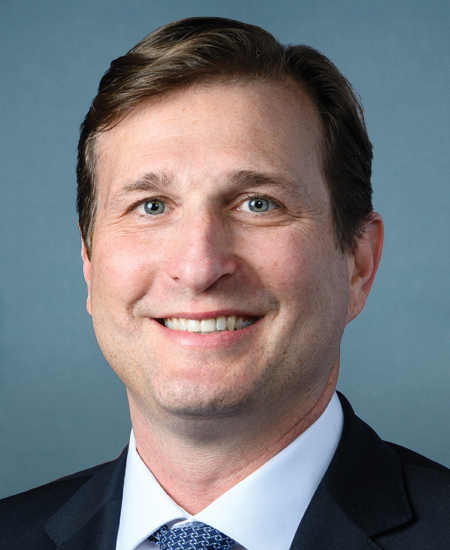
Rep. Daniel S. Goldman
Total votes
1,879
all sessions
Attendance
92%
154 missed
Lower than 94% of chamber peers
With party
97%
of cast votes
Near the chamber average
Bipartisan score
2%
crosses aisle rarely
Near the chamber average
Sponsored
1,466
bills & resolutions
Higher than 97% of chamber peers
Committees
5
assignments
1,466 bills and resolutions
Sponsored bills
Total
1,466
Primary
66
Co-sponsor
1,400
This page
1,466
matching current filters
In committee Sep 24, 2026
1 co-sponsor
In committee Sep 24, 2026
1 co-sponsor
Justice for Ukrainian Children Act
Maddy summaryThe Justice for Ukrainian Children Act directs the U.S. government to support efforts to locate and rescue Ukrainian children forcibly transferred by Russia, while imposing mandatory sanctions on foreign individuals who facilitate these transfers. The bill authorizes at least $15 million annually from fiscal years 2027 through 2032 to fund evidence collection, maintain a centralized database, and assist in the rehabilitation of affected children. It requires the President to block the assets and revoke the visas of any foreign person found to have knowingly participated in the abduction or indoctrination of Ukrainian minors, with limited exceptions for humanitarian aid and national security needs. Additionally, the legislation allocates $10 million annually to expand U.S. media broadcasting services in Ukraine and neighboring regions to counter disinformation.
Budget & TaxesSupports Budget & TaxesThe bill authorizes at least $15 million annually from fiscal years 2027 through 2032, directly impacting government spending and appropriations for a specific program.
Criminal JusticeSupports Criminal JusticeThe bill supports international efforts to address crimes against children, which aligns with broader criminal justice principles of accountability and victim support, although it is not domestic criminal justice reform.
In committee Sep 16, 2026
1 co-sponsor
Debt-Free College Act of 2026
Maddy summaryThe Debt-Free College Act of 2026 establishes a state-federal partnership that provides federal grants to states to cover the unmet financial need of eligible students attending in-state public colleges, effectively making tuition debt-free for those who qualify. To participate, states must commit to capping tuition increases at inflation levels, maintaining their current level of funding for higher education, and implementing student success programs that support low-income and underserved populations. The bill also creates a separate five-year grant program for specific minority-serving institutions and tribal colleges to help them cover student costs, while simultaneously expanding federal financial aid eligibility to include "Dreamer students" who entered the United States as minors under certain conditions.
In committee Sep 16, 2026
1 co-sponsor
9–8–8 Implementation Act of 2026
Maddy summaryThe 9-8-8 Implementation Act of 2026 expands federal funding and mandates insurance coverage for behavioral health crisis services, directly affecting individuals experiencing mental health or substance use emergencies as well as the providers who serve them. The bill authorizes grants to upgrade local lifeline call centers, build new crisis stabilization facilities, and train a larger workforce of behavioral health professionals. It requires Medicare, Medicaid, private group health plans, TRICARE, and other federal insurance programs to cover crisis response services with financial terms no more restrictive than standard medical care. Additionally, the legislation establishes a federal panel to develop training protocols for 9-1-1 dispatchers to better connect callers to appropriate crisis care rather than law enforcement responses.
In committee Sep 16, 2026
1 co-sponsor
ASAP Act
Maddy summaryThis bill would require Medicare to cover early detection screening tests for Alzheimer's disease and related dementias starting January 1, 2028. It defines eligible tests as FDA-cleared genomic blood tests, blood product analyses, or equivalent medical imaging methods (like protein expression or whole genome sequencing) that detect pre-symptomatic or early-stage conditions. Medicare beneficiaries would receive this coverage without cost-sharing for these specific screenings. The bill amends Medicare coverage rules to explicitly include these tests under Section 1861(nnn) of the Social Security Act.
In committee Sep 16, 2026
1 co-sponsor
Medically Tailored Home-Delivered Meals Program Pilot Act
Maddy summaryThis bill creates a 6-year Medicare pilot program providing medically tailored home-delivered meals and nutrition counseling to specific high-risk Medicare patients after hospital discharge. It targets individuals with diet-impacted conditions (like diabetes or heart failure) who live at home, have limited mobility, and are at high risk of hospital readmission. Selected hospitals must meet quality standards, screen patients using approved tools, and deliver at least two meals daily meeting nutritional needs while respecting cultural/religious dietary requirements, all without patient cost-sharing. The program requires hospitals to submit data for the Secretary to evaluate health outcomes, readmission rates, and cost savings compared to non-participants. Funding comes from the Medicare Hospital Insurance Trust Fund, offset by reductions to other hospital payments to maintain budget neutrality.
Budget & TaxesSupports Budget & TaxesBill creates federal funding for Medicare pilot program targeting high-risk patients, advancing essential healthcare spending through government appropriation.
HealthcareSupports HealthcareCreates Medicare-funded pilot for medically tailored meals to reduce readmissions, expanding coverage for diet-impacted conditions like diabetes.
In committee Sep 16, 2026
1 co-sponsor
Transportation Worker Identification Credential Efficiency Act
Maddy summaryHR 5109 requires the Transportation Security Administration (TSA) to create guidelines helping individuals in federal, state, and local prisons prepare for and apply for Transportation Worker Identification Credential (TWIC) cards *before* their release. The bill directs TSA to develop specific procedures for prison staff to assist inmates in pre-applying for TWIC cards and navigating appeals or waivers if initially denied. This aims to streamline access to TWIC cards - required for many port and maritime jobs - allowing returning citizens to secure employment faster after release. The bill cites that 525,000 jobs in Louisiana alone depend on TWIC access, and faster credential acquisition supports reintegration efforts.
Criminal JusticeSupports Criminal JusticeBill aids reentry by helping incarcerated individuals pre-apply for TWIC cards, reducing employment barriers and supporting criminal justice reform to lower recidivism.
Labor & EmploymentSupports Labor & EmploymentFacilitates employment access for returning citizens by streamlining TWIC credential process for transportation jobs, reducing employment barriers.
Passed Sep 16, 2026
1 co-sponsor
AM Radio for Every Vehicle Act of 2025
Maddy summaryThis bill requires all new passenger vehicles manufactured for sale in the U.S. to include AM radio as standard equipment (not an optional add-on) by 2027-2028, depending on manufacturer size. It mandates that AM radio receivers must be easily accessible to drivers and allows compliance through digital AM broadcast technology. During a transition period, manufacturers must clearly label vehicles without AM radio but cannot charge extra for this feature. The bill also mandates a GAO study on AM radio's role in emergency alerts and includes a 10-year sunset provision for the rule. It preempts state laws regarding AM radio access in vehicles.
Passed Sep 16, 2026
1 co-sponsor
Ask Maddy
·
AI policy assistant
Ask Maddy about Daniel S. Goldman
Scope: delaware
Hi! I can help you understand Daniel S. Goldman's legislative record. What would you like to know?
Try one of these
i
Maddy answers using official bill text and legislative records. Always verify before sharing.
Sources cited inline