Healthy Drinking Water Affordability Act or the Healthy H2O Act This bill directs the Department of Agriculture to establish a clean drinking water program to provide grants for water quality testing and for the purchase, installation, and maintenance of point-of use and point-of-entry water filtration systems that remove or significantly reduce contaminants in drinking water. Grants may be given to rural end users (such as homeowners), nonprofit organizations, and government entities.
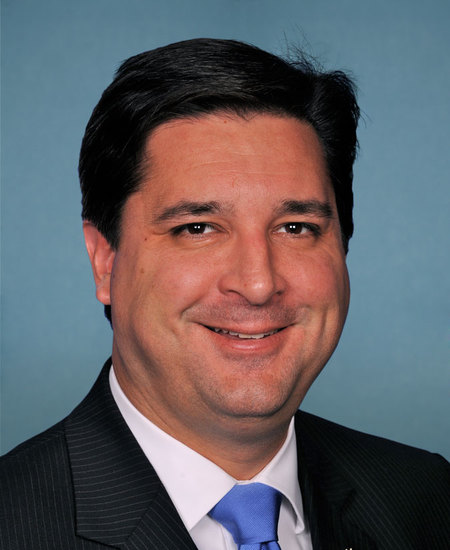
Rep. David Rouzer
Sponsored bills
Housing Supply Expansion Act This bill modifies the federal prevailing wage rates that apply to federally assisted housing and requires the Department of Labor to review and revise its process for determining prevailing wage rates. Specifically, the bill applies the prevailing wage rate for residential construction to all housing projects that receive assistance under specified federal statutes. (Under current law, the residential construction prevailing wage rate applies to the construction, alteration, or repair of single-family homes or apartment buildings up to four floors in height.)
Stop Child Abuse Act This bill nullifies the executive order titled Advancing Equality for Lesbian, Gay, Bisexual, Transgender, Queer, and Intersex Individuals , which was issued on June 15, 2022. The order directed several executive agencies to establish initiatives that support lesbian, gay, bisexual, transgender, queer, and intersex individuals in a variety of settings, including health care, education, housing, and social services.
Unleash American Drilling Act This bill requires the Department of Interior to issue decisions on applications for drilling permits associated with certain oil and gas leases within specified timeframes. If a decision is not made within the timeframe, the permit shall be considered issued.
Saving Access to Laboratory Services Act This bill modifies provisions relating to Medicare payment rates for clinical diagnostic laboratory services, including by requiring payment rates for certain widely available clinical diagnostic laboratory tests to be based on a statistical sampling of private sector rates.
Reducing Farm Input Costs and Barriers to Domestic Production Act This bill addresses various provisions related to the regulation of domestic agricultural products, including by requiring the Department of Agriculture to publish criteria for considering requests from meat and poultry establishments to operate at line speeds in excess of the current regulatory limitations. The bill also nullifies the final rule issued by the Council on Environmental Quality on April 20, 2022, that reinstated various National Environmental Policy Act regulatory provisions.
Recovering America’s Wildlife Act of 2022 This bill provides funding for the conservation or restoration of wildlife and plant species of greatest conservation need, including endangered or threatened species, and establishes related requirements. TITLE I--WILDLIFE CONSERVATION AND RESTORATION (Sec. 101) This title establishes and funds a subaccount of the Wildlife Conservation and Restoration Account, which was established under the Pittman-Robertson Wildlife Restoration Act. The subaccount must be used to support efforts of states, territories, or the District of Columbia to recover and manage wildlife and plant species of greatest conservation need. The Department of the Interior must use a portion of the funding from the subaccount for grants to state fish and wildlife departments, the District of Columbia fish and wildlife department, fish and wildlife departments of territories, nonprofit organizations, or regional associations of fish and wildlife departments. The grants must be used for innovative recovery efforts for species of greatest conservation need, species listed as endangered or threatened species, or the habitats of such species. Funding for the subaccount must supplement existing funds available to the states from funds distributed under the Dingell-Johnson Sport Fish Restoration Act and the Wildlife Conservation and Restoration Account. Recipients of the funding from the subaccount must match federal funds as specified by the title. The Government Accountability Office must study and report on the progress of states, territories, the District of Columbia, and Indian tribes in protecting species of greatest conservation need, endangered species, and threatened species. TITLE II--TRIBAL WILDLIFE CONSERVATION AND RESTORATION (Sec. 201) This title establishes and funds a Tribal Wildlife Conservation and Restoration Account to support Indian tribes' efforts to recover and manage wildlife and plant species of greatest conservation need. Indian tribes are not required to provide matching funds. TITLE III--ENDANGERED SPECIES RECOVERY AND HABITAT CONSERVATION LEGACY FUND (Sec. 301) This title establishes and funds through FY2026 the Endangered Species Recovery and Habitat Conservation Legacy Fund. The U.S. Fish and Wildlife Service must use the fund to (1) implement an Endangered Species Recovery Grant Program; (2) address its interagency consultation responsibilities under the Endangered Species Act of 1973; (3) work with nonfederal entities to conserve wildlife habitat and at-risk species, threatened or endangered species, or species proposed to be listed as threatened or endangered species; or (4) address the development and permitting of voluntary conservation agreements under such act. Amounts made available under the fund must supplement other federal amounts made available to carry out such activities. The President must annually submit to Congress, together with the annual budget of the United States, a list of threatened species and endangered species for which recovery plans will be developed or implemented with amounts from the Endangered Species Recovery and Habitat Conservation Legacy Fund. TITLE IV--REPORT (Sec. 401) Interior must also report on information concerning the amount of grants and contracts that were awarded or are allocated under this bill to Historically Black Colleges and Universities, Hispanic-serving educational institutions, tribally controlled colleges and universities, minority-serving educational institutions, minority-owned business enterprises, women-owned business enterprises, and community-based organizations that are principally administered by, operated by, or serving minority communities.
Military Spouse Hiring Act This bill expands the Work Opportunity Tax Credit (WOTC) to include the hiring of a qualified military spouse. (The WOTC permits employers who hire individuals who are members of a targeted group such as qualified veterans, ex-felons, or long-term unemployment recipients to claim a tax credit equal to a portion of the wages paid to those individuals.) A qualified military spouse is any individual who is certified by the designated local agency as being (as of the hiring date) a spouse of a member of the Armed Forces.
Chase COVID Unemployment Fraud Act of 2022 This bill addresses fraud and overpayments of pandemic unemployment assistance, including by allowing states to retain a specified percentage of recovered funds and prohibiting the Department of Labor from allowing blanket waivers of overpayments.
USACE Military Personnel Augmentation Act of 2022 This bill expands the types of Army personnel entitled to receive certain pay and allowances while assigned to the U.S. Army Corps of Engineers on nonmilitary public works projects. Currently, regular Corps officers and reserve Army officers assigned to the Corps are entitled to receive pay and allowances from funds appropriated for the project that they are working on. The bill entitles warrant officers and enlisted members of the Army, whether regular or reserve, to receive such pay and allowances when assigned to the Corps.