

Standardizing Thresholds Of Penalties for Fentanyl Act or the STOP Fentanyl Act This bill reduces the drug quantity thresholds that trigger a mandatory minimum prison term for a defendant who manufactures, distributes, imports, exports, or possesses with intent to distribute fentanyl. The bill also creates enhanced criminal penalties for certain violations involving fentanyl that was imported along the U.S.-Mexico border. Specifically, the bill reduces from 400 to 5 grams the fentanyl quantity and from 100 to 0.05 grams the fentanyl analogue quantity that trigger a mandatory minimum prison term for high-level first-time or repeat offenders. It also reduces from 40 to 0.5 grams the fentanyl quantity and from 10 to 0.005 grams the fentanyl analogue quantity that trigger a mandatory minimum prison term for low-level first-time or repeat offenders. Additionally, the bill creates enhanced mandatory minimum prison terms for importing or exporting fentanyl that was imported along the U.S.-Mexico border.
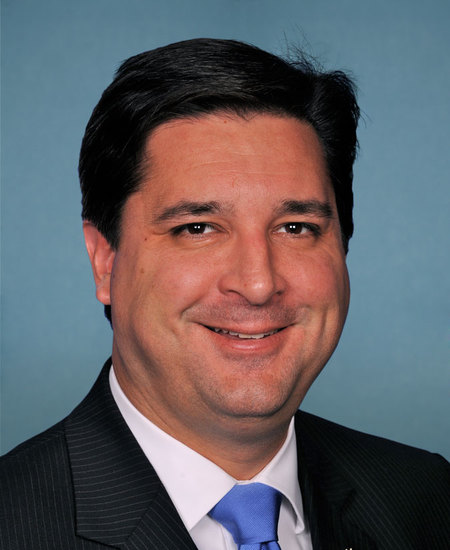
Rep. David Rouzer
Sponsored bills
Authorization for the Use of Military Force to Combat, Attack, Resist, Target, Eliminate, and Limit Influence Resolution or the AUMF CARTEL Influence Resolution This joint resolution authorizes the President to use the Armed Forces against foreign nations, foreign organizations, or foreign persons affiliated with foreign organizations that the President determines are involved in trafficking fentanyl or fentanyl-related substances into the United States. The joint resolution also authorizes the use of force against those determined to have used force or violence in specified ways, such as engaging in violence or intimidation to control territory to be used for illicit means. The joint resolution deems nine named cartels as having met the criteria for the President to use force against them. Force authorized by this joint resolution may only be used against organizations and persons located outside of the United States. The authority expires five years after the date of this joint resolution's enactment.
This resolution reaffirms support for the Belfast/Good Friday agreement on the 25th anniversary of its signing. The resolution also calls for full implementation of the agreement and commends those who have worked to further peace and reconciliation in Northern Ireland in accordance with the principles of the agreement.
Maddy summaryThe GAS Act (HR 337) prohibits any federal agency from banning the sale or use of gas-burning stoves in the United States. This applies to all agencies defined under federal law, including the Environmental Protection Agency and Consumer Product Safety Commission. The bill directly blocks agencies from enacting new regulations that would restrict gas stoves, preventing future regulatory actions. It does not affect existing stove sales or current agency authority but sets a clear restriction on future rulemaking.
Maddy summaryHR 263, the STOVE Act, prohibits federal agencies from creating or implementing rules that ban or restrict gas-powered stoves, cooktops, ranges, or ovens in the United States. It blocks agencies like the EPA or DOE from proposing or finalizing regulations that would limit the sale or use of these appliances. The bill directly affects federal rulemaking processes related to home energy appliances, preventing new restrictions from being enacted. This is a policy change that stops federal action on appliance bans, not a change to existing appliance use.
This joint resolution proposes a constitutional amendment that authorizes the President to use a line item veto to reduce an appropriation in a bill or joint resolution. Under the amendment, the President must notify Congress within 10 days of using this authority to reduce an appropriation. The House and Senate may then consider disapproval of the reduction. If at least two-thirds of each chamber of Congress votes to disapprove the reduction, the amount of the appropriation that is subject to the reduction must be returned to the amount that was originally presented to the President.
Maddy summaryHJRES 8 proposes a constitutional amendment to permanently set the Supreme Court's size at nine justices. The bill would require any future changes to the Court's composition to follow this specific number, locking in the current structure. It does not alter the existing Court size (which has been nine since 1869) but aims to prevent future adjustments through legislative action. The amendment must be ratified by three-fourths of state legislatures within seven years to take effect. This is a procedural proposal focused on constitutional structure, not a direct policy affecting citizens or programs.
Maddy summaryHRES 8 is a formal resolution introduced by the U.S. House of Representatives in January 2023 to impeach Secretary of Homeland Security Alejandro Mayorkas. The resolution alleges three specific violations: (1) failing to maintain border security, citing record migrant encounters and fentanyl seizures under his leadership; (2) providing false testimony to Congress about border security; and (3) spreading false claims about Border Patrol agents whipping migrants during a 2021 incident. It claims these actions violated his constitutional duties and federal law. As an impeachment resolution, it does not enact policy but seeks to refer the case to the Senate for trial.
Maddy summaryHR 203, the "No Hires for the Delinquent IRS Act," requires the Treasury Secretary to publicly certify that no current IRS employee has an outstanding tax debt before any new IRS hire can be offered a position. This directly affects the IRS hiring process by delaying new employee offers until this certification is issued. The bill defines "seriously delinquent tax debt" as unpaid federal taxes with a filed lien, excluding debts being paid under agreement or under active resolution processes. It does not change tax collection laws but adds a hiring condition tied to employee tax compliance.
Maddy summaryThe States’ Education Reclamation Act of 2023 would abolish the U.S. Department of Education and transfer its programs - such as job training, special education, and student loans - to other federal agencies like the Department of Labor and Department of Health and Human Services. It would provide states with annual federal grants for K-12 and higher education, requiring states to use the funds to supplement, not replace, existing state education spending. States would also need to conduct annual audits of grant spending, submit public reports, and maintain federal anti-discrimination standards (like Title IX) without direct federal oversight. This bill directly affects state education systems, shifting federal funding and accountability to state governments.