Maddy summaryHR 812, titled the "Inflation Reduction Act of 2023," would repeal the Inflation Reduction Act of 2022 (Public Law 117-169) and rescind unobligated funds from that law. This bill does not establish new policy but reverses the existing 2022 legislation, halting its ongoing programs and redirecting unused funding. It directly affects the continuation of the 2022 act's provisions, including climate and healthcare initiatives, by formally terminating them. The key mechanism is the repeal of the 2022 law and the rescission of remaining unobligated balances.
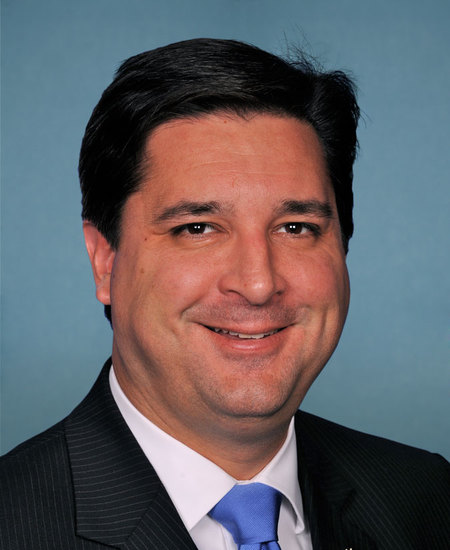
Rep. David Rouzer
Sponsored bills
Maddy summaryHR 558 amends the Defense Production Act to prohibit China, Iran, North Korea, and Russia (and entities they control) from purchasing or leasing property within 10 miles of designated sensitive sites. These sites include U.S. military bases, ports, government facilities, and other locations where foreign access could threaten national security through intelligence collection or surveillance. The bill requires the Committee to notify Congress of any violations and applies to transactions occurring after its enactment. It directly affects foreign entities from the listed countries seeking real estate near critical U.S. infrastructure.
Child Interstate Abortion Notification Act This bill creates new federal crimes related to transporting a minor across state lines for an abortion. Specifically, the bill makes it a crime to knowingly transport a minor across a state line to obtain an abortion without satisfying the requirements of a parental involvement law in the minor's resident state. A parental involvement law requires parental consent or notification, or judicial authorization, for a minor to obtain an abortion. The bill prohibits an individual who has committed incest with a minor from knowingly transporting the minor across a state line to receive an abortion. Finally, the bill makes it a crime for a physician to knowingly perform or induce an abortion on an out-of-state minor without first notifying the minor's parent.
Prohibition of Agricultural Land for the People's Republic of China Act This bill requires the President to prohibit nonresident aliens, foreign businesses, and agents associated with China's government from (1) purchasing agricultural (including ranching) real estate located in the United States, or (2) participating in Department of Agriculture programs that are unrelated to food and safety regulatory requirements.
Maddy summaryThis bill helps new car dealers affected by pandemic-era supply chain disruptions by changing tax rules for inventory sales. It allows dealers using LIFO accounting to treat certain sales of unsold vehicles (liquidations) between March 2020 and December 2021 as "qualified" for tax purposes. Dealers can defer recognizing income from these sales and have until 2026 to replace the sold vehicles before potential tax adjustments apply. The provision specifically targets dealers who couldn't replenish inventory during the supply chain crisis.
Maddy summaryThe SHIP IT Act (HR 471) aims to improve commercial trucking safety and efficiency through several key provisions. It allows states to temporarily permit overweight trucks during emergencies, provides tax credits for truck drivers (up to $10,000), and allocates $175-$200 million annually for grants to build commercial truck parking facilities. The bill also simplifies driver licensing processes, removes seasonal restrictions on agricultural transportation, and creates a pilot program for 6-axle vehicles with safety data collection requirements. These changes directly affect truck drivers, trucking companies, and state transportation agencies, with the goal of enhancing highway safety, reducing congestion, and supporting the trucking workforce.
Maddy summaryHR 683 (PASS Act of 2023) expands the Committee on Foreign Investment in the United States (CFIUS) review process to cover foreign investments in U.S. agriculture businesses, agricultural biotechnology, and private farmland. It mandates that the President block transactions involving foreign entities from China, Russia, Iran, or North Korea that would give them control over U.S. agricultural operations or land used for farming. The bill allows limited presidential waivers for national security reasons but requires a 30-day review period before any waiver. Additionally, it requires the Secretary of Agriculture to submit biannual reports to Congress on risks posed by foreign ownership in U.S. agriculture.
Disaster Reforestation Act This bill sets forth a special rule for the tax deduction for casualty losses of uncut timber (including pre-merchantable timber). It provides that in losses of any uncut timber from fire, storm, insects, invasive species, drought, or other casualty, or from theft, the basis for determining the amount of the deduction for such loss shall not be less than the excess of the value of such timber determined immediately before such loss was sustained, over the salvage value of such timber. To be eligible for the casualty loss deduction, the uncut timber subject to the loss must be reforested not later than the close of the five-year period beginning on the date of the loss.
Maddy summaryThe A PLUS Act (HR 631) allows states to consolidate federal education funds into a single funding stream, reducing administrative burdens for school districts. It requires states to submit a "declaration of intent" outlining which programs they’ll bundle (excluding special education funds), report annual student progress data to parents, and ensure federal funds supplement - rather than replace - state education spending. States must limit administrative costs to 1% of consolidated funds (3% if excluding Title I) and maintain public accountability through transparent reporting on achievement gaps and funding use. The act directly affects states, school districts, and students - particularly disadvantaged groups - by streamlining fund management while mandating public reporting on educational outcomes.
This resolution expresses the sense of the House of Representatives that (1) the President should classify synthetic illicit fentanyl-related substances as weapons of mass destruction; and (2) illicit fentanyl, and illicit fentanyl-related substances, should be permanently placed in schedule I (i.e., as drugs, substances, or chemicals with no currently accepted medical use and a high potential for abuse).