Maddy summaryThis bill amends the Higher Education Act to exempt certain family-owned assets from being counted when calculating federal student aid eligibility. Specifically, it excludes family farms where the family resides and small businesses with 100 or fewer full-time equivalent employees owned and controlled by the family. These assets will no longer be considered when determining a student's financial need for aid programs. The change directly affects students from qualifying family farms or small businesses when applying for federal financial aid. The exemption applies to assets held by the family, not just the business itself.
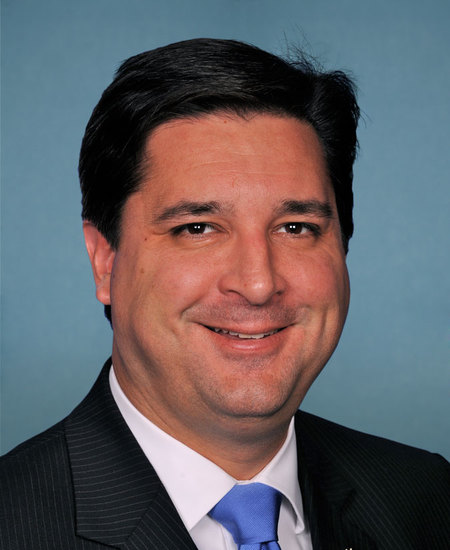
Rep. David Rouzer
Sponsored bills
Maddy summaryHR 1228 prohibits the U.S. military and Department of Defense-operated academic institutions from promoting specific anti-American or racist theories in training. It bans military programs that teach ideas such as "the U.S. is fundamentally racist," "the Constitution is fundamentally racist," or that "an individual’s worth is determined by race." The bill explicitly states it does not restrict protected speech, research access, or educational contexts that clearly disavow military endorsement of such theories. This directly affects military training curricula, workshops, and educational materials within the armed forces.
Maddy summaryHR 1202, the REDI Act, amends the Higher Education Act to allow medical and dental residents to temporarily pause federal student loan payments without accruing interest during their internship or residency programs. This directly affects borrowers with federal student loans who are enrolled in qualifying medical or dental training programs. The key provision adds a new rule (paragraph 6) ensuring these borrowers qualify for a deferment period where they don't pay principal and interest accrues at 0%. The change modifies existing loan rules to explicitly include medical/dental residents under the "in-school" deferment category. This policy change provides immediate financial relief during a critical training phase for healthcare professionals.
Maddy summaryHR 1200, the National Right-to-Work Act, prohibits requiring workers to join a union or pay dues as a condition of employment in both private-sector workplaces (covered by the National Labor Relations Act) and railroad industries (covered by the Railway Labor Act). The bill amends key sections of these laws to eliminate provisions that allowed union security agreements, meaning workers in unionized settings would no longer be forced to pay dues to retain their jobs. This directly affects employees in unionized workplaces across the U.S., particularly those in industries with existing union contracts that included mandatory dues. The law changes the legal framework to ensure union membership and dues payment remain voluntary for all workers.
Maddy summaryHR 1181 would limit pollution discharge permits under the Clean Water Act to 10 years for state and municipal programs, and 5 years for all other polluters like industrial facilities. This changes how long permits remain valid before requiring renewal, directly affecting wastewater treatment plants, factories, and state environmental agencies. The bill does not alter pollution standards or requirements, only the maximum duration of permits. It amends the Federal Water Pollution Control Act to establish these fixed terms.
Maddy summaryThe Stop the Cartels Act (HR 597) aims to disrupt drug trafficking organizations and related criminal activities by requiring enhanced intelligence gathering on cartels in Mexico and Central American countries, mandating improved U.S.-Mexico law enforcement cooperation, and cutting federal funding from jurisdictions that restrict immigration enforcement. The bill creates a "Special Transnational Criminal Organization" designation for major cartels like the Sinaloa Cartel and Jalisco New Generation Cartel, requires monthly reports on migrant encounters at the border, and establishes refugee processing centers in Mexico and Central America. It also increases staffing for immigration courts by 500 judges, prohibits asylum applications from nationals of countries with refugee processing centers, and reauthorizes substance abuse prevention funding at higher levels while repealing several existing drug programs. These provisions directly affect U.S. intelligence and law enforcement agencies, Mexican and Central American governments, local jurisdictions receiving federal funds, and migrants seeking asylum or refugee status.
Women's Public Health and Safety Act This bill allows a state to exclude from participation in the state's Medicaid program a provider that performs an abortion, unless (1) the pregnancy is the result of rape or incest, or (2) the woman suffers from a physical issue that would place her in danger of death unless an abortion is performed. Under current law, a state plan for medical assistance must provide that any individual eligible for medical assistance may obtain required services from any provider qualified to perform them.
CBDC Anti-Surveillance State Act This bill limits the ability of the Federal Reserve to (1) provide direct services to individuals, and (2) use a central bank digital currency. A central bank digital currency is a digital currency (e.g., Bitcoin or Ether) issued by a government-backed central bank. Specifically, the bill prohibits the Federal Reserve and the Federal Open Market Committee from using any central bank digital currency to implement monetary policy. In addition, a Federal Reserve bank is prohibited from offering products or services directly to an individual, maintaining an account on behalf of an individual, or issuing a central bank digital currency directly to an individual. The Federal Reserve must (1) consult with each Federal Reserve bank with respect to any central bank digital currency study or pilot program, and (2) issue quarterly reports on the findings and determinations of any such study or program.
Maddy summaryThis bill designates seven specific creeks in North Carolina with new names honoring individuals (Noah Styron Creek, Hunter Parks Creek, etc.), including their exact geographic coordinates. It updates all federal references in laws, maps, and documents to use these new names. The bill has no policy impact beyond renaming geographic features and affects no groups or programs. As a purely procedural naming resolution, it does not alter laws or regulations.
Maddy summaryHR 987 authorizes the U.S. Mint to produce commemorative coins honoring Golda Meir, Israel's first female Prime Minister, and the 75th anniversary of U.S.-Israel relations. It specifies three coin types: $5 gold coins (max 50,000), $1 silver coins (max 400,000), and half-dollar clad coins (max 750,000), with detailed weight and composition requirements. All coins will include Golda Meir's image, her name, and commemorative inscriptions, and will be sold during 2026. A surcharge ($35 for $5 coins, $10 for $1 coins, $5 for half-dollars) will be paid to the American Friends of Kiryat Sanz Laniado Hospital Inc. to support its hospital operations.