Maddy summaryHR 4595, the National Education Association Charter Repeal Act, repeals the federal charter granted to the National Education Association (NEA) under Title 36 of the U.S. Code. This bill directly affects the NEA as an organization, removing its status as a federally chartered entity. The key mechanism is a specific repeal of the charter provision (Chapter 1511, Title 36), with no new programs or funding. The bill does not alter the NEA's activities or operations, only its legal status under federal law.
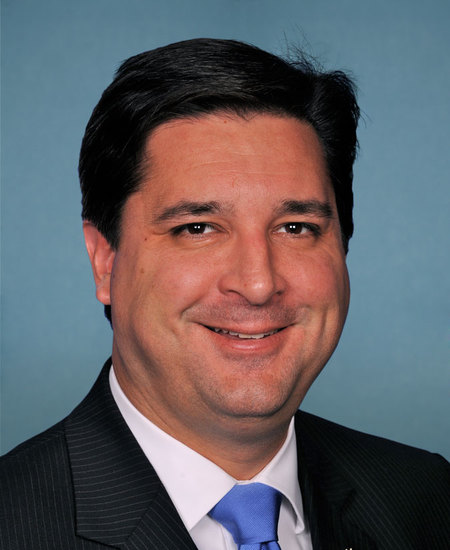
Rep. David Rouzer
Sponsored bills
Cybersecurity for Rural Water Systems Act of 2023 This bill amends the Department of Agriculture (USDA) Circuit Rider Program to include cybersecurity technical assistance for rural water systems serving fewer than 10,000 people. Under the program, USDA provides technical assistance to rural water systems that are experiencing day-to-day operational, financial, or managerial issues. Specifically, the program's cybersecurity technical assistance must (1) assess system efficacy in protecting against cyber threats; and (2) implement cybersecurity plans, procedures, and technologies to protect against cyber threats. The bill also reauthorizes the Circuit Rider Program through FY2028.
Maddy summaryHR 4437 requires the Comptroller General of the United States to study potential negative impacts of electric vehicles on U.S. infrastructure, grid security, fire safety (including charging systems), labor markets, and competitiveness. The study must specifically examine issues like supply chain concerns related to foreign labor practices and effects on American industry. After completing the study, any future congressional legislation about electric vehicles must include a section explaining how the study's findings were considered. This bill does not change current policies but mandates this analysis to inform future legislative decisions. The study's findings would directly affect how Congress approaches electric vehicle-related laws.
Maddy summaryHR 4417, the "Ending Agricultural Trade Suppression Act," prevents state and local governments from imposing additional production standards on agricultural products sold across state lines if those standards aren't already required by federal law or the state where the product is grown. It directly affects agricultural producers, distributors, and businesses operating in interstate commerce by allowing them to sue states in federal court to challenge such regulations. The bill creates a private right of action for affected parties to seek court invalidation of the regulations and damages for economic losses, with provisions for preliminary injunctions to halt enforcement during litigation. This aims to reduce regulatory barriers that could hinder the movement of agricultural goods between states.
Maddy summaryHR 4323 delays any changes to the National Oceanic and Atmospheric Administration's (NOAA) current rule limiting ship speeds to protect North Atlantic right whales. The bill requires NOAA to wait until two conditions are met: (1) new whale protection protocols from the 2022 Coast Guard Act are fully developed and deployed, and (2) the Secretary submits a report to four congressional committees detailing how those protocols will shape future rule updates. This directly affects NOAA's regulatory authority and vessel operators who must follow the existing speed rules. The law does not change the current rule but pauses any amendments until these specific steps are completed.
Maddy summaryHR 4355, the Rural Veterinary Workforce Act, modifies the Internal Revenue Code to exclude certain loan repayment or forgiveness assistance from taxable income. It specifically adds programs under the National Agricultural Research, Extension, and Teaching Policy Act of 1977 and similar state initiatives - designed to boost veterinary services in rural areas - to the list of tax-exempt benefits. This directly affects veterinary students participating in these state or federal programs who work in underserved rural communities. The change takes effect for assistance received in taxable years beginning after December 31, 2023.
Maddy summaryHR 4300, the Real Emergencies Act, prohibits the President from declaring national emergencies, major disasters, or public health emergencies under three specific federal laws *based on climate change*. It directly affects the President and federal agencies that manage emergency declarations under the National Emergencies Act, the Stafford Act, and the Public Health Service Act. The bill's key provision explicitly bans using climate change as a justification for these emergency declarations, without altering existing emergency powers for other reasons. This is a procedural restriction on executive authority, not a change to climate policy or emergency response mechanisms.
Maddy summaryHR 3419 reauthorizes and increases mandatory funding for U.S. animal disease prevention programs through fiscal year 2028. It allocates $233 million annually from the Commodity Credit Corporation for three key areas: $10 million for disease prevention, $70 million for surveillance, and $153 million for rapid response. The bill also raises annual funding for the National Animal Health Laboratory from $30 million to $45 million. These provisions directly affect USDA programs that protect livestock and agricultural industries from foreign animal disease outbreaks. The funding increases extend existing programs through 2028, with reduced annual amounts starting in 2029.
Maddy summaryHJRES 44 is a congressional resolution seeking to block a 2021 rule by the Bureau of Alcohol, Tobacco, Firearms, and Explosives (ATF). The rule classified firearms with stabilizing braces as "short-barreled rifles," which would have required additional licensing and regulation. This resolution uses a specific legal process (under Title 5, U.S. Code) to formally disapprove the ATF rule, meaning the rule would no longer be in effect. It directly affects firearm owners, manufacturers, and dealers who would have been subject to the rule’s requirements.
Maddy summaryThis bill renames the U.S. Food for Peace program after Peter O'Brien and makes key changes to how agricultural aid is delivered. It prohibits using cash, food vouchers, or foreign-sourced food for aid (section 2d), requires that at least 50% of annual funds be used for procuring U.S. agricultural commodities (section 2b(5)), and mandates annual reports to Congress on fund usage (section 2b(6)). These changes directly affect U.S. farmers supplying aid and international recipients of food assistance. The bill focuses on strengthening domestic agricultural exports within the Food for Peace program while adding transparency requirements.