Maddy summaryThis bill prohibits federal funding for elementary and secondary schools that partner with Chinese government-funded programs, including Confucius Institutes, Confucius Classrooms, or other entities receiving support from China's government (e.g., through teaching materials, personnel, or funds). It directly affects schools with these specific ties to the People's Republic of China. The prohibition takes effect one year after enactment, with the Education Secretary required to notify schools and provide compliance guidance within 90 days of enactment. The policy change blocks federal education funds for schools meeting the defined criteria, without altering existing educational content or curriculum standards.
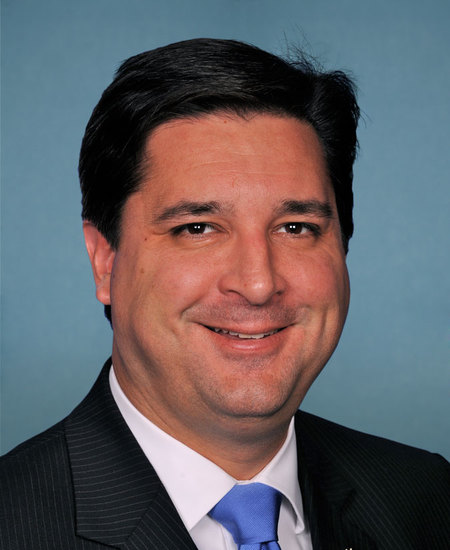
Rep. David Rouzer
Sponsored bills
Maddy summaryThis bill (HR 2365, Public Law 118-66) directs the U.S. Department of Health and Human Services (HHS) to establish the National Parkinson’s Project. It requires HHS to create and update a coordinated national plan for preventing, diagnosing, treating, and researching Parkinson’s disease and related disorders (including multiple system atrophy and progressive supranuclear palsy), while coordinating federal research and care efforts across agencies like the NIH, CDC, and VA. The law mandates annual progress assessments, an advisory council with patient advocates and diverse experts, and annual reports to Congress on federal Parkinson’s programs and recommendations for improvement. It affects federal agencies managing Parkinson’s-related programs and aims to improve care coordination and research efficiency for patients and caregivers, with the law sunsetting in 2035.
Maddy summaryHR 8889, the Sunset Chevron Act, requires the Government Accountability Office (GAO) to compile a list of federal court decisions that upheld agency rules using Chevron deference (a legal doctrine where courts defer to agency interpretations of laws) and are still in effect. The GAO must organize this list by agency and assign each rule a sunset date - 30 days after the list's publication for the most recent rule, with older rules getting sunsets 30 days apart. This bill directly affects federal agencies whose rules are included in the GAO's list, as it triggers automatic expiration of those rules after specific dates. The key mechanism is the mandatory GAO review and the automatic sunset schedule, not new regulations or policy changes. The bill does not alter Chevron deference itself but creates a timeline for existing rules upheld under it to expire.
Maddy summaryThe Conscience Protection Act of 2024 would strengthen protections for health care providers, facilities, and organizations that refuse to participate in or provide coverage for abortions, assisted suicide, or other procedures conflicting with their religious or moral beliefs. It creates a private right of action allowing individuals or entities to sue when their conscience rights are violated, and requires the Department of Health and Human Services to enforce existing conscience protections through the Office for Civil Rights. The bill prohibits discrimination against health care entities that decline to provide or facilitate these services, while ensuring these protections don't interfere with emergency care requirements under existing law. It also establishes clearer enforcement mechanisms, including the ability to terminate federal funding for non-compliance with conscience protections.
Maddy summaryHR 8809, the Motor Carrier Safety Selection Standard Act of 2024, requires businesses like shippers, brokers, and freight forwarders (but not individual shippers) to verify a motor carrier’s safety compliance before shipping goods. Specifically, they must confirm the carrier is properly registered, has required insurance, and meets all Federal Motor Carrier Safety Administration (FMCSA) safety standards - verified through a public FMCSA status check - within 45 days before shipment. The bill also directs the Transportation Secretary to update safety fitness regulations within one year to include these verification requirements. Individual shippers are exempt from these checks and are automatically considered reasonable in carrier selection.
Maddy summaryThis bill rescinds unspent funds from specific federal programs. It targets leftover money from pandemic relief (like the CARES Act and American Rescue Plan) and certain infrastructure initiatives (including education stabilization funds and transportation programs like the Congestion Mitigation Program). The rescission is limited to amounts already allocated for Israel, Ukraine, and Indo-Pacific security supplements under recent appropriations. Unspent funds must be returned to the Treasury, with no new spending created.
Maddy summaryHRES 1303 is a resolution passed by the U.S. House of Representatives on June 14, 2024, that condemns the Biden administration's suspension of pending approvals for liquefied natural gas (LNG) exports to countries without free trade agreements with the U.S. The resolution argues this action is politically motivated, citing studies showing economic benefits of LNG exports and noting that previous administrations conducted similar environmental reviews without halting permits. It calls for lifting the suspension to restore confidence in the energy sector, prioritize U.S. workers and communities, and align with the administration's stated goals of economic growth. As a non-binding resolution, it does not change policy but formally expresses congressional disapproval of the administration's approach.
Maddy summaryHRES 1300 is a non-binding House resolution condemning campus protests and the groups organizing them. It specifically targets protesters at universities like Columbia and George Washington for actions including blocking classes, using antisemitic rhetoric, and defacing U.S. flags with Palestinian flags. The resolution condemns organizations like Students for Justice in Palestine and George Soros for funding these protests, and calls for an investigation into foreign adversaries involved. It also urges politicians to reject contributions from groups supporting anti-American or antisemitic demonstrations. The resolution does not create new laws but expresses the House's position on campus protests.
Maddy summaryThis bill expands federal flood insurance coverage to help homeowners demolish or relocate structures threatened by shoreline erosion. It requires the flood insurance program to pay up to 40% of a structure's value upfront for demolition or relocation, with an additional 60% upon completion (capped at $250,000 total per claim), excluding damage to contents. Coverage applies only to properties already insured under flood insurance for at least 12 months before the bill's enactment, and terminates future flood insurance for the same property after a qualifying claim. The bill specifically targets properties deemed unsafe due to erosion, subsidence, or being over water, bluff, or escarpment by state/local authorities.
Maddy summaryHR 192 prohibits noncitizens from voting in all District of Columbia elections, including for public office and ballot initiatives. It directly affects noncitizen residents of Washington D.C. who currently have voting rights under the repealed Local Resident Voting Rights Amendment Act of 2022. The bill's key mechanism is repealing that 2022 amendment, restoring the requirement that only U.S. citizens may vote in DC elections. This changes the voting eligibility rules for noncitizens living in the District. The law would take effect upon enactment, removing noncitizens from the voter rolls for all local elections.