Maddy summaryThis bill creates a new system for recognizing and regulating individuals who help veterans file benefit claims. It requires the VA to provide veterans with information about free assistance options and maintain a public list of accredited representatives. The bill sets a maximum fee limit of $12,500 or 5 times the monthly benefit increase for representatives, and establishes penalties for unaccredited representatives who charge improper fees. The law aims to protect veterans from unscrupulous representatives while ensuring they have access to quality assistance with their benefit claims.
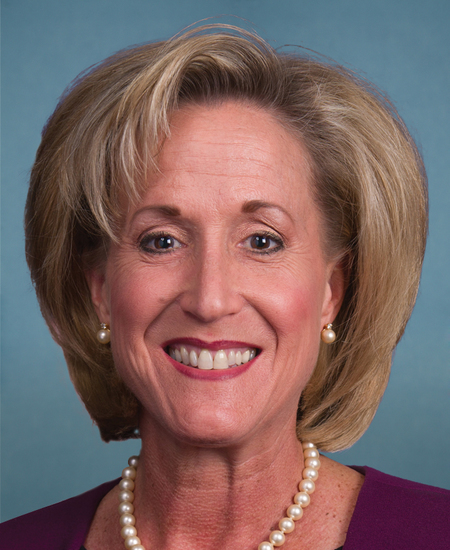
Rep. Ann Wagner
Sponsored bills
Maddy summaryHR 976, the "1071 Repeal to Protect Small Business Lending Act," would repeal data collection and reporting requirements for small business loans under Section 704B of the Equal Credit Opportunity Act. This specifically removes the mandate for financial institutions - especially community banks and credit unions - to track and submit loan data by business characteristics like race or gender. The bill aims to reduce compliance costs for lenders, which its findings argue limit small business access to credit. The repeal would eliminate these reporting obligations and remove references to the requirement from related federal laws.
Maddy summaryThe SALUTE Act establishes a 5-year pilot program to provide supplemental insurance for military members and their TRICARE-eligible dependents who face uncovered cancer-related costs. It requires the Secretary of Defense to partner with up to two insurance companies to offer fixed indemnity plans that pay direct cash benefits for cancer screening, diagnosis, and treatment expenses not covered by standard military health benefits. These plans must operate separately from existing coverage, be available through TRICARE's online portal, and be funded entirely by enrollee premiums with no government subsidies. The program targets active-duty service members (Army, Navy, Marine Corps, Air Force, Space Force) and their TRICARE-enrolled dependents facing out-of-pocket cancer costs.
Frederick Douglass Trafficking Victims Prevention and Protection Reauthorization Act of 2025 This bill reauthorizes certain programs and activities that promote awareness of human trafficking and support victims. The bill also establishes a new program to support victims of trafficking. Specifically, this bill reauthorizes through FY2029 programs and activities at the Department of Health and Human Services (HHS) to promote awareness of trafficking and strengthen services for victims, including the National Human Trafficking Hotline and cybersecurity and public education campaigns; Department of Justice grants to support trafficking victims inside the United States, including amounts for housing assistance grants; and International Megan’s Law, which requires sex offenders to provide certain information about their intended travel outside of the United States, among other provisions. The bill also authorizes HHS to carry out a new program—the Human Trafficking Survivors Employment and Education Program—to help victims of trafficking integrate or reintegrate into society.
Maddy summaryThis bill amends the Elementary and Secondary Education Act to explicitly include accounting education as part of a well-rounded K-12 curriculum. It requires schools to develop and strengthen programs teaching accounting, including increasing access to high-quality accounting courses for students from groups historically underrepresented in accounting careers. The key provision inserts specific language into existing law, directing schools to promote accounting career awareness and expand course availability through grade 12. This directly affects K-12 students, particularly those from underrepresented backgrounds, by making accounting education a recognized component of career-focused learning.
Maddy summaryThis non-binding resolution encourages the U.S. Department of State to work with Middle Eastern countries - including the UAE, Bahrain, Morocco, and others - to reform school curricula by removing antisemitic content and promoting peace education, building on existing changes in those nations under the Abraham Accords. It urges diplomatic engagement to prioritize educational reforms that foster tolerance and reduce hate speech, aligning with the Israel Relations Normalization Act of 2021. The resolution specifically supports expanding these efforts to countries like Saudi Arabia and Indonesia, where similar educational reforms are underway.
Maddy summaryHR 2777, the S-CAP Act of 2025, amends the Internal Revenue Code to increase the maximum number of shareholders allowed for a business to qualify as an S corporation from 100 to 250. This change directly affects small businesses that currently exceed the 100-shareholder limit, allowing them to maintain S-corporation tax status. The key provision modifies Section 1361(b)(1)(A) of the tax code, with the new limit applying to taxable years beginning after December 31, 2025. The bill makes no other changes to S-corporation rules and focuses solely on expanding the shareholder cap.
Frederick Douglass Trafficking Victims Prevention and Protection Reauthorization Act of 2025 This bill reauthorizes certain programs and activities that promote awareness of human trafficking and support victims. The bill also establishes a new program to support victims of trafficking. Specifically, this bill reauthorizes through FY2029 programs and activities at the Department of Health and Human Services (HHS) to promote awareness of trafficking and strengthen services for victims, including the National Human Trafficking Hotline and cybersecurity and public education campaigns; Department of Justice grants to support trafficking victims inside the United States, including amounts for housing assistance grants; and International Megan’s Law, which requires sex offenders to provide certain information about their intended travel outside of the United States, among other provisions. The bill also authorizes HHS to carry out a new program—the Human Trafficking Survivors Employment and Education Program—to help victims of trafficking integrate or reintegrate into society.
Maddy summaryHR 2729, the "Carnivals are Real Entertainment Act," creates a new temporary work visa category for carnival and circus workers. It directly affects mobile entertainment providers (like traveling carnivals, circuses, and affiliated food/game concession services) and their workers who perform essential tasks such as transporting, assembling, operating, and maintaining rides and equipment at seasonal fairs and festivals. The bill amends immigration law to define "mobile entertainment workers" as those entering temporarily for functions integral to these operations, subject to labor program requirements similar to other temporary work visas. It requires the Departments of Homeland Security and Labor to issue implementing rules within one year of enactment.
Maddy summaryHR 2666, the CBO Scoring Accountability Act, requires the Congressional Budget Office (CBO) to annually analyze and publicly report on the actual costs and revenue impacts of major federal legislation for the first 10 years after it becomes law. It mandates that the CBO compare actual spending/revenue results against prior estimates, and if discrepancies exceed 10% for costs or revenue, the CBO must explain the causes in a report to Congress. This applies to bills projected to affect at least 0.25% of U.S. GDP in spending or revenue (defined as "major legislation"), and federal agencies must provide data to support these analyses. The bill aims to improve transparency around budget estimates without altering legislative processes.