Maddy summaryThe FIRM Act (HR 2702) prohibits federal banking agencies from considering "reputational risk" in supervising banks and credit unions. It requires agencies to remove all references to reputational risk - defined as concerns about negative publicity affecting an institution's reputation - from regulations, examinations, and enforcement actions. The bill directly affects depository institutions (banks and credit unions) and federal regulators like the FDIC and CFPB, banning them from using reputational risk as a basis for supervision or enforcement. This policy change aims to limit regulatory actions based on subjective public opinion rather than financial safety and soundness.
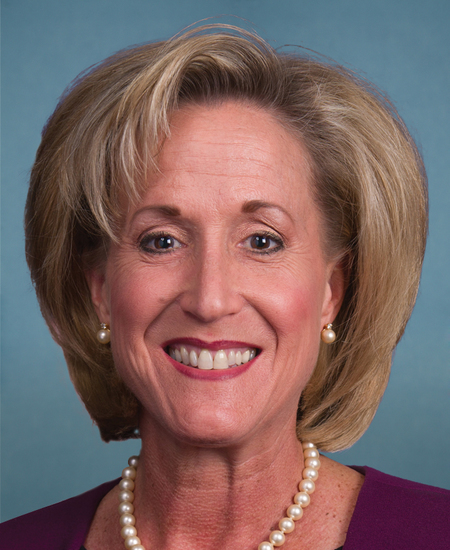
Rep. Ann Wagner
Sponsored bills
Maddy summaryHRES 481 is a symbolic resolution condemning recent antisemitic attacks in the U.S., specifically referencing the June 1, 2025, Boulder, Colorado, assault on a Jewish community gathering and other incidents like the May 2025 Washington, D.C., embassy shooting. It formally recognizes a pattern of violence targeting Jewish individuals and institutions, including attacks during religious events. The resolution calls on law enforcement to thoroughly investigate and prosecute such incidents and urges elected officials to publicly oppose antisemitism and politically motivated violence. As a non-binding resolution, it does not create new laws or allocate funding but serves to affirm congressional stance against antisemitism.
Maddy summaryHR 3323, the "Helping Startups Continue To Grow Act," raises the revenue threshold for companies to qualify as "emerging growth companies" (EGCs) under securities law. It increases the limit from $1 billion to $3 billion in annual revenue, allowing more startups to retain EGC status. This directly affects early-stage companies that would otherwise lose access to simplified reporting requirements under the Securities Act of 1933 and Securities Exchange Act of 1934. The key change extends regulatory relief for qualifying businesses, helping them avoid more complex disclosure rules as they grow.
Maddy summaryThis bill requires the Securities and Exchange Commission (SEC) to create rules allowing covered financial entities (like investment companies, brokers, and advisers) to deliver required regulatory documents - such as prospectuses, annual reports, and proxy statements - electronically to investors. It mandates specific transition steps: initial paper delivery for investors preferring it, a 180-day shift to electronic delivery, and annual paper reminders for two years after transition to maintain opt-out options. The rules must ensure documents are readable, securely delivered, and include clear mechanisms for investors to switch back to paper at any time. The SEC must finalize these rules within one year of the bill’s enactment, while existing document delivery requirements remain unchanged.
Maddy summaryHRES 447 is a non-binding House resolution condemning antisemitism and honoring Yaron Lischinsky and Sarah Milgrim, two Israeli Embassy employees killed during a peace-focused panel discussion in 2023. The resolution specifically condemns all forms of antisemitism - including violence, vandalism, and online harassment - and remembers the victims, who were killed by a far-left activist affiliated with the Party for Socialism and Liberation. It calls for enforcing existing hate crime laws and protecting religious freedom, without creating new legislation. This resolution symbolically supports Jewish communities and victims of antisemitic violence but does not alter legal requirements.
Maddy summaryThe Carla Walker Act (HR 3591) creates federal grants to fund forensic DNA analysis using genetic genealogy databases for law enforcement. It authorizes $5 million annually (2024-2028) for two programs: (1) grants to eligible entities like police departments and medical examiners for whole genome sequencing (100,000+ markers) to solve unsolved cases or identify human remains when standard DNA databases fail, and (2) grants to purchase forensic equipment for genetic genealogy analysis. Funds cannot cover staffing or travel, with only 10% allowed for administrative costs. Recipients must report on case outcomes, testing methods, and results, including how often identifications led to arrests. The bill directly affects state/local law enforcement, forensic labs, and medical examiner offices handling unresolved criminal cases.
Maddy summaryThe DEFIANCE Act of 2025 creates a new civil legal remedy for victims of non-consensual intimate digital forgeries (synthetic images or videos manipulating real people into sexual contexts without consent). It allows affected individuals to sue perpetrators in federal court for damages up to $250,000, injunctions to remove content, and privacy protections like pseudonyms. The bill specifically covers cases where forgeries are created or shared with intent to disclose, including scenarios involving sexual assault or harassment. It expands existing federal protections under 15 U.S.C. 6851 to address digital forgeries while ensuring state laws remain in effect.
Maddy summaryHRES 421 is a resolution memorializing 345 law enforcement officers killed in the line of duty during 2024, listing each officer's name. It expresses the House of Representatives' support for law enforcement, acknowledges the sacrifice of these officers, and recognizes the need for adequate resources to protect officers while they serve the public. The resolution also extends condolences to the families of fallen officers. As a ceremonial resolution, it does not create new laws or policies but serves as a formal tribute.
Maddy summaryHRES 412 is a non-binding House resolution congratulating Pope Leo XIV on his historic election as the 267th pope and the first American-born pope in the Catholic Church's 2,000-year history. The resolution recognizes his Chicago upbringing, missionary work in Peru, and commitment to humility and pastoral care, highlighting his significance for American Catholics. As a symbolic gesture with no legal effect, it expresses the House's support for his leadership without altering any policies or affecting any stakeholders.
Maddy summaryHR 3184, the PFAS Alternatives Act, funds research to develop turnout gear (firefighter safety clothing) without harmful PFAS chemicals, directly affecting firefighters who wear this gear. It authorizes $25 million annually (2025-2029) for grants to eligible organizations to research and test PFAS-free gear, requiring partnerships with firefighting groups to translate findings into practice. The bill also allocates $2 million yearly (2027-2031) for training programs on safe gear use and decontamination. Its goal is to reduce firefighters' exposure to chemicals linked to occupational illnesses during operations.