LEOSA Reform Act This bill broadens the authority for certain law enforcement officers to carry concealed firearms across state lines. Specifically, the bill allows qualified active and retired law enforcement officers to carry concealed firearms and ammunition (including magazines) in school zones; in national parks; on state, local, or private property that is open to the public; and in certain federal facilities that are open to the public. Further, the bill permits states to reduce the frequency with which retired law enforcement officers must meet certain qualification standards.
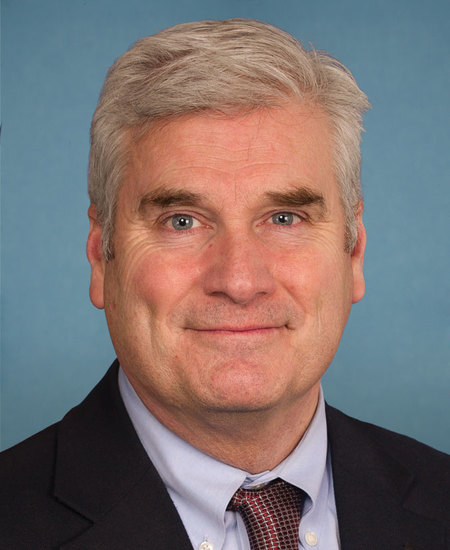
Rep. Tom Emmer
Sponsored bills
Pain-Capable Unborn Child Protection Act This bill establishes a new criminal offense for performing or attempting to perform an abortion if the probable post-fertilization age of the fetus is 20 weeks or more. A violator is subject to criminal penalties—a fine, a prison term of up to five years, or both. The bill provides exceptions for an abortion (1) that is necessary to save the life of the pregnant woman, or (2) when the pregnancy is the result of rape or incest. A physician who performs or attempts to perform an abortion under an exception must comply with specified requirements. A woman who undergoes a prohibited abortion may not be prosecuted for violating or conspiring to violate the provisions of this bill.
Defending Against Imitations and Replacements of Yogurt, milk, and cheese to Promote Regular Intake of Dairy Everyday Act or the DAIRY PRIDE Act This bill prohibits the sale of any food that uses the market name of a dairy product (such as milk , yogurt , or cream cheese ) unless the food (1) is the milk of a hooved animal, (2) is derived from such milk, or (3) contains such milk as a primary ingredient.
Pharmacy and Medically Underserved Areas Enhancement Act This bill provides for Medicare coverage and payment with respect to certain pharmacist services that (1) are furnished by a pharmacist in a health-professional shortage area, and (2) would otherwise be covered under Medicare if furnished by a physician.
Life at Conception Act This bill declares that the right to life guaranteed by the Constitution is vested in each human being at all stages of life, including the moment of fertilization, cloning, or other moment at which an individual comes into being. Nothing in this bill shall be construed to authorize the prosecution of any woman for the death of her unborn child.
No Taxpayer Funding for Abortion and Abortion Insurance Full Disclosure Act of 2021 This bill modifies provisions relating to federal funding for, and health insurance coverage of, abortions. Specifically, the bill prohibits the use of federal funds for abortions or for health coverage that includes abortions. Such restrictions extend to the use of funds in the budget of the District of Columbia. Additionally, abortions may not be provided in a federal health care facility or by a federal employee. Historically, language has been included in annual appropriations bills for the Department of Health and Human Services (HHS) that prohibits the use of federal funds for abortions—such language is commonly referred to as the Hyde Amendment. Similar language is also frequently included in appropriations bills for other federal agencies and the District of Columbia. The bill makes these restrictions permanent and extends the restrictions to all federal funds (rather than specific agencies). The bill's restrictions regarding the use of federal funds do not apply in cases of rape, incest, or where a physical disorder, injury, or illness endangers a woman's life unless an abortion is performed. The Hyde Amendment provides the same exceptions. The bill also prohibits qualified health plans from including coverage for abortions. Currently, qualified health plans may cover abortion, but the portion of the premium attributable to abortion coverage is not eligible for subsidies.
Stop China's IP Theft Act This bill directs the Department of State and the Department of Homeland Security to deny entry into the United States to senior Chinese Communist Party officials, the spouses and children of such officials, members of the cabinet of the Chinese government, and active duty members of China's armed forces. This prohibition shall not apply in any year in which the Office of the Director of National Intelligence certifies to Congress that China's government has stopped sponsoring, funding, facilitating, and actively working to support efforts to infringe the intellectual property rights of U.S. citizens and companies.
Finish the Wall Act This bill requires the Department of Homeland Security (DHS) to resume activities related to the construction of a barrier system along the U.S.-Mexico border and addresses other border-related issues. DHS must resume all such construction activities that were planned or underway prior to January 20, 2021. DHS must also expend all funds appropriated or explicitly obligated since October 1, 2016, for construction of this barrier system. DHS may not cancel contracts for activities related to such construction entered into on or before January 20, 2021. Furthermore, within 14 days of this bill's enactment, DHS must certify to Congress that U.S. Customs and Border Protection facilities that process adults taken into custody at the border are fully compliant with certain laws related to the collection of DNA. (Among other things, these laws allow for the collection of DNA samples from non-U.S. persons detained under U.S. authority.)
This resolution censures Representative Maxine Waters for her comments related to the trial of Derek Chauvin.
Maximizing America's Prosperity Act of 2021 This bill establishes annual spending limits that are equal to specified percentages of potential gross domestic product (GDP). Potential GDP generally refers to the GDP that would occur if the economy were at full employment without inflation. The spending limits apply to all budget authority and outlays of the federal government excluding net interest. The bill establishes procedures for enforcing the spending limits, including requirements for sequestration (i.e., automatic spending cuts) and for the President's budget and congressional budget resolutions to comply with the limits. The bill also requires at least 1% of total discretionary spending for each year to be reserved for emergencies.