Maddy summaryThe Water Authority Cybersecurity Protection Act extends the Drinking Water Infrastructure Risk and Resilience Program through fiscal years 2028 and 2029, replacing the previous expiration dates of 2020 and 2021. The bill doubles the authorized funding for technical assistance to $10 million and for grants to small water systems to $20 million. Additionally, it increases the total annual authorization of appropriations for the program from $25 million to $50 million. These changes directly affect public water utilities by providing continued financial support for cybersecurity improvements and risk management.
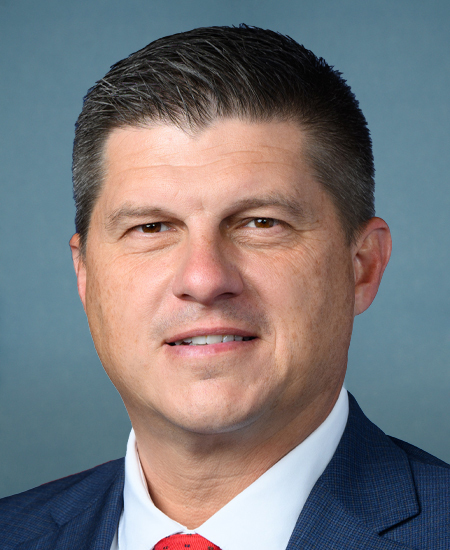
Rep. Brad Finstad
Sponsored bills
Maddy summaryThe Not In My Barn Yard Act would prohibit the federal government from using eminent domain to seize agricultural land if a feasible alternative for the intended public use is available. This restriction applies to land used for farming, ranching, forestry, or timber production within the previous five years, while excluding small plots of ten acres or less that generate $1,000 or less in annual gross receipts. The bill directly affects agricultural landowners by providing them with legal protection against federal land seizures under these specific conditions. However, the new prohibition would not apply to any eminent domain proceedings that began before the act is enacted.
This bill designates the facility of the United States Postal Service located at 15642 Sand Canyon Avenue in Irvine, California, as the "Mary Kageyama Nomura Post Office Building".
Maddy summaryThe Lifelong Learning Act amends the Workforce Innovation and Opportunity Act to increase the percentage of federal funds that states must reserve for incumbent worker training and transitional jobs programs. It requires states to report on the performance outcomes of these specific training initiatives, which will then be used to adjust performance targets for other adult and dislocated worker programs. Additionally, the bill expands flexibility by allowing local boards to serve as one-stop operators if they enter into written agreements with local officials and adhere to strict conflict-of-interest controls.
Maddy summaryThis bill authorizes the President to award the Medal of Honor to Earl L. Nolte for his acts of valor while serving in the Army during World War II. It specifically waives standard time limits that typically restrict when such military decorations can be granted. The legislation recognizes that Nolte was previously awarded the Silver Star for these same actions, effectively upgrading his highest honor to the nation's most prestigious military decoration.
Maddy summaryHR 6213, the Heat Workforce Standards Act of 2025, prohibits the U.S. Department of Labor from finalizing, implementing, or enforcing OSHA's proposed "Heat Injury and Illness Prevention" standard (published August 30, 2024). This bill directly blocks the specific regulatory proposal targeting heat safety in both outdoor and indoor work settings. It does not create new requirements or affect workers; it solely prevents the implementation of the existing OSHA proposal. The bill is procedural, focusing on halting a regulatory action rather than establishing new policy.
Maddy summaryThis bill reauthorizes funding for the C.W. Bill Young Cell Transplantation Program, setting $31 million for fiscal year 2025 and $33 million annually for fiscal years 2027-2031. It also extends the deadline for the national cord blood inventory program from 2026 to 2031. The legislation directly affects stem cell research programs and cord blood banks by maintaining federal funding levels and prolonging the inventory program’s timeline. These provisions ensure continuity for existing research infrastructure and blood bank operations without introducing new policy changes.
Maddy summaryThe Patients First Act of 2026 modifies how Medicare reimburses physicians and primary care providers to improve access and stabilize payments. It establishes a new hybrid payment model for primary care services from 2027 to 2031, which pays a monthly fee per patient to eligible independent practices while covering specific services like care management and telehealth without cost-sharing for patients. The bill also updates the formula for calculating reimbursement rates to account for high inflation years and requires more frequent updates to the costs used in calculating payments. Additionally, the legislation reforms the performance-based payment system by adding care efficiency measures, creating a task force to recommend new quality metrics, and adjusting penalties for providers who fail to report on certain data.
Maddy summaryThe Essential Caregivers Act of 2026 requires nursing homes, long-term care hospitals, rehabilitation facilities, and intermediate care facilities to allow two chosen family members or friends to visit residents during times when regular visitation is suspended. These essential caregivers must agree to follow the facility's existing safety and infection control rules, which are no more restrictive than those applied to staff. While facilities can limit access for the first seven days of a suspension or deny entry if a caregiver shows symptoms of a serious infectious disease, they cannot block visits for end-of-life care. Additionally, the bill mandates that complaints about denied access to essential caregivers be investigated and resolved within three days.
Maddy summaryHR 7651, the Chloe Cole Act of 2026, prohibits healthcare providers from performing certain medical interventions on minors under 18 aimed at altering physical development to align with gender identity. These "covered interventions" include puberty blockers, hormone treatments, and specific surgeries, but exclude medically necessary care for conditions like disorders of sexual development or traumatic injuries. The bill creates a federal civil lawsuit right for affected minors or their parents against providers who perform such interventions, allowing claims for damages including emotional distress and punitive awards, with strict liability for providers after the law's enactment. It explicitly allows exceptions for legitimate medical treatments and requires providers to prove such exceptions apply if challenged.