

Maddy summaryThe SAFE KIDS Act would void surrogacy contracts between U.S. surrogates and foreign nationals from designated "foreign entities of concern" (nations listed under 10 U.S.C. §4872(f)(2)), except for married couples where at least one prospective parent is a U.S. citizen or lawful permanent resident. It prohibits surrogacy brokers from facilitating such contracts, imposing fines or up to one year in prison for knowingly arranging these agreements. If a contract is voided, custody decisions for the child would be determined by state courts based solely on the child’s best interests, disregarding the invalid agreement. The bill aims to address what Congress identifies as a national security threat involving exploitation of U.S. surrogacy laws and potential human trafficking.
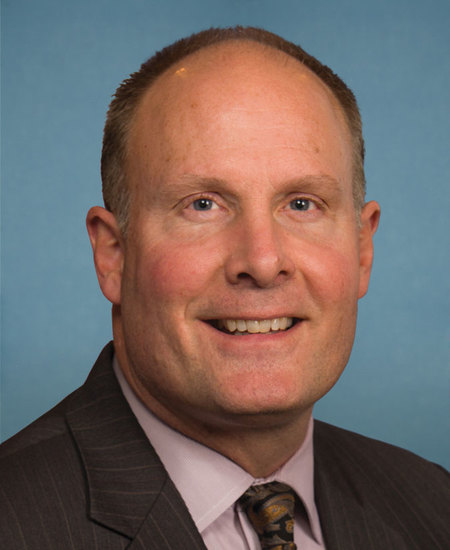
Rep. John R. Moolenaar
Sponsored bills
Maddy summaryThe AI OVERWATCH Act requires U.S. exporters to obtain a license for sending certain high-performance integrated circuits (defined by specific technical specifications like processing power or bandwidth) to countries designated as "concerns," including China, Russia, Iran, and North Korea. Before approving such licenses, the Commerce Department must submit detailed certifications to Congress, including assurances the export won’t support military/intelligence capabilities of the recipient country and won’t harm U.S. semiconductor availability or AI leadership. The bill also creates an exemption for U.S. companies meeting strict security and ownership standards ("trusted United States persons") to export these chips to non-target countries without a license. Additionally, it mandates a national security strategy assessing how such exports affect U.S. AI competitiveness, particularly regarding China’s semiconductor production and capabilities.
Maddy summaryThe Tribal Labor Sovereignty Act of 2025 amends the National Labor Relations Act to explicitly include tribal governments and their enterprises as covered employers under federal labor law. It adds new definitions clarifying that "Indian tribe," "Indian," and "Indian lands" encompass federally recognized tribes, their members, and lands held in trust or within reservation boundaries. This change directly affects tribal nations, their member-owned businesses, and tribal employees by bringing them under the same labor protections (like collective bargaining rights) previously applicable to most private-sector employers. The bill does not create new programs but adjusts the legal definition to ensure tribal entities operating on tribal lands are subject to the NLRA’s standard labor regulations.
Maddy summaryHR 2683, the Remote Access Security Act, amends the Export Control Reform Act of 2018 to regulate how foreign entities remotely access U.S.-controlled technology. It defines "remote access" as foreign persons accessing U.S. items (like sensitive technology) via internet or cloud services from outside the item's physical location. The bill updates existing export control rules to include remote access as a regulated activity, requiring oversight similar to physical exports or in-country transfers. This primarily affects foreign companies, cloud providers, and technology firms handling U.S.-jurisdiction items.
Maddy summaryThis bill amends the Fair Labor Standards Act to exclude the value of employer-provided child or dependent care services from overtime pay calculations. It directly affects employers who offer such care benefits, allowing them to exclude the cost of these services when determining overtime wages for eligible employees. The key change adds a new exclusion (paragraph (9)) to the overtime calculation rules, meaning the value of childcare or elder care provided by an employer is no longer counted toward an employee's regular rate for overtime purposes. The change applies to overtime pay required for workweeks beginning after the bill's enactment date.
Maddy summaryHR 909, the Crime Victims Fund Stabilization Act of 2025, modifies how funds from the False Claims Act are deposited into the Crime Victims Fund. It specifies that from 2025 through 2029, certain False Claims Act proceeds (specifically those for qui tam plaintiff payments and government damage reimbursements) cannot be deposited into the fund. This change directly affects the composition of the Crime Victims Fund by excluding these specific revenue streams during the specified period. The bill does not create new benefits or alter victim services; it only adjusts fund allocation rules for existing False Claims Act revenues.
Maddy summaryThis bill imposes penalties on freight brokers who contract with carriers that have a history of safety violations. Specifically, brokers face a civil penalty equal to 10% of the contracted cargo's value if they work with a carrier (or employ a driver) that received three or more Department of Transportation violations in the past five years. Penalties collected go to the Highway Trust Fund and can be used for roadway safety projects. The bill also authorizes investigations into fatal crashes involving brokers' contracted carriers, allowing safety requirements to be added if brokers showed disregard for safety.
Maddy summaryThis bill, titled "Pet and Livestock Protection Act," is misleading; it actually focuses on gray wolf management. It requires the Secretary of the Interior to reissue a 2020 rule removing gray wolves from the endangered species list within 60 days of enactment. The bill also prohibits courts from reviewing this reissuance. This directly affects gray wolf populations and management policies in states where wolves are present, shifting regulatory control away from federal endangered species protections.
Essential Caregivers Act of 2025 This bill prohibits certain health care facilities from limiting the access of essential caregivers to residents of those facilities, including during designated emergency periods. Specifically, the bill generally prohibits Medicare skilled nursing facilities, Medicaid nursing facilities, Medicaid intermediate care facilities, and associated inpatient rehabilitation facilities from restricting the access of essential caregivers to residents of the facilities, including during emergency periods in which visitation rights are otherwise restricted. During emergency periods, facilities may restrict access for an initial period of up to seven days and for one additional maximum seven-day period (if the additional period is approved by the state health department). Facilities may restrict access for a total of 7 days (or 14 days with the approval of the state health department) during an emergency period. Essential caregivers must agree to comply with any safety protocols set by the facility, which may be no more stringent for caregivers compared to those for staff. Caregivers who fail to comply with these requirements may be denied access, subject to an appeals process.
Maddy summaryHR 6707, the CFIUSMCA Act, directs the U.S. Trade Representative to advocate during USMCA joint reviews for Mexico and Canada to adopt foreign investment review frameworks similar to the U.S. Committee on Foreign Investment (CFIUS) process. It aims to create a coordination mechanism among the U.S., Mexico, and Canada for sharing information and managing national security risks in strategically important sectors like semiconductors, artificial intelligence, critical infrastructure, and cybersecurity. The bill requires U.S. agencies to provide technical assistance to Mexico and Canada to help them establish these aligned frameworks and mandates regular communication to address shared threats from foreign investments. This legislation directly affects U.S. trade and security officials, as well as the foreign investment review processes of Mexico and Canada under the USMCA agreement.