

One-Stop Pilot Program Act of 2021 This bill authorizes the Transportation Security Administration (TSA) to conduct a pilot program at not more than six foreign last point of departure airports to permit passengers and their accessible property to bypass domestic security rescreening at a connecting airport in the United States. Screening may be bypassed if (1) the country of departure has an aviation screening agreement with the United States setting standards and protocols comparable to those in the United States; (2) passengers cannot access their checked baggage until arriving at their final destination; and (3) upon arrival in the United States, passengers do not come into contact with other arriving international passengers (or their property) or persons who have not been screened. The TSA must ensure there is no reduction in the level of security or specific aviation security standards and requirements for screening passengers and their property prior to boarding an international flight bound for the United States, including standards or requirements regarding (1) high risk passengers; and (2) weapons, explosives, and incendiaries. If the TSA determines that the foreign countries participating in the screening agreements have not maintained and implemented comparable standards and protocols to those in the United States, it must ensure that passengers and their property arriving from the foreign airports are rescreened in the United States before they are permitted into sterile areas of the airports. The pilot program shall terminate six years after the enactment of the bill.
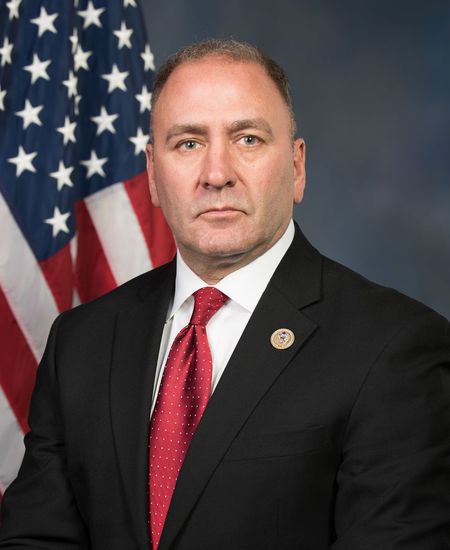
Rep. Clay Higgins
Sponsored bills
2020 WHIP+ Reauthorization Act This bill expands disaster indemnity programs through which the Department of Agriculture provides payments to agricultural producers for crop and milk losses resulting from hurricanes, wildfires, and other qualifying natural disasters. In particular, the bill extends the Wildfire and Hurricane Indemnity Program Plus (WHIP+), the On-Farm Storage Loss Program, and the Milk Loss Program to make losses that occurred in the 2021 and 2022 calendar years eligible for payments. Under current law, these programs provide disaster payments to agricultural producers with crop and milk losses resulting from qualifying natural disasters that occurred in the 2018 and 2019 calendar years.
Countering Communist China Act This bill addresses issues related to China, tax incentives, and other topics. The bill imposes visa- and property-blocking sanctions on certain entities and individuals that (1) are involved in acts of malign disinformation on behalf of a foreign government or political party, or (2) have engaged in a pattern of significant infringement of intellectual property belonging to a U.S. entity or individual. It also authorizes sanctions on developers and owners of software that makes unauthorized transmissions of user data to servers that are located in China and are accessible by China's government. The bill also provides tax incentives for relocating pharmaceutical, medical supply, or medical device manufacturing to the United States, including by allowing accelerated depreciation of nonresidential real property acquired in connection with such relocation; eliminates the five-year amortization requirement for research and experimental expenditures scheduled to begin in 2022, thus allowing continued expensing of such expenditures in the taxable years in which they are incurred; prohibits an institution of higher education from receiving certain federal funds if the institution has a contractual partnership with an entity controlled by China's government or organized under China's laws; modifies presumptions and evidentiary standards in administrative patent validity challenges; bars China from asserting sovereign immunity in certain instances; requires U.S. representatives to the International Monetary Fund (IMF) to take certain actions, such as opposing any increase to the weight given to China's currency when determining the value of IMF Special Drawing Rights; and permanently rescinds unobligated funds previously made available for certain economic relief programs related to COVID-19.
This resolution condemns (1) the executive actions that canceled the Keystone pipeline and imposed a moratorium on oil and gas leases on federal lands and waters, and (2) the waiver of sanctions on officials connected with the Nord Stream 2 pipeline.
This resolution expresses the sense of the House of Representatives that the Secretary of Defense, Lloyd James Austin III, should immediately resign from office.
This resolution expresses the sense of the House of Representatives that the Chairman of the Joint Chiefs of Staff, Mark Alexander Milley, immediately resign from office.
This resolution calls for the immediate resignation of President Biden.
U.S.A. Beef Act This bill modifies label requirements for meat food products of cattle. Specifically, the bill prohibits the label of cattle meat or a meat food product of cattle from bearing the phrase Product of U.S.A. unless such meat or meat food product is exclusively derived from one or more cattle born, raised, and slaughtered in the United States. The requirement does not apply to cattle meat or a meat food product of cattle that is intended and offered for export to a foreign country.
This resolution impeaches Secretary of State Antony J. Blinken for high crimes and misdemeanors related to his role in the withdrawal of U.S. forces and diplomatic assets from Afghanistan.
Puppies Assisting Wounded Servicemembers for Veterans Therapy Act or the PAWS for Veterans Therapy Act This bill implements a program and a policy related to service dog therapy for veterans. Specifically, the bill requires the Department of Veterans Affairs (VA) to implement a five-year pilot program to provide canine training to eligible veterans diagnosed with post-traumatic stress disorder as an element of a complementary and integrative health program. Eligible veterans are those who are enrolled in the VA health care system and have been recommended for participation by a qualified mental health care provider or clinical team. The VA must seek to enter agreements containing specified elements with accredited nongovernmental entities that have demonstrated ability to provide canine training. Veterans who participate in the program are authorized to adopt the dog they assisted in training if their health provider determines it is in the best interest of the veteran. The VA must establish processes to document and track the progress of participating veterans with respect to health benefits and improvements. The Government Accountability Office must brief Congress and submit a report on the program. The bill also authorizes the VA to provide service dogs to veterans with mental illnesses, regardless of whether they have a mobility impairment.