

State, Local, Tribal, and Territorial Fiscal Recovery, Infrastructure, and Disaster Relief Flexibility Act This bill allows states, tribes, territories, and localities to use certain COVID-19 relief funds for new categories of spending, including for natural disasters and infrastructure projects. It also makes changes to expenditure deadlines and other aspects of this funding. Specifically, recipients may use funds for emergency relief from natural disasters and associated negative economic impacts of natural disasters. In addition, recipients may use a portion of their COVID-19 relief funds for designated infrastructure projects, such as nationally significant freight and highway projects. Furthermore, the bill allows recipients to expend COVID-19 relief funds on these types of infrastructure projects until September 30, 2026. Under current law, recipients must expend the funds by December 31, 2024. Other changes in the bill include (1) modifying eligibility and allocation requirements for funding set aside for counties and Indian tribes that are near public lands, (2) allowing Indian tribes an additional year to expend their COVID-19 relief funds, and (3) establishing a process for government entities to decline COVID-19 relief funds and requiring any declined funds to be used to reduce the federal deficit.
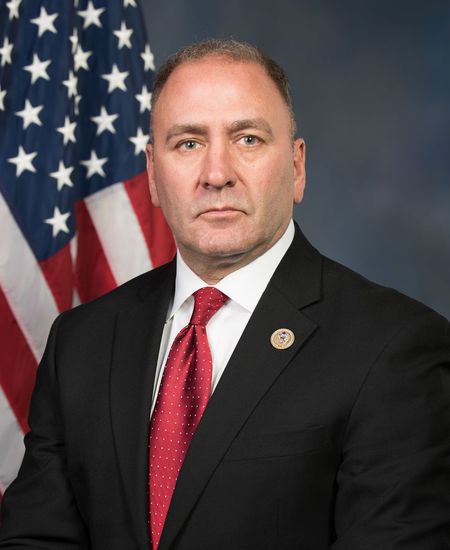
Rep. Clay Higgins
Sponsored bills
CBP Donations Acceptance Program Reauthorization Act This bill extends through December 31, 2026, the authority of U.S. Customs and Border Protection (CBP) to enter into an agreement with any entity to accept donations of real and personal property for certain activities at ports of entry. Further, the bill allows CBP to accept donations at leased land ports of entry.
Priority Response for Veterans Impacted by Disasters and Emergencies Act or the PROVIDE Act This bill requires the Department of Veterans Affairs to set forth criteria (1) for the priority processing of claims related to compensation for service-connected disability for certain veterans (e.g., veterans affected by homelessness or major disasters), and (2) to establish flexible evidence requirements for veterans who are unable to meet ordinary evidence requirements for such priority claims due to a major disaster.
This resolution recognizes the ultimate sacrifice of the unknown soldiers interred at Arlington National Cemetery and expresses gratitude and appreciation of all the members of the Armed Forces who have served during wars and peacetime. Additionally, the resolution commends all members of the 3d Infantry Regiment, specifically those who guard the Tomb of the Unknown Solider.
Maximum Pressure Act This bill expands sanctions and economic penalties on Iran. It also restricts the President from unilaterally lifting or waiving the sanctions or penalties and increases congressional oversight of them. Specifically, the bill requires the President to impose visa- and asset-blocking sanctions. Additionally, it modifies existing sanctions, including by (1) providing statutory authority for executive orders imposing sanctions; (2) applying sanctions to additional sectors of Iran's economy; and (3) broadening sanctionable conduct to cover, for example, assisting Iran with the acquisition of ballistic missiles and the complicity of Iranian officials in human rights violations in specified countries. The bill also requires reporting on licenses that authorize activities subject to sanctions. The bill prohibits U.S. representatives at the International Monetary Fund from voting to allow Iran's access to special drawing rights (a currency support tool) and places restrictions on financial transactions with Iran. The restrictions include requiring domestic financial institutions to implement special measures with respect to foreign financial institutions that conduct significant transactions connected to the Instrument in Support of Trade Exchanges (a European mechanism that bypasses U.S. sanctions when carrying out trade with Iran). The Department of State must maintain the Islamic Revolutionary Guard Corps' designation as a terrorist organization and must designate Ansharallah (or Houthis), which operates in Syria, as a foreign terrorist organization. The bill also requires reports on U.S. sanctions concerning Iran, the status of Iran's nuclear weapons program, and other matters.
Drug Cartel Terrorist Designation Act This bill directs the Department of State to designate the Reynosa/Los Metros faction of the Gulf Cartel and the Cartel Del Noreste faction of Los Zetas as foreign terrorist organizations and to submit a detailed report on those drug cartels and any other cartels it may identify. Based on this report, the State Department must designate as a foreign terrorist organization any such identified cartel (or faction thereof) that meets certain criteria for designation as a foreign terrorist organization.
COVID-19 Border Protection (CBP) Act This bill requires the Department of Homeland Security (DHS) to devise and implement a strategy to ensure that no alien with COVID-19 (i.e., coronavirus disease 2019) in DHS or Department of Health and Human Services custody may be released into the community during a public health emergency related to COVID-19. Funds previously provided to the Department of State for supporting international efforts to help migrants and refugees respond to COVID-19 shall be transferred to DHS to implement this strategy.
Energy Security Cooperation with Allied Partners in Europe Act of 2021 This bill establishes requirements related to U.S. international energy strategy. Applications to export natural gas to North Atlantic Treaty Organization (NATO) member countries, Japan, and certain other countries shall be granted on an expedited basis without modification or delay. The President shall impose sanctions on a person that provides certain equipment, investment, or services to the Russian government or related entities for constructing or servicing Russian energy export pipelines. The Department of State shall report to Congress on a strategy to enhance the energy security of NATO member countries and increase exports of U.S. energy (and related technologies and services) to such countries.
Prohibiting IRS Financial Surveillance Act This bill prohibits the Department of the Treasury from requiring a financial institution to report the transfers into and out of a financial account. This prohibition does not apply to laws or regulations in effect on October 1, 2021.
Choose Home Care Act of 2021 This bill provides for coverage of home-based extended care services under Medicare. Specifically, the bill provides for coverage of services that are furnished to Medicare beneficiaries in their homes by home health agencies, including nursing care, meals and nutritional support, home medical supplies, nonemergency medical transportation, and care coordination. Coverage includes 30 days of post-hospital care and other periods of extended illness, as determined by the Centers for Medicare & Medicaid Services (CMS). Home health agencies that provide such services may receive additional payments in accordance with a specified methodology. The CMS may make payments for covered services furnished before 2022 during any period in which there is a public health emergency.