Maddy summaryHR 2405, the White Oak Resilience Act, establishes a voluntary coalition to coordinate federal, state, tribal, and private efforts for restoring white oak forests across the U.S. It creates pilot projects on public lands (including national forests and Department of the Interior sites), a non-regulatory grant program for landowners, and a strategy to address tree nursery shortages. The bill directly affects private landowners, tribes, state agencies, and federal land managers by providing technical assistance, funding for restoration, and research on white oak resilience. The program includes a 7-year sunset clause and emphasizes science-based restoration without mandating new regulations.
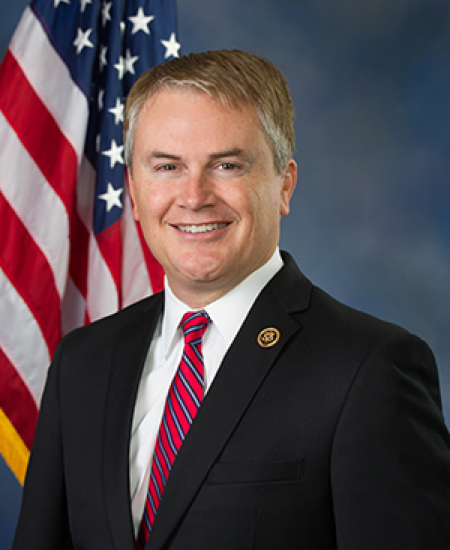
Rep. James Comer
Sponsored bills
Maddy summaryHR 3492, the Protect Children’s Innocence Act, makes it a federal crime to perform genital or bodily mutilation or chemical castration on minors under 18, except for specific medical reasons. The bill broadly defines prohibited procedures to include gender transition-related surgeries (like hysterectomies or mastectomies) and medical treatments such as puberty blockers or cross-sex hormones administered to minors. It criminalizes these acts when they occur across state lines, involve payments, or use interstate commerce, while explicitly banning religious tradition as a defense. Exceptions include medically necessary procedures for health emergencies, childbirth, or conditions certified by a physician.
Miracle on Ice Congressional Gold Medal Act This act provides for the award of Congressional Gold Medals to the members of the 1980 U.S. Olympic men's ice hockey team in recognition of the team's achievement at the 1980 Winter Olympic Games.
Maddy summaryThis bill establishes new requirements for pharmacy benefit managers (PBMs) working with Medicare Part D prescription drug plans and Medicaid programs. It mandates that PBMs pay pharmacies a specific reimbursement amount based on drug acquisition costs plus a fixed fee, pass through manufacturer rebates directly to beneficiaries at the point of sale, and prohibits steering practices that direct patients to specific pharmacies. The bill applies to Medicare Part D plans and Medicaid managed care organizations beginning January 1, 2027, affecting how PBMs interact with pharmacies and handle drug rebates. Violations could result in criminal penalties of up to $1 million or 10 years in prison for willful noncompliance. The bill aims to increase transparency and fairness in pharmacy drug pricing for Medicare and Medicaid beneficiaries.
Maddy summaryHR 5749, the Official Time Reporting Act, requires federal agencies to report annually on how they use "official time" - when union-represented employees perform union duties during work hours. Agencies must submit detailed data to the Office of Personnel Management (OPM) by December 31 each year, including total official time granted, costs, explanations for year-over-year increases, and specific activities covered. OPM then compiles this information into a public report by March 31, showing agency-level breakdowns and comparing data across years. This bill directly affects all federal agencies with union-represented employees, mandating transparency about official time usage and associated costs. The reporting aims to provide clear, standardized data for public accountability without changing existing official time policies.
Maddy summaryHR 5731, the School Food Modernization Act, provides funding to help schools upgrade facilities and equipment for healthier meal programs. It authorizes $300 million in loan guarantees (covering up to 80% of costs) and $35 million annually for grants to support kitchen renovations, equipment purchases, and food safety improvements for local schools and tribal organizations. The bill also allocates $10 million yearly to fund training programs for school food service staff, developed by third-party organizations, to meet nutrition standards. These provisions directly affect public school districts, tribal schools, and their food service operations by enabling infrastructure upgrades and staff training.
Maddy summaryHRES 900 is a symbolic resolution expressing condolences to the families and loved ones of the 14 victims (3 on board and 11 in the Louisville community) of the UPS Airlines flight 2976 crash that occurred on November 4, 2025, at Louisville Muhammad Ali International Airport. It specifically names the victims, honors their lives, and commends the first responders who assisted during the tragedy. This resolution has no policy or funding impact - it serves only as a formal expression of sympathy from the House of Representatives.
Maddy summaryThis bill requires all new passenger vehicles manufactured for sale in the U.S. to include AM radio as standard equipment (not an optional add-on) by 2027-2028, depending on manufacturer size. It mandates that AM radio receivers must be easily accessible to drivers and allows compliance through digital AM broadcast technology. During a transition period, manufacturers must clearly label vehicles without AM radio but cannot charge extra for this feature. The bill also mandates a GAO study on AM radio's role in emergency alerts and includes a 10-year sunset provision for the rule. It preempts state laws regarding AM radio access in vehicles.
Maddy summaryThis bill ensures that critical firearm-related government operations continue during federal shutdowns. It designates background checks (via the FBI's National Instant Criminal Background Check System), Bureau of Alcohol, Tobacco, Firearms and Explosives enforcement, and firearm export licensing (handled by Commerce and State Departments) as essential services that must remain operational. These functions would be treated as "excepted" under federal law, meaning their employees would continue working even if other government services halt. The bill affects how background checks and firearm export licenses are processed during shutdowns but does not change gun ownership laws or eligibility.
Maddy summaryThis bill ensures SNAP (food stamp) benefits continue uninterrupted during government funding gaps in fiscal year 2026. It directs the USDA to use existing Treasury funds to pay SNAP benefits if Congress fails to pass a full-year budget for the Department of Agriculture by September 30, 2025. The bill also covers retroactive payments for missed benefits starting September 30, 2025, through the bill's enactment date. Benefits funded this way stop once Congress enacts a full FY2026 budget for the USDA. It directly affects SNAP recipients who rely on these benefits during budget delays.