Maddy summaryHRES 798 is a House resolution condemning support for Hamas, Hezbollah, and other terrorist organizations at colleges and universities. It states such support may create a hostile environment for Jewish students, faculty, and staff, citing incidents like blaming Israel for the October 7 Hamas attack. The resolution urges the Secretary of Education to direct the Office for Civil Rights to investigate and take action where appropriate. This non-binding resolution expresses the House's position but does not create new law or policy changes.
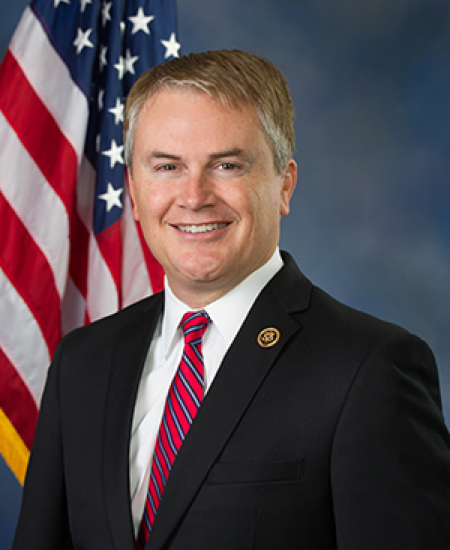
Rep. James Comer
Sponsored bills
Maddy summaryHRES 771 is a non-binding resolution expressing the U.S. House of Representatives' support for Israel following Hamas' October 7, 2023, attack. It condemns Hamas' actions, affirms Israel's right to self-defense, and calls for the immediate release of hostages. The resolution also urges enforcement of existing laws restricting aid to terrorists and sanctions against Iran for supporting Hamas. It does not create new policies or allocate funds, as it is a symbolic statement of congressional support.
Maddy summaryHRES 768 is a symbolic House Resolution expressing congressional support for Israel following Hamas' October 7, 2023 attacks. It condemns Hamas' actions, reaffirms Israel's right to self-defense, and calls for the immediate release of hostages. The resolution references the U.S. commitment to Israel's security through existing military aid programs, including the 2016 U.S.-Israel Memorandum of Understanding, and emphasizes enforcement of laws like the Taylor Force Act to prevent U.S. aid from reaching terrorist groups. As a symbolic resolution, it does not create new policy but serves as a statement of congressional support for Israel.
Maddy summaryHJRES 11 proposes a constitutional amendment that would limit Members of Congress to serving a maximum of three terms in the House of Representatives and two terms in the Senate. If passed and ratified, it would prevent any member who has already served the maximum terms from running for re-election, including time spent filling vacancies (for more than one year in the House or three years in the Senate). This amendment directly affects current and future members of Congress by changing eligibility rules for re-election. The proposal is currently a joint resolution in the House, requiring ratification by three-fourths of state legislatures to become part of the Constitution.
Maddy summaryHR 5636, the "Protect Children’s Innocence Act," prohibits federal criminal penalties for performing gender-affirming medical care on minors under specific circumstances. It defines prohibited care as surgeries (like hysterectomy or mastectomy), puberty blockers, and hormone therapies at supraphysiologic doses, with exceptions for medical emergencies, intersex conditions, or life-threatening illnesses. The law only applies when the care involves interstate commerce (e.g., payments, communications, or travel across state lines). Minors receiving such care cannot be prosecuted, but they may sue providers for civil damages. The bill directly affects minors under 18, healthcare providers, and families seeking gender-affirming medical treatment.
Maddy summaryHR 1435, the Preserving Choice in Vehicle Purchases Act, amends the Clean Air Act to restrict states from implementing vehicle emissions rules that limit the sale or use of new gasoline-powered cars. It directly affects states with stricter emissions standards (like California) by adding a new definition that blocks state rules "directly or indirectly" limiting internal combustion engine vehicles as defined in federal regulations as of January 1, 2023. The bill requires the EPA to revoke existing state emissions waivers granted between January 2022 and the bill’s enactment if they don’t comply with this new definition. This creates a concrete federal standard preventing states from advancing policies that could reduce demand for conventional vehicles.
Maddy summaryThis bill amends the Workforce Innovation and Opportunity Act to require states receiving federal workforce development funds to prioritize programs based on evidence of effectiveness. Specifically, states must describe in their plans how they will give highest priority to "high-evidence" programs (proven through multiple rigorous studies), followed by "moderate-evidence" programs, and then "low-evidence" programs. The bill defines these evidence tiers clearly, requiring states to fund interventions shown to produce positive results in well-conducted studies or credible research. This directly affects state workforce agencies managing federal grants under WIOA.
Maddy summaryThis bill directs the U.S. Treasury to mint commemorative coins marking the Marine Corps' 250th anniversary in 2025. It authorizes three coin types: $5 gold coins (max 50,000), $1 silver coins (max 400,000), and half-dollar coins (max 750,000), with surcharges of $35, $10, and $5 respectively. The surcharge proceeds will fund the Marine Corps Heritage Center's educational programs, with no net cost to taxpayers as the Treasury must recover all minting costs through the surcharges. The coins can only be issued during 2025, and the Treasury must ensure all costs are covered before distributing funds to the Heritage Foundation.
Maddy summaryHR 4721, the Main Street Tax Certainty Act, makes a permanent the 20% tax deduction for eligible small business owners under Section 199A of the tax code. This provision directly affects pass-through business owners (like S-corps, partnerships, and sole proprietorships) who qualify for the deduction. The bill achieves this by removing the temporary expiration language (subsection (i)) from the existing tax code provision. The key change is ending the need for annual congressional extensions of this deduction, providing long-term tax certainty for small businesses.
This resolution expresses the sense of the House of Representatives that research and promotion boards support efforts to develop new markets and strengthen existing markets via research, education, and promotion.