

Woman's Right To Know Act This bill specifies requirements for informed consent that health care providers must obtain before performing an abortion procedure. Providers must present a woman seeking an abortion with an authorization form at least 24 hours before performing the procedure. The form must (1) include specified information concerning gestational age, associated developmental characteristics, and medical risks; (2) disclose penalties that providers may face for failing to obtain the requisite informed consent; and (3) include an affirmation that the individual signing the form understands the information. The form must be signed and witnessed in person and retained in the medical file. Providers do not have to obtain such consent if, in reasonable medical judgment, obtaining it would pose a greater risk of death or substantial physical impairment of a major bodily function, excluding psychological or emotional conditions, of the pregnant woman. The bill also establishes civil penalties for providers who do not comply with these requirements.
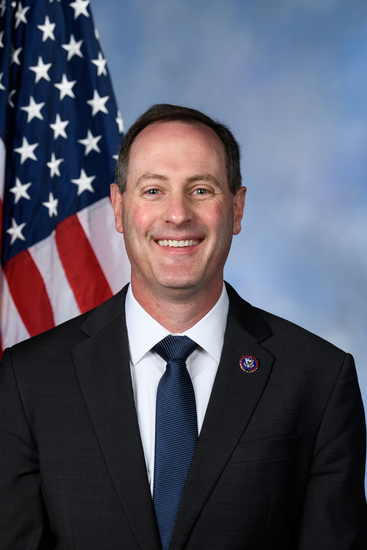
Rep. Tracey Mann
Sponsored bills
Life at Conception Act This bill declares that the right to life guaranteed by the Constitution is vested in each human being at all stages of life, including the moment of fertilization, cloning, or other moment at which an individual comes into being. Nothing in this bill shall be construed to authorize the prosecution of any woman for the death of her unborn child.
Establishing Public Accountability Act of 2021 This bill requires the Environmental Protection Agency to include a statement regarding the net gain or loss of domestic jobs that is likely to result if a rule is adopted, as well as the accompanying analysis, in the notice of proposed rulemaking.
No Taxpayer Funding for Abortion and Abortion Insurance Full Disclosure Act of 2021 This bill modifies provisions relating to federal funding for, and health insurance coverage of, abortions. Specifically, the bill prohibits the use of federal funds for abortions or for health coverage that includes abortions. Such restrictions extend to the use of funds in the budget of the District of Columbia. Additionally, abortions may not be provided in a federal health care facility or by a federal employee. Historically, language has been included in annual appropriations bills for the Department of Health and Human Services (HHS) that prohibits the use of federal funds for abortions—such language is commonly referred to as the Hyde Amendment. Similar language is also frequently included in appropriations bills for other federal agencies and the District of Columbia. The bill makes these restrictions permanent and extends the restrictions to all federal funds (rather than specific agencies). The bill's restrictions regarding the use of federal funds do not apply in cases of rape, incest, or where a physical disorder, injury, or illness endangers a woman's life unless an abortion is performed. The Hyde Amendment provides the same exceptions. The bill also prohibits qualified health plans from including coverage for abortions. Currently, qualified health plans may cover abortion, but the portion of the premium attributable to abortion coverage is not eligible for subsidies.
Security First Act This bill provides statutory authorization for the Operation Stonegarden program from FY2022 through FY2025 and contains other provisions related to border security. (Operation Stonegarden provides grants to enhance the border security capabilities of state, local, and tribal governments.) From FY2022 through FY2025, the money from unreported monetary instruments seized from individuals crossing the U.S.-Mexico border and transferred into the Department of the Treasury general fund shall be made available without further appropriation to the Department of Homeland Security (DHS) to fund Operation Stonegarden. DHS shall report to Congress on (1) DHS hiring practices from 2017 to 2020, and (2) whether certain Mexican drug cartels meet the criteria to be designated as foreign terrorist organizations. DHS shall also periodically report to Congress about the technology needed to secure the U.S.-Mexico land border.
Stop China's IP Theft Act This bill directs the Department of State and the Department of Homeland Security to deny entry into the United States to senior Chinese Communist Party officials, the spouses and children of such officials, members of the cabinet of the Chinese government, and active duty members of China's armed forces. This prohibition shall not apply in any year in which the Office of the Director of National Intelligence certifies to Congress that China's government has stopped sponsoring, funding, facilitating, and actively working to support efforts to infringe the intellectual property rights of U.S. citizens and companies.
Finish the Wall Act This bill requires the Department of Homeland Security (DHS) to resume activities related to the construction of a barrier system along the U.S.-Mexico border and addresses other border-related issues. DHS must resume all such construction activities that were planned or underway prior to January 20, 2021. DHS must also expend all funds appropriated or explicitly obligated since October 1, 2016, for construction of this barrier system. DHS may not cancel contracts for activities related to such construction entered into on or before January 20, 2021. Furthermore, within 14 days of this bill's enactment, DHS must certify to Congress that U.S. Customs and Border Protection facilities that process adults taken into custody at the border are fully compliant with certain laws related to the collection of DNA. (Among other things, these laws allow for the collection of DNA samples from non-U.S. persons detained under U.S. authority.)
Natural Gas Export Expansion Act This bill revises requirements regarding natural gas imports or exports to expand the expedited application and approval process to any nation, even if not a party to a free trade agreement with the United States, that is not specifically excluded by this bill. The bill excludes any nation subject to sanctions or trade restrictions imposed by the United States or excluded by the President or Congress for national security reasons.
American Workforce Empowerment Act This bill allows tax-preferred college savings plans (529 plans) to fund certain postsecondary certificate programs and apprenticeship programs.
Withstanding Attempts to Encroach on our Resources Act of 2021 or the WATER Act This bill specifies which bodies of water fall under the scope of the Clean Water Act and are thereby under federal jurisdiction. Specifically, the bill provides statutory authority for the definition of waters of the United States , commonly known as WOTUS, included in the 2020 Navigable Waters Protection Rule: Definition of "Waters of the United States." The 2020 rule replaced a 2015 rule that included a more expansive definition of WOTUS.