Maddy summaryHR 5867, the Plant-Powered School Meals Pilot Act, creates a federal grant program to help schools serve 100% plant-based meal options. It authorizes $10 million for grants to school food authorities (specifically those serving 50%+ students eligible for free/reduced-price meals) over three years to cover staff training, meal preparation, community partnerships, and procurement from underserved farmers. The bill also establishes a separate $2 million pilot to reimburse schools for nondairy beverage substitutions for students with dietary needs, prioritizing schools with high lactose intolerance rates. Both pilots require annual reporting on participation, meal counts, and fund usage, with final reports submitted to Congress.
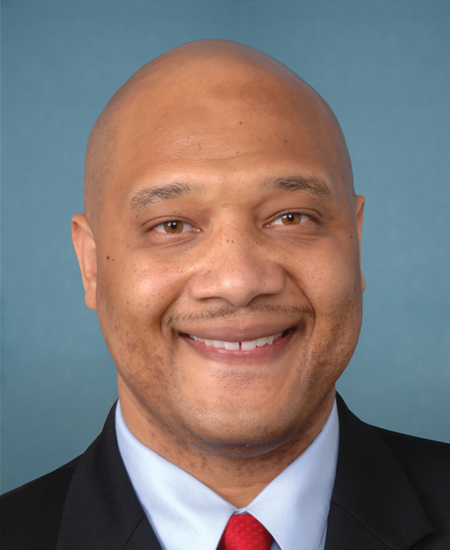
Rep. André Carson
Sponsored bills
Maddy summaryThe American Energy Independence and Affordability Act extends multiple clean energy tax credits that were set to expire between 2025 and 2026. It specifically extends residential clean energy credits through 2034, clean electricity investment credits for wind and solar through 2032, and clean vehicle credits for electric vehicles through 2032. The bill also reinstates special rates for sustainable aviation fuel and modifies requirements for energy-efficient home improvements. These provisions directly affect homeowners installing solar panels, businesses investing in clean energy infrastructure, and manufacturers producing clean energy equipment.
Maddy summaryThis bill amends the tax code to allow businesses to claim charitable tax deductions for donating specific food-related equipment to hunger-relief organizations. It creates a new category called "qualified property," covering fully functional food storage equipment (like industrial freezers), transportation vehicles (delivery trucks), and meal preparation tools (industrial ovens, packing machinery). Donors can deduct up to 25% of the equipment's fair market value, with annual limits of $500 for transport equipment and $15,000 for preparation equipment. The changes apply to tax years beginning after December 31, 2025, and only affect donations to organizations whose primary mission is distributing food to people in need.
Maddy summaryThe GRAD Act (HR 5850) prevents colleges from changing or ending a student's enrollment status if federal financial aid under Title IV is delayed due to a government shutdown. It directly affects students receiving federal aid and the institutions that award it. The bill amends the Higher Education Act to require schools to maintain enrollment status during disruptions caused by lapses in government funding. This ensures students aren’t penalized for aid delays beyond their control during shutdowns.
Maddy summaryHRES 832 is a symbolic resolution expressing the U.S. House of Representatives' support for designating October 19-25, 2025, as "National Chemistry Week." It recognizes chemistry's role in everyday life (from food and medicine to energy) and promotes public engagement with science, technology, engineering, and math education. The resolution specifically commends the American Chemical Society for organizing the 36th annual event, which focuses on themes like "The Hidden Life of Spices" and aims to inspire youth - especially underrepresented groups - to pursue STEM careers. As a non-binding ceremonial resolution, it has no legislative effect or policy changes.
Maddy summaryHRES 833 is a non-binding resolution passed by the U.S. House of Representatives to honor Dr. Jane Goodall, a renowned primatologist, conservationist, and advocate for wildlife protection. The resolution recognizes her groundbreaking chimpanzee research at Gombe Stream, her founding of the Jane Goodall Institute and Roots and Shoots program (which engages youth in environmental action globally), and her decades-long advocacy for ethical animal treatment and conservation. It commemorates her legacy following her passing on October 1, 2025, and extends condolences to her family and affiliated organizations. This resolution has no legal effect but serves as a symbolic tribute to her global environmental impact.
Maddy summaryThis resolution expresses the U.S. House of Representatives' support for recognizing October 26, 2025, as Intersex Awareness Day, which honors intersex individuals - those with natural variations in physical sex characteristics (such as anatomy, hormones, or chromosomes) that differ from typical male or female bodies. It affirms the day’s goals of promoting bodily autonomy and addressing issues like nonconsensual medical procedures on intersex children. The resolution encourages federal agencies, schools, and organizations to observe the day through educational activities that increase public awareness and support for the intersex community. It does not create new laws or policies but symbolically aligns with existing federal actions promoting nondiscrimination and health equity for intersex people.
Maddy summaryHR 5816, the HELP FEDs Act, protects federal employees from student loan penalties during government shutdowns. It prevents late fees, additional interest, and credit damage on qualified education loans (like federal student loans) when employees miss payments due to a funding lapse causing government operations to halt. The law requires the Department of Education to coordinate with loan servicers and credit agencies to remove any inaccurate negative credit reports from these missed payments, applying retroactively to shutdowns after October 1, 2025. The bill does not eliminate the need to repay loans but pauses penalties and credit impacts during covered disruptions.
Maddy summaryHRES 824 is a ceremonial House resolution recognizing the religious and historical significance of Diwali, the festival of lights. It acknowledges Diwali’s meaning across Hindu, Sikh, and Jain traditions - symbolizing light over darkness, good over evil, and marking spiritual milestones like Guru Hargobind’s release and Lord Mahavira’s Nirvana. The resolution expresses respect for Indian-Americans and the global Indian diaspora, highlighting Diwali’s role in U.S. religious diversity. As a non-binding recognition, it does not create new laws, policies, or funding, but formally honors the cultural observance.
Maddy summaryThis bill requires federal agencies to report detailed spending data on advertising contracts starting with the 2027 budget. Specifically, agencies must disclose total advertising expenditures and break down spending for contracts with women-owned, minority-owned, and socially/economically disadvantaged small businesses (as defined by law). The reporting applies to both past fiscal year spending and estimated future spending for each agency. This is a transparency measure focused solely on data collection, not on changing how contracts are awarded or funding levels.