Maddy summaryHR 3045, the West Bank Violence Prevention Act of 2025, imposes U.S. sanctions on foreign individuals and entities responsible for violence, displacement, or property destruction in the West Bank. It targets those directly involved in attacks on civilians, forced displacement, or property seizures, including settler leaders or officials of groups engaged in such activities. Key provisions require freezing assets of sanctioned individuals within U.S. jurisdiction and blocking their entry into the United States via visa restrictions. The law applies to foreign nationals meeting specific criteria outlined in the bill, not U.S. citizens or entities.
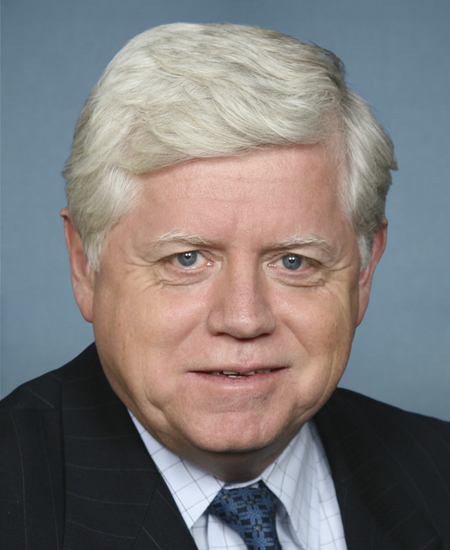
Rep. John B. Larson
Sponsored bills
Maddy summaryHR 2994, the Child and Dependent Care Tax Credit Enhancement Act of 2025, increases financial support for families covering childcare costs. It raises the credit rate to 50% (reduced for higher incomes), boosts the maximum creditable amount from $3,000 to $8,000 per child under 13 (or $6,000 to $16,000 for other dependents), and adjusts these limits annually for inflation starting in 2026. The bill also ensures married couples filing separately calculate their credit as if filing jointly, preventing reduced benefits. It directly affects low- and middle-income taxpayers with childcare expenses who itemize deductions. The changes take effect for tax years beginning after December 31, 2024.
Maddy summaryHR 3006 would limit Medicare coinsurance for certain surgical procedures performed in ambulatory surgical centers (ASCs). Specifically, it prevents patients from paying coinsurance exceeding the annual inpatient hospital deductible for those procedures. If the coinsurance amount would surpass the deductible, the Medicare program must reduce the patient's share to match the deductible and reimburse the ASC for the difference. This change applies to services provided on or after January 1, 2026, directly affecting Medicare beneficiaries using ASCs for qualifying surgeries.
Maddy summaryThis bill limits how much Social Security can withhold from monthly benefits to recover overpayments. It sets a 10% cap on withholdings for cases without fraud (unless the recipient requests a higher rate), affecting Social Security beneficiaries who received more than they were entitled to. The key provision prevents excessive deductions from monthly payments, ensuring recipients retain at least 90% of their benefit for non-fraudulent overpayments. The law applies to overpayments existing after the bill's effective date.
Hot Foods Act of 2025 This bill expands the Supplemental Nutrition Assistance Program (SNAP) to permit the use of SNAP benefits to purchase hot foods or hot food products ready for immediate consumption.
Maddy summaryThe Save Our Small Farms Act of 2025 amends crop insurance and disaster assistance programs to better support small and diversified farms. It creates a streamlined application process for small-scale producers, including those using urban production systems, direct-to-consumer models, and diversified farming operations. The bill establishes a revenue-based coverage option using IRS Schedule F tax forms, provides premium discounts (25% for first year, 50% for subsequent years) for farmers transitioning to whole farm insurance plans, and creates a new single index insurance policy to protect against weather-related income losses. The bill specifically targets support for beginning farmers, socially disadvantaged producers, veteran farmers, and those participating in the revenue-based option, with special considerations for farms with less than $350,000 in adjusted gross income.
Maddy summaryHRES 327 is a procedural resolution requesting the President to provide the House of Representatives with specific documents about Social Security Administration (SSA) operations after March 12, 2025. It seeks information on policies ending phone applications for benefits (effective March 18 and 26, 2025), office closures/consolidations, and staffing reductions. The resolution does not change laws but asks for records related to how these changes may affect public access to SSA services. This is a request for information, not a policy change.
Maddy summaryThe SERVICE Act (HR 2829) modifies the Public Service Loan Forgiveness (PSLF) program to make it more accessible for borrowers. It reduces the required number of qualifying monthly payments from 120 to 96, expands what counts as a qualifying payment to include certain deferments and forbearances, and creates a "buyback" option to make up for missed payments. The bill also establishes an online portal for borrowers to track their progress toward forgiveness, clarifies that independent contractors can qualify for PSLF, and changes how consolidated loans are treated. This bill directly affects borrowers with federal student loans who work in public service jobs and are seeking loan forgiveness.
Maddy summaryThe Neighborhood Homes Investment Act creates a new tax credit for developers who build or rehabilitate affordable homes in distressed communities. The credit is calculated as the lesser of (1) the difference between development costs and sale price, (2) 40% of development costs, or (3) 32% of the national median home price. It applies only to homes sold to qualified homeowners with income up to 140% of area median income in designated "qualified census tracts" (areas with high poverty rates, low median home values, and low median family income). Developers must meet quality standards and repay the credit if the home is sold within 5 years of the affordable sale. This credit aims to address the "value gap" that prevents housing development in distressed communities by incentivizing affordable home construction and rehabilitation.
Maddy summaryThe New England Coastal Protection Act of 2025 prohibits the federal government from issuing new leases for oil and gas exploration, development, or production in offshore federal waters along the coasts of Maine, New Hampshire, Massachusetts, Rhode Island, and Connecticut. This bill directly affects the Department of the Interior (which manages offshore leasing) and any companies seeking to drill in these areas by blocking new lease permits. The key provision amends the Outer Continental Shelf Lands Act to explicitly ban the Secretary from granting such leases in the specified coastal region. As a result, the bill prevents new oil and gas drilling projects in these offshore waters, though it does not impact existing leases or activities.