Maddy summaryThis bill requires five federal agencies (Housing and Urban Development, Agriculture, Veterans Affairs, Treasury, and the Federal Housing Finance Agency) to coordinate housing data sharing and jointly propose policy solutions. Within one year of enactment, the agencies must establish a shared agreement and submit a report to Congress addressing mortgage costs, housing construction barriers, local regulations, insurance availability, down payment assistance, and disaster resilience. The report will outline specific proposals to improve housing affordability and market efficiency. This is a procedural bill focused on interagency coordination, not direct policy changes or benefits for homeowners.
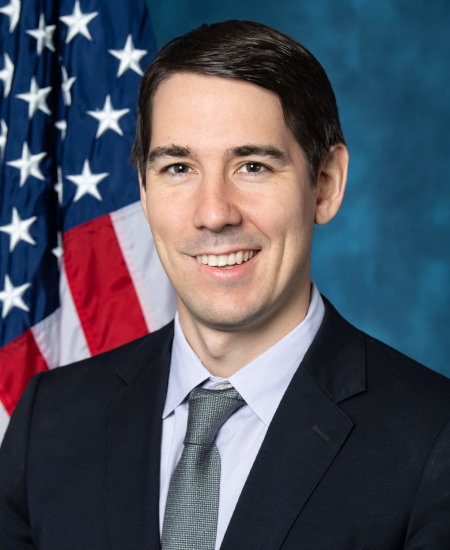
Rep. Josh Harder
Sponsored bills
Physical Therapist Workforce and Patient Access Act of 2025 This bill expands certain health professional programs and Medicare covered services to include physical therapists. Specifically, the bill expands the National Health Service Corps to include physical therapists and provides for the designation of specific health professional target areas for physical therapists under the program. The bill also expands covered services of rural health clinics and federally qualified health centers under Medicare to include physical therapy services. The bill increases funds for FY2025 for the corps and requires a certain amount of funds to be used for student loan repayments for participating physical therapists in the National Health Service Corps Loan Repayment Program.
Maddy summaryThis concurrent resolution designates the week of September 22-28, 2025, as "National Falls Prevention Awareness Week" to raise public awareness about falls among older adults (65+). It directly affects older adults and organizations working on fall prevention, such as healthcare providers and community groups. The resolution cites CDC data showing falls cause 41,000 annual deaths and $80 billion in medical costs, while encouraging existing evidence-based strategies like home safety modifications and balance exercises. It does not create new laws or funding but supports awareness efforts and collaboration among federal agencies, the Aging Network, and healthcare providers.
Maddy summaryThe FASTER Act (HR 5575) provides federal grants through FEMA to fire departments for programs that prevent falls among older adults (65+). It directly affects fire departments (career, combination, and volunteer) and seniors by funding home safety modifications like handrails, removing tripping hazards, and installing emergency access devices. Key provisions include 3-year grants covering up to 75% of costs in the first two years (35% in year three), requiring fire departments to use funds for specific fall prevention activities like home assessments and community paramedicine staffing - not to replace local funding. The bill mandates performance evaluations and a congressional report on effectiveness within two years of enactment.
Maddy summaryThe Lower Internet Costs Act (HR 5550) requires broadband providers to clearly show the total price of service as a single line item on customer bills and in promotional materials, including the regular price after introductory offers end. It prohibits specific "covered fees" like network maintenance charges, local government right-of-way fees, and equipment repair fees. The bill applies to all broadband subscribers and providers, mandating transparent pricing for both standard plans and bundled services (e.g., internet plus TV). Key provisions include requiring providers to disclose price changes 60 and 30 days in advance for limited-time offers and specifying that taxes or equipment fees aren’t included in the stated total price.
Maddy summaryThe Mental Health Services for Students Act of 2025 would establish a federal grant program to fund school-based mental health services for students in grades K-12, particularly those experiencing trauma, grief, suicide risk, or violence. It directly affects schools (including Bureau of Indian Education schools), students, and community mental health providers through partnerships that must include school districts and local mental health entities. Key provisions require services to be culturally appropriate, trauma-informed, and integrated with positive behavioral supports, with grants capped at $2 million per award for 5 years (renewable) and funded at $300 million annually for 2027-2028. Recipients must report annually on program outcomes, ensure equitable access across urban and rural areas, and comply with privacy laws like HIPAA and FERPA.
Maddy summaryThis resolution designates September 22-28, 2025, as "Asian American and Native American Pacific Islander-Serving Institutions Week" to honor institutions that serve Asian American, Native Hawaiian, and Pacific Islander students. It recognizes these colleges and universities as critical providers of higher education, noting they enroll 46% of AANHPI undergraduates despite comprising only 7% of U.S. institutions. The resolution emphasizes their role in supporting low-income, first-generation students and preserving cultural heritage, while calling for national recognition through community activities during the designated week. It is a symbolic gesture with no funding or policy changes attached.
Maddy summaryHRES 744 is a non-binding House resolution supporting the designation of September 21-27, 2025, as "Gold Star Families Remembrance Week." It honors families who lost members in military service (Gold Star Families) and families of veterans, recognizing their sacrifices. The resolution encourages Americans to observe the week through community service and by celebrating the lives of those who died defending the U.S. It does not create new laws or policies but formally recognizes these families annually. This is a commemorative measure, not a legislative change.
Maddy summaryHR 5462, the Michelle Alyssa Go Act, changes Medicaid rules to exclude small mental health facilities with 36 beds or fewer from the definition of "institution for mental diseases" if they meet specific national standards. This directly affects small mental health and substance use disorder treatment facilities (36 beds or less) that comply with evidence-based standards for services, care hours, staffing, and clinical programs. The bill modifies Medicaid funding eligibility by removing these small facilities from the restrictive "institution" category, allowing them to remain eligible for Medicaid coverage under state plans. The change takes effect 180 days after the law is enacted, applying to all state Medicaid plans starting then.
Maddy summaryHR 5476, the PARA Educators Act, provides federal grants to states to help recruit and retain school support staff (paraprofessionals) in public elementary, secondary, and preschool programs. It allocates funds based on previous Title I education funding, requiring states to prioritize schools serving high numbers of low-income students or those meeting specific poverty criteria. States can use the funds for proven programs like mentoring for paraprofessionals, professional development, helping staff earn credentials (e.g., special education or English learner certificates), and increasing wages or offering retention bonuses. The law mandates annual reporting on wage baselines, paraprofessional employment, and program outcomes. This bill directly affects paraprofessionals and the schools they support, particularly in high-poverty communities.