Maddy summaryHJRES 121 proposes a constitutional amendment to allow Congress and states to set reasonable limits on money raised or spent to influence elections. It would permit regulations distinguishing between natural persons (individuals) and corporations or other artificial entities, potentially restricting corporate spending in elections. The amendment explicitly states that such regulations cannot abridge press freedom. This is a proposed constitutional change requiring ratification by three-fourths of state legislatures, not yet law.
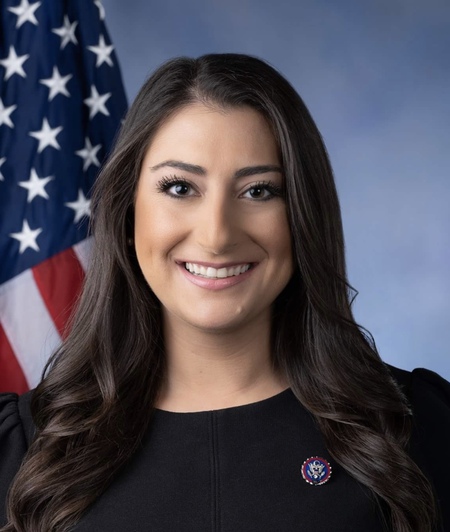
Rep. Sara Jacobs
Sponsored bills
Maddy summaryHR 5309, the Congressional Tribute to Constance Baker Motley Act of 2025, authorizes a posthumous Congressional gold medal for Constance Baker Motley, a pioneering civil rights attorney and judge. The bill directs the Treasury Secretary to strike the medal with her image and name, to be presented to her son, Joel W. Motley III, and her niece, Constance Royster. It also permits the sale of bronze duplicates at cost to cover expenses, with proceeds going to the U.S. Mint fund. This is a commemorative measure with no substantive policy changes, honoring Motley’s legacy as the first African-American woman appointed to a federal judgeship.
Maddy summaryThe LINE Act (HR 5319) prohibits the Centers for Medicare and Medicaid Services (CMS) and the Department of Health and Human Services (HHS) from sharing Medicaid health data with U.S. Immigration and Customs Enforcement (ICE). Specifically, it blocks the disclosure of individually identifiable health information from Medicaid enrollment records (under Title XIX of the Social Security Act) to ICE for immigration enforcement purposes. This directly affects Medicaid enrollees, particularly those who may be immigrants, by preventing their health data from being used in immigration proceedings. The law creates a clear barrier between Medicaid health records and immigration enforcement efforts.
Maddy summaryHR 5340 prohibits the U.S. Department of Housing and Urban Development (HUD) and public housing agencies from sharing tenant records with immigration authorities for immigration enforcement purposes. It directly affects all HUD housing program participants (including renters and applicants, regardless of immigration status) by requiring HUD to obtain written consent or a language-proficient request from the individual before disclosing their records. Key provisions include banning disclosure without consent, preventing HUD from forcing public housing agencies to share records, and mandating a 90-day compliance report to Congress detailing record security and past sharing practices. The bill aims to protect housing privacy by ensuring immigration enforcement cannot access sensitive tenant information held by HUD without explicit individual authorization.
Maddy summaryThis bill directs the U.S. President to identify Pakistani officials responsible for undermining democracy and human rights within 180 days of enactment, then impose Global Magnitsky sanctions on them. It targets senior government, military, or security officials found to have committed gross human rights violations or interfered with democratic processes, such as during Pakistan’s 2024 elections or through constitutional changes. Sanctions would include asset freezes and travel bans, with exceptions for humanitarian aid, UN obligations, and national security activities. The bill expires on September 30, 2030, and aims to pressure Pakistan to uphold democratic norms, human rights, and judicial independence.
Maddy summaryThis bill changes how the military calculates income for the Basic Needs Allowance. It excludes the Basic Allowance for Housing (BAH) from the gross household income calculation for eligible service members. As a result, service members' housing payments will no longer count toward their income when determining their Basic Needs Allowance eligibility or amount. This directly affects active-duty military members and their families who receive the Basic Needs Allowance. The change modifies the existing calculation method under Title 37, U.S. Code, to simplify the process.
Maddy summaryThis bill increases federal funding for Impact Aid, which supports school districts that serve students on federal property (like military bases) or have high numbers of children with disabilities. It authorizes specific annual funding amounts for four key areas: payments for federal property acquisition, basic support for heavily impacted districts, aid for children with disabilities, and school construction. The funding grows incrementally each year from 2026 through 2031, with total annual amounts rising from $85 million to $250 million for property payments, and from $1.49 billion to $2.35 billion for basic district support. This directly affects school districts in communities with significant federal land or federal facility presence.
Maddy summaryHR 1510, the Due Process Continuity of Care Act, expands Medicaid eligibility to cover individuals in jail or custody while awaiting trial or disposition of charges, at a state's option. This allows states to provide Medicaid benefits to this population without requiring them to be convicted first. The bill provides $50 million in planning grants to states to develop implementation plans, including assessing healthcare needs, recruiting providers (especially for behavioral health and substance use treatment), and creating electronic billing systems for correctional facilities and outpatient providers. States must also consult with stakeholders like jails, providers, and Medicaid advocates before finalizing their plans.
Maddy summaryThis bill requires the EPA to establish guidelines for indoor air contaminants like radon, formaldehyde, and carbon monoxide that affect schools and childcare facilities. It mandates a national assessment of indoor air quality in these buildings, with updates every five years, and provides technical assistance to schools and childcare providers to implement air quality improvements. The EPA must publish science-based guidelines with recommended concentration limits for key contaminants and support voluntary building certifications for healthier indoor environments. These provisions directly impact local schools, childcare centers, and state/local governments responsible for building maintenance and health standards.
Maddy summaryThis bill prohibits Members of Congress, their spouses, and dependent children from owning or trading certain investments, including stocks, commodities, and derivatives (referred to as "covered investments"). It requires affected individuals to divest these investments within 90-180 days, with specific exemptions for Treasury bonds, diversified mutual funds, small business interests, and family trusts meeting strict conditions. Violations incur penalties of 10% of the investment's value plus disgorgement of profits, paid directly to the U.S. Treasury. The law applies to all covered individuals during federal service, with exceptions for investments acquired through inheritance or occupational trading (e.g., a spouse’s finance job).