

Maddy summaryThis resolution expresses the U.S. House of Representatives' support for recognizing October 26, 2025, as Intersex Awareness Day, which honors intersex individuals - those with natural variations in physical sex characteristics (such as anatomy, hormones, or chromosomes) that differ from typical male or female bodies. It affirms the day’s goals of promoting bodily autonomy and addressing issues like nonconsensual medical procedures on intersex children. The resolution encourages federal agencies, schools, and organizations to observe the day through educational activities that increase public awareness and support for the intersex community. It does not create new laws or policies but symbolically aligns with existing federal actions promoting nondiscrimination and health equity for intersex people.
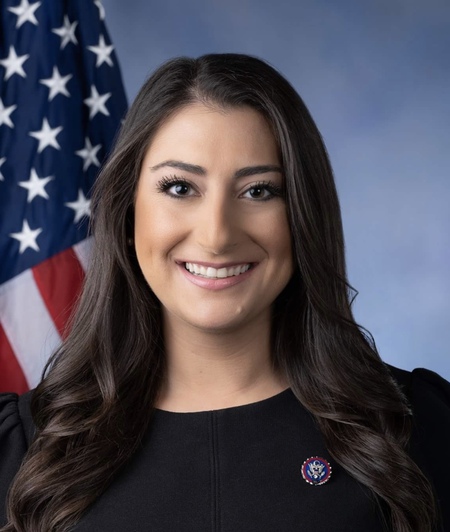
Rep. Sara Jacobs
Sponsored bills
Maddy summaryHR 5830, the Guaranteed Income Pilot Program Act of 2025, would establish a 3-year pilot program providing monthly cash payments to 20,000 eligible low-income individuals aged 18-65. Participants would receive payments equal to the fair market rent for a 2-bedroom apartment in their ZIP code, paid monthly on the 15th, with these payments not counting as income for other federal benefits. The program, funded at $495 million annually for fiscal years 2026-2030, requires a study tracking impacts on participants' financial stability, health, housing, and other outcomes. The final report would assess the program’s feasibility for broader expansion.
Maddy summaryHRES 822 is a non-binding resolution designating October 23, 2025, as "National Marine Sanctuary Day." It supports raising public awareness about the National Marine Sanctuary System, which protects ocean and Great Lakes areas for conservation, recreation, and cultural heritage. The resolution encourages responsible visits to sanctuaries and recognizes their economic benefits, including supporting jobs in tourism and fishing. It does not create new laws or funding but formally acknowledges the system’s role in preserving marine ecosystems and coastal communities. This symbolic gesture aims to foster public engagement with marine sanctuaries across the U.S.
Maddy summaryHRES 824 is a ceremonial House resolution recognizing the religious and historical significance of Diwali, the festival of lights. It acknowledges Diwali’s meaning across Hindu, Sikh, and Jain traditions - symbolizing light over darkness, good over evil, and marking spiritual milestones like Guru Hargobind’s release and Lord Mahavira’s Nirvana. The resolution expresses respect for Indian-Americans and the global Indian diaspora, highlighting Diwali’s role in U.S. religious diversity. As a non-binding recognition, it does not create new laws, policies, or funding, but formally honors the cultural observance.
Maddy summaryHCONRES 57 is a symbolic resolution honoring Wadee Alfayoumi, a 6-year-old Palestinian-American boy murdered in a hate crime in Illinois on October 14, 2023. It commemorates his life and condemns the perpetrator’s anti-Muslim, anti-Palestinian hate speech that led to his death. The resolution states that the U.S. has "zero tolerance for hate crimes, Islamophobia, anti-Semitism, and anti-Palestinian and anti-Arab discrimination." As a concurrent resolution, it does not create new laws or policies but serves to recognize the victim and affirm national principles against hate-based violence.
Maddy summaryThis bill makes federal funding for the WIC program mandatory by requiring Congress to appropriate necessary funds annually for fiscal year 2026 and each subsequent year. It removes discretionary language from WIC funding requirements and clarifies that eligible participants must be served without participation limits. The bill directly affects low-income pregnant women, new mothers, and young children who rely on WIC for nutrition assistance, ensuring continued access to critical food, health, and education services.
Maddy summaryHJRES 126 is a joint resolution directing the removal of U.S. Armed Forces from military operations against specific targets without congressional authorization. It requires the President to end hostilities involving: (1) foreign terrorist organizations designated after February 20, 2025; (2) countries where those groups operate; or (3) non-state groups trafficking illegal drugs, unless Congress explicitly authorizes such actions through a war declaration or specific law. The bill cites recent military strikes on vessels as examples of unauthorized hostilities and emphasizes that drug trafficking alone does not justify military force under the War Powers Resolution. This resolution applies to all current and future operations targeting these groups without prior congressional approval.
Maddy summaryThis resolution condemns the use of federal regulatory agencies (like the FCC) or lawsuits to suppress lawful speech critical of political parties or the President, specifically referencing concerns about tactics mirroring authoritarian practices. It does not create new laws but formally warns that such actions undermine First Amendment protections and democratic norms. The resolution directly affects media organizations, journalists, and public discourse by calling on government agencies to avoid using their power for political retaliation. It reaffirms the House’s commitment to protecting free expression and urges officials to refrain from pressuring media to silence criticism.
Maddy summaryThis bill requires the Secretary of Defense to restore access to all curricula, books, and learning materials previously available at Department of Defense Education Activity (DODEA) schools by 30 days after enactment, and prohibits new restrictions until the 2026-2027 school year. It adds new procedural requirements for future directives affecting DODEA schools, mandating advisory committee reviews and congressional notice before changes to curricula or materials. The bill also nullifies specific executive orders (including those restricting "radical indoctrination" or "gender ideology") that impacted DODEA schools and directs a study on creating an independent body to oversee DODEA curricula. It directly affects military-connected students and schools operated by the Department of Defense Education Activity.
Maddy summaryThe Algorithmic Accountability Act of 2025 requires companies that deploy complex AI systems making significant decisions (such as those affecting education, employment, healthcare, or financial services) to conduct impact assessments and submit annual reports to the Federal Trade Commission. It applies to companies with over $50 million in annual revenue or those handling information about more than 1 million consumers. Companies must assess potential negative impacts on consumers, including bias, privacy risks, and fairness concerns, and document their findings. The FTC will maintain a public repository of anonymized information from these reports to inform consumers and researchers about how AI systems are being used.