

Maddy summaryHR 277 would require Congress to approve major federal regulations before they take effect. Major rules are defined as those with significant economic impact ($100 million+ annually), major cost increases for consumers or industries, or significant adverse effects on competition, employment, or innovation. Agencies must submit detailed information about these rules to Congress, including cost-benefit analyses, before they can take effect. Congress would have 70 session days to approve the rule with a joint resolution; if they don't act within that timeframe, the rule would not take effect. This would increase congressional oversight of federal regulations and require more detailed information about proposed rules before they become law.
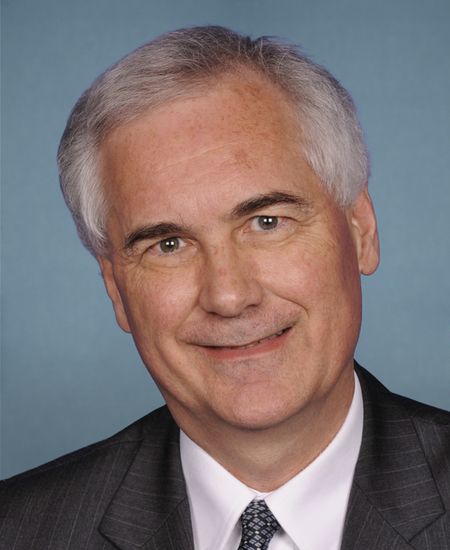
Rep. Tom McClintock
Sponsored bills
Maddy summaryHR 288, the Separation of Powers Restoration Act of 2023, amends federal law to change how courts review agency actions. It requires federal courts to decide de novo (anew) all legal questions - including interpretations of laws and the Constitution - when reviewing agency decisions, rather than deferring to agency interpretations. This applies to all judicial reviews of agency actions under existing law, unless a specific law explicitly exempts such cases. The bill directly affects federal courts, agencies, and parties involved in litigation over agency rules or enforcement. It aims to shift interpretive authority from agencies to courts in administrative law cases.
Maddy summaryHR 1525, the FAIR Act of 2023, reforms federal civil forfeiture laws to require all property seizures to go through a court process rather than allowing agencies to take property without judicial review. It raises the evidence standard from "preponderance of the evidence" to "clear and convincing evidence" for the government to prove forfeiture, and mandates courts to review cases within 7 days of seizure. The bill also requires courts to appoint attorneys for low-income individuals unable to afford legal representation and ensures property owners receive timely notice of their rights. These changes directly affect individuals whose property is seized in civil forfeiture cases, particularly those with limited financial means.
This resolution expresses the sense of the House of Representatives that it is the policy of the United States to recognize and remember the Semele Massacre. The Semele Massacre was the 1933 killing of up to 3,000 unarmed Assyrian Christians by the armed forces of the government of Iraq.
Maddy summaryThis bill renames a U.S. Postal Service facility at 300 Long Beach Boulevard in Long Beach, California, as the "Alan S. Lowenthal Post Office Building." It directly affects the postal facility and all federal documents, maps, or records referencing it. The key provision updates every official reference to the building to use the new name, ensuring consistency in government records. The bill does not change postal services, funding, or policy - only the building's official designation.
Maddy summaryThis bill designates the U.S. Postal Service facility at 7911 Imperial Highway in Downey, California, as the "Lucille Roybal-Allard Post Office Building." It updates all official references in federal laws, documents, and records to use this new name for the specific post office location. The change affects the facility's official identification but does not alter its operations or services.
Processing Revival and Intrastate Meat Exemption Act or the PRIME Act This bill exempts from federal inspection requirements animals and meats that are slaughtered and prepared at custom animal slaughter facilities for distribution within the state. Under current law, a custom slaughter exemption applies if the meat is slaughtered exclusively for personal, household, guest, or employee uses. Specifically, the bill expands the federal inspection exemption to include the slaughter of animals or the preparation of carcasses, meat, and meat food products that are slaughtered and prepared at a custom slaughter facility in accordance with the laws of the state where the facility is located; and prepared exclusively for distribution to household consumers in the state or restaurants, hotels, boarding houses, grocery stores, or other establishments in the state that either prepare meals served directly to consumers or offer meat and food products for sale directly to consumers in the state. The bill does not preempt any state law concerning (1) the slaughter of animals or the preparation of carcasses, meat, and meat food products at a custom slaughter facility; or (2) the sale of meat or meat food products.
Maddy summaryHR 3115, the Public Service Reform Act, changes employment rules for most federal career employees (non-political appointees) by establishing at-will employment, meaning they can be fired for any reason - including no reason - without needing cause. It abolishes the Merit Systems Protection Board (MSPB), replaces its role with agency-level procedures for removals (including a 14-day response window for employees), and limits appeals to the agency head or federal courts for specific claims like whistleblower retaliation. The bill also redirects certain appeals to the Equal Employment Opportunity Commission (EEOC) for discrimination cases and modifies whistleblower protections to allow direct court appeals for retaliation claims. These changes directly affect over 1 million career federal workers across executive agencies.
Maddy summary# Summary of the Energy Development and Permitting Bill This document is a comprehensive energy policy bill focused on streamlining permitting processes, accelerating energy development, and reducing regulatory burdens for oil, gas, and geothermal projects on public lands. ## Key Provisions: 1. **Leasing and Permitting Reforms:** - Requires annual oil and gas lease sales in the Gulf of Mexico and Alaska regions - Sets 30-day deadlines for processing permit to drill applications - Mandates annual reports on permit processing status - Establishes 50-year terms for pipeline rights-of-way (replacing previous 30-year terms) 2. **Environmental Review Streamlining:** - Introduces "categorical exclusions" for certain activities that don't require environmental review - Sets page limits for environmental documents (150 pages for EIS, 75 for EA) - Establishes deadlines for completing environmental reviews (1-2 years) - Limits judicial review of environmental decisions - Requires "statement of purpose and need" in environmental impact statements 3. **Special Provisions:** - Allows drilling on non-Federal surface estate without Federal permit (if State permit is provided) - Prohibits Chinese Communist Party ownership interest in Federal leases - Sets royalty rates at not more than 12.5% for onshore Federal oil and gas leases - Exempts certain activities from "major Federal action" definition 4. **Transparency Requirements:** - Requires public posting of pending applications and processing status - Mandates annual reports on permit processing timelines - Requires publication of data on lease sales and permit approvals 5. **Judicial Limitations:** - Bars claims for judicial review of environmental decisions unless filed within 120 days - Limits challenges to environmental reviews to specific issues - Prohibits injunctions against lease sales unless imminent environmental harm is proven This bill represents a significant effort to accelerate energy development on public lands while reducing regulatory complexity and environmental review requirements, with particular emphasis on oil, gas, and geothermal projects.
Maddy summaryThe SAFE Banking Act of 2023 would protect banks and financial institutions that provide services to state-legal marijuana businesses and hemp-related businesses by preventing federal regulators from taking adverse actions against them solely for serving these businesses. It clarifies that income from state-legal marijuana businesses can be considered for mortgage applications, and requires regulators to update guidance on suspicious activity reports related to these businesses. The bill does not require financial institutions to serve these businesses, but ensures they won't face penalties for doing so. It extends similar protections to hemp-related businesses, which have faced banking challenges despite being federally legal under the 2018 Farm Bill.