

Maddy summaryHR 5403, the Enhancing COPS Hiring Program Grants for Local Law Enforcement Act, amends federal law to allow local law enforcement agencies facing officer recruitment shortages or high turnover to use COPS Program grants for recruitment and retention bonuses. The bill specifically adds a new provision (25) to the grant program, enabling agencies to fund bonuses for hiring or keeping officers when they experience declining recruitment or elevated retirements/resignations. This change directly affects eligible local police departments seeking to address staffing challenges through existing federal funding. The key mechanism expands the permitted uses of COPS grants to include performance-based bonuses, without creating new funding streams. The bill focuses on practical tools for agencies struggling to maintain staffing levels.
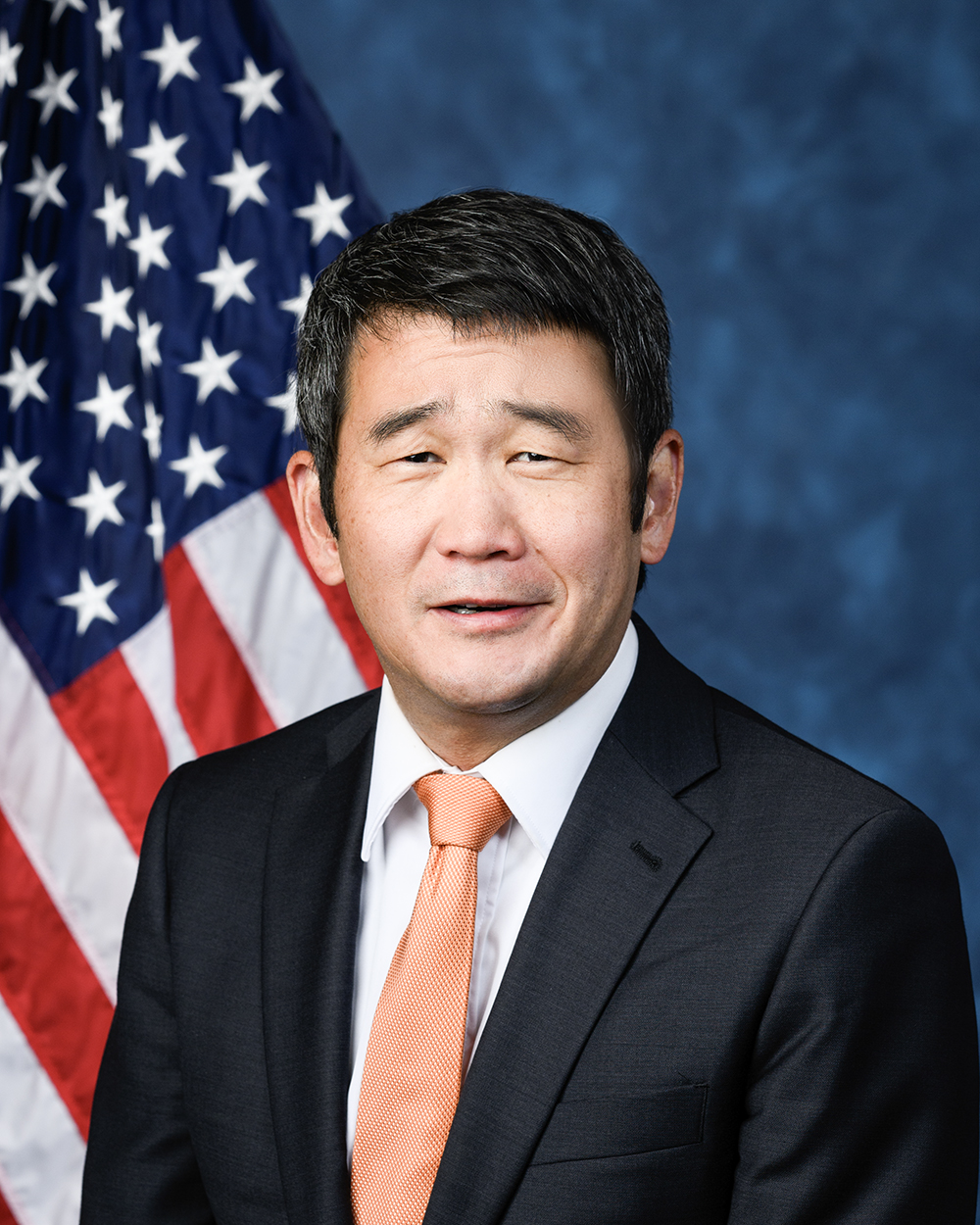
Rep. Dave Min
Sponsored bills
Maddy summaryThe Bipartisan Bulletproof Vest Partnership Program Expansion Act increases federal funding for law enforcement bulletproof vests by raising the grant share from 50% to 60% for state and local agencies. It also authorizes $60 million annually for the program from fiscal years 2026 through 2030. This change reduces the cost burden on participating agencies, requiring them to cover only 40% of vest costs instead of 50%. The bill directly affects state and local law enforcement agencies that apply for these grants to purchase protective gear.
Maddy summaryThe FAMILY Act would establish a national paid family and medical leave insurance program that provides wage replacement benefits for workers needing time off for caregiving or medical reasons. It defines "qualified caregiving" to include caring for a family member with a serious health condition, personal medical needs, or recovery from violence (including domestic violence, sexual assault, or stalking). Benefits would be calculated based on earnings, with a minimum monthly benefit of $580 and maximum of $4,000, administered by a new Office of Paid Family and Medical Leave within the Social Security Administration. Eligible individuals would need to have worked for at least 8 quarters in the previous year and file an application with required documentation, while existing state paid leave programs would continue to operate alongside this federal program.
Maddy summaryThe Azerbaijan Sanctions Review Act of 2025 requires the President to review within 180 days whether 53 specific Azerbaijani officials meet criteria for sanctions under the Global Magnitsky Human Rights Accountability Act. These officials include military commanders, security service heads, and judges implicated in human rights violations related to the Nagorno-Karabakh conflict. The review must include a detailed justification and determine if sanctions should be imposed on individuals linked to alleged war crimes, arbitrary detention, and torture of Armenians. The bill mandates this assessment without imposing new sanctions, focusing instead on evaluating existing legal authority for action.
Maddy summaryThe Taxpayer Funds Oversight and Accountability Act (HR 1558) requires federal agencies to improve financial management by shifting from a 5-year to a 4-year planning cycle for governmentwide spending oversight. Each agency must develop a specific 4-year plan within 90 days, focusing on strengthening spending tracking, financial record accuracy, and cost management through internal controls. Agencies must also submit annual reports to Congress detailing progress on financial management goals, including how they address system weaknesses and prevent errors in spending. This directly affects all executive branch agencies and aims to increase transparency in federal spending without making policy judgments about outcomes.
Maddy summaryThe FLAME Act requires the U.S. Fire Administration to provide Congress 60 days' notice before canceling 25% or more of the National Academy’s annual courses, including details on affected departments and justifications. It mandates notifying enrolled firefighters and fire chiefs at least 45 days before cancellations, with reimbursement for fire departments’ travel and staffing costs (like overtime) unless cancellations are due to "good cause" (e.g., facility closures or national emergencies). The bill also directs a GAO study by March 2026 to analyze how large-scale cancellations impact fire department readiness, interoperability, and the Academy’s role in training. This directly affects fire departments nationwide that send personnel to the Academy for in-person or virtual training.
Maddy summaryHRES 697 is a symbolic House resolution recognizing suicide as a preventable public health issue and supporting the designation of September as "National Suicide Prevention Month" and September 10, 2025, as "World Suicide Prevention Day." It does not create new laws or allocate funds but formally expresses congressional support for these designations to raise awareness. The resolution cites statistics showing suicide as a leading cause of death across age groups, including among veterans and adolescents, and emphasizes mental health as equally important as physical health. It acknowledges the need for diverse prevention strategies without specifying new policies or programs. This resolution is purely declarative, aiming to bolster public awareness rather than enact concrete changes.
Maddy summaryHRES 684 is a non-binding House resolution designating September 9, 2025, as "National Firearm Suicide Prevention Day." It aims to raise public awareness about firearm suicide statistics (including that firearms were used in 55% of U.S. suicides in 2023) and promote safe firearm storage as a key suicide prevention strategy. The resolution encourages health professionals to discuss safe storage with patients and supports existing awareness efforts led by organizations like Brady and End Family Fire. It directly affects the public and healthcare providers by emphasizing evidence-based prevention practices, not by creating new laws.
Maddy summaryThis resolution (HRES 680) recognizes suicide as a serious public health issue and designates September 8, 2025, as "988 Day" to highlight the national three-digit crisis hotline (988 Suicide and Crisis Lifeline). It does not create new laws or funding but formally supports existing efforts to raise awareness about the 988 hotline, which connects people in mental health crisis to 24/7 support services. The resolution emphasizes the hotline's role in suicide prevention, citing data showing it handled nearly 18 million contacts since 2022 and was reported as helpful by 98% of users. It urges continued public education about the hotline, particularly for high-risk groups like LGBTQI+ youth, and encourages broader access to mental health services.
Maddy summaryHR 2181, the Protect Our Watchdogs Act of 2025, strengthens protections for federal Inspectors General (IGs) by requiring the President to have specific, documented reasons to remove them. The bill amends federal law to specify nine grounds for removal, including documented felony convictions, gross mismanagement, waste of funds, abuse of authority, or neglect of duty - each requiring written justification. This directly affects IGs who oversee federal agency accountability and investigations, as it prevents arbitrary removals and mandates transparency in the process. The law applies to all federal Inspectors General across agencies, ensuring their independence is maintained through clear, enforceable standards.