Maddy summaryH.J. Res. 135 proposes a constitutional amendment to limit the President's pardon power. It would require the President to notify Congress within three days of granting any pardon or reprieve, after which Congress could attempt to nullify the action by passing a two-thirds vote in both chambers within 60 days. If Congress fails to act, the pardon becomes effective 90 days after the notification. The amendment also voids any pardon if the President misses the three-day notification deadline and prohibits pardons for offenses previously nullified by Congress.
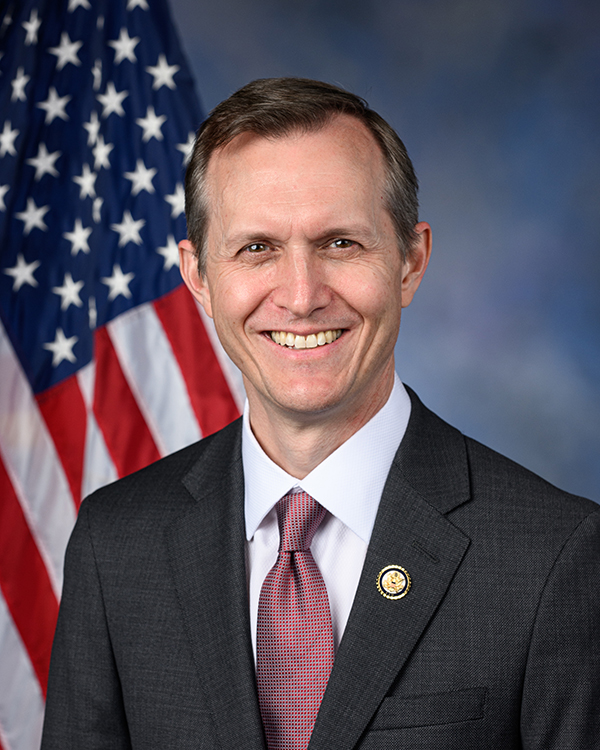
Rep. George Whitesides
Sponsored bills
Maddy summaryHRES 966 is a ceremonial resolution passed by the U.S. House of Representatives to formally recognize California State Senator Monique Limón's historic appointment as the first Latina and first mother to serve as Senate President Pro Tempore. The resolution highlights her background as a first-generation college graduate, former educator, and long-time state legislator representing districts in Santa Barbara. It does not create new laws or policy changes; instead, it serves as a formal acknowledgment of her leadership and service to California. The resolution was submitted for her upcoming swearing-in on January 5, 2026.
Maddy summaryHR 6908, the Blue Envelope Awareness Act, creates a new program to help people with speech, hearing, or developmental disabilities communicate more effectively with police during traffic stops. The bill directs federal Byrne grant funds to support "blue envelope programs," which provide individuals with blue envelopes containing disability documentation to show officers and train law enforcement on interacting with these individuals. It amends existing law to define "blue envelope program" and add this funding authorization to the Omnibus Crime Control and Safe Streets Act. The bill directly affects people with disabilities who interact with police and law enforcement agencies receiving Byrne grants.
Maddy summaryThis bill provides tax relief to individuals affected by qualifying disasters. It allows taxpayers to use their previous year's earned income to calculate tax credits like the Earned Income Tax Credit if their 2025 income was reduced by a disaster. The bill temporarily removes limits on charitable contributions for disaster relief, permits penalty-free withdrawals up to $100,000 from retirement plans, and adjusts rules for claiming personal casualty losses related to disasters. These provisions apply to individuals whose principal homes were in designated disaster areas during specific periods. The bill aims to help disaster survivors recover financially by easing tax burdens related to their losses.
Maddy summaryHR 6849 designates the U.S. Postal Service facility at 2121 Meridian Park Boulevard in Concord, California, as the "Carl Jefferson Post Office Building." This bill updates all official U.S. government references (laws, maps, documents) to the facility to reflect its new name. It directly affects the postal facility itself and any federal records mentioning it. The bill contains no substantive policy changes or funding provisions, solely serving a ceremonial naming purpose.
Maddy summaryAlyssa's Act of 2025 expands the Federal Clearinghouse on School Safety Evidence-based Practices to collect and analyze school safety data, including information on school shootings and emergency response effectiveness. The bill creates a National School Safety Data Center to track incidents, injuries, and response methods, while requiring emergency response maps for schools to meet specific digital standards for accessibility and real-time updates. It also establishes a program to develop and test panic alarm technology for schools, and mandates annual reports on school safety master plans developed by states and local educational agencies. The legislation requires coordination with the U.S. Secret Service's National Threat Assessment Center to align school safety practices with evidence-based approaches.
Maddy summaryHRES 955 is a symbolic House resolution recognizing the importance of maintaining U.S. leadership in ending pediatric HIV/AIDS globally. It affirms support for existing programs like PEPFAR and the Global Fund, which provide critical prevention services (e.g., antiretroviral prophylaxis for pregnant women) and treatment for children. The resolution specifically calls for continued commitment to closing the treatment gap for children, expanding access to long-acting prevention methods, and advancing the Global Alliance to End AIDS in Children by 2030. As a recognition measure, it does not create new laws or allocate funding but underscores ongoing U.S. efforts to prevent mother-to-child transmission and improve pediatric HIV outcomes.
Essential Caregivers Act of 2025 This bill prohibits certain health care facilities from limiting the access of essential caregivers to residents of those facilities, including during designated emergency periods. Specifically, the bill generally prohibits Medicare skilled nursing facilities, Medicaid nursing facilities, Medicaid intermediate care facilities, and associated inpatient rehabilitation facilities from restricting the access of essential caregivers to residents of the facilities, including during emergency periods in which visitation rights are otherwise restricted. During emergency periods, facilities may restrict access for an initial period of up to seven days and for one additional maximum seven-day period (if the additional period is approved by the state health department). Facilities may restrict access for a total of 7 days (or 14 days with the approval of the state health department) during an emergency period. Essential caregivers must agree to comply with any safety protocols set by the facility, which may be no more stringent for caregivers compared to those for staff. Caregivers who fail to comply with these requirements may be denied access, subject to an appeals process.
Maddy summaryHR 6731, the "Restore Trust in Government Act," requires Members of Congress, the President/Vice President, and their spouses or dependent children to divest certain financial investments during federal service. It defines "covered investments" broadly (including stocks, commodities, and derivatives) but excludes Treasury bonds, municipal bonds, family farm interests, and some Alaska Native Settlement stock. Covered individuals must sell holdings within 90-180 days of taking office or enacting the law, with limited exceptions for qualified blind trusts or spouses’ occupational trading. Violations incur a 10% fee on the investment value and require returning profits, paid to the Treasury. Ethics offices enforce these rules, publish penalty details, and issue divestiture certificates.
Maddy summaryThe Protect America's Workforce Act cancels an executive order issued on March 27, 2025, that excluded certain groups from federal labor-management relations programs, making it legally unenforceable. It also ensures that all collective bargaining agreements between federal agencies and labor unions, which were active as of March 26, 2025, remain fully effective until their agreed terms expire. This directly affects federal agencies, labor unions, and the employees covered by these agreements. The bill prevents federal funds from being used to implement the canceled executive order while preserving existing labor agreements.