Fairness for Rural Medicare Beneficiaries Act of 2021 This bill modifies the payment methodology and coinsurance amount for outpatient critical access hospital services under Medicare. Currently, the payment rate for such services is 101% of reasonable costs; the coinsurance amount for such services is 20% of the applicable charges. The bill modifies this methodology so as to base the 20% coinsurance amount on the fee schedule under the Medicare outpatient prospective payment system.
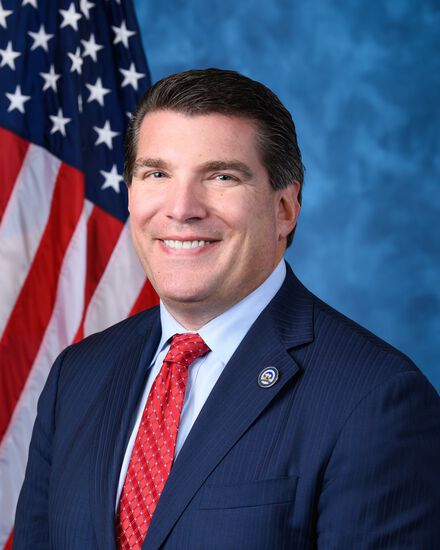
Rep. Jay Obernolte
Sponsored bills
Lower Costs, More Cures Act of 2021 This bill establishes and modifies several programs and requirements to address prescription drug prices. The bill modifies provisions under Medicare and Medicaid relating to prescription drug coverage and price transparency. Among other changes, the bill requires the Centers for Medicare & Medicaid Services to publish certain information, as reported by pharmacy benefit managers (PBMs), relating to generic dispensing rates, drug discounts and rebates, and payments between PBMs, health plans, and pharmacies; caps annual out-of-pocket spending under the Medicare prescription drug benefit; allows prescription drug plan sponsors under the Medicare prescription drug benefit to offer additional plans in a region; requires pass-through pricing models, and prohibits spread-pricing, for payment arrangements with PBMs under Medicaid; and allows states to include in the Medicaid Drug Rebate Program covered outpatient drugs that are provided as part of physician or outpatient hospital services. The bill also generally modifies other provisions relating to the regulation and costs of generic and brand-name drugs. Among other changes, the bill prohibits the manufacturer of a brand-name, generic, or biosimilar drug from entering into certain agreements to resolve or settle a patent infringement claim in connection with the sale of a drug or biological product; permanently allows high deductible health plans to waive deductibles for insulin and associated products; and establishes the position of Chief Pharmaceutical Negotiator in the Office of the U.S. Trade Representative.
Maximum Pressure Act This bill expands sanctions and economic penalties on Iran. It also restricts the President from unilaterally lifting or waiving the sanctions or penalties and increases congressional oversight of them. Specifically, the bill requires the President to impose visa- and asset-blocking sanctions. Additionally, it modifies existing sanctions, including by (1) providing statutory authority for executive orders imposing sanctions; (2) applying sanctions to additional sectors of Iran's economy; and (3) broadening sanctionable conduct to cover, for example, assisting Iran with the acquisition of ballistic missiles and the complicity of Iranian officials in human rights violations in specified countries. The bill also requires reporting on licenses that authorize activities subject to sanctions. The bill prohibits U.S. representatives at the International Monetary Fund from voting to allow Iran's access to special drawing rights (a currency support tool) and places restrictions on financial transactions with Iran. The restrictions include requiring domestic financial institutions to implement special measures with respect to foreign financial institutions that conduct significant transactions connected to the Instrument in Support of Trade Exchanges (a European mechanism that bypasses U.S. sanctions when carrying out trade with Iran). The Department of State must maintain the Islamic Revolutionary Guard Corps' designation as a terrorist organization and must designate Ansharallah (or Houthis), which operates in Syria, as a foreign terrorist organization. The bill also requires reports on U.S. sanctions concerning Iran, the status of Iran's nuclear weapons program, and other matters.
American Critical Mineral Independence Act of 2021 This bill provides support for a domestic supply of critical minerals, establishes deadlines to complete the environmental review of critical mineral projects on federal land, and sets forth related requirements to expedite the review of such projects under the National Environmental Policy Act of 1969 (NEPA). Specifically, the National Science Foundation must award grants to support research to advance critical mineral mining strategies and technologies. The Department of Energy must also provide grants to research, develop, and assess technologies and techniques to recover critical minerals from mine waste and metallurgical activities. If an environmental assessment or environmental impact statement is required for a critical mineral project, then all necessary federal review and permit considerations must be completed within 18 or 24 months, respectively. However, the review may exceed the time limit if the project sponsor agrees. The lead agency of the environmental review of such project must allow a state or another appropriate entity to assume certain federal responsibilities regarding the environmental review of the project upon the request of such entity. Further, the bill authorizes a lead agency to determine that the requirements of NEPA have been satisfied if a state or federal agency acting under state or federal law has addressed specified factors. If the lead agency does not make such a determination, then the agency must enter into an agreement with the project sponsor to set time limits for each part of the permitting process.
Drug Cartel Terrorist Designation Act This bill directs the Department of State to designate the Reynosa/Los Metros faction of the Gulf Cartel and the Cartel Del Noreste faction of Los Zetas as foreign terrorist organizations and to submit a detailed report on those drug cartels and any other cartels it may identify. Based on this report, the State Department must designate as a foreign terrorist organization any such identified cartel (or faction thereof) that meets certain criteria for designation as a foreign terrorist organization.
Prohibiting IRS Financial Surveillance Act This bill prohibits the Department of the Treasury from requiring a financial institution to report the transfers into and out of a financial account. This prohibition does not apply to laws or regulations in effect on October 1, 2021.
Making Advances in Mammography and Medical Options for Veterans Act This bill addresses the Department of Veterans Affairs (VA) provision of mammograms and breast cancer treatment. Among other requirements, the VA must submit a strategic plan for improving breast imaging services for veterans, implement a three-year pilot program to provide telemammography services for veterans who live in locations where access to breast imaging services at a VA facility is difficult or unfeasible, upgrade all mammography services at its facilities to use three-dimensional breast imaging, update guidelines to increase the use of testing for the breast cancer gene and genetic counseling for veterans diagnosed with breast cancer, and update its policies and directives to ensure that it confirms the accessibility of a breast imaging site when referring a veteran with a spinal cord injury or disorder to a non-VA provider. In addition, the VA must enter into a partnership with at least one cancer center of the National Cancer Institute of the National Institutes of Health in each Veterans Integrated Service Network to expand access to high-quality cancer care for women veterans. In implementing such partnerships, the VA must ensure that veterans with breast cancer who reside in rural areas or states without a partner cancer center are able to receive care through telehealth. Finally, the VA must collaborate with the Department of Defense and report on all current research and health care collaborations between the departments on treating veterans and members of the Armed Forces with breast cancer.
Advancing and Promoting Programming or the APP Act This bill establishes a centralized website to provide information regarding sources of federal funding for the creation of apps (software applications that enable the performance of specific tasks that may be run on a computer, mobile device, or any other electronic device). The website must also allow the public to download publicly available federal government apps. Specifically, the bill requires the General Services Administration (GSA) to establish a publicly available website that includes a database of federal funding opportunities for the creation of apps, options for rating and reviewing apps, tools for app developers, and resources related to education and training in computer science. The GSA shall review any app for which an update has not been released in more than two years and shall remove any app from the website that is no longer functional or compatible.
Designates the facility of the United States Postal Service located at 9317 Bolsa Avenue, in Westminster, California, as the "General Tran Hung Dao Post Office."
This bill requires the Office of Personnel Management to establish or update existing occupational series for positions in the federal government in the fields of software development, software engineering, data science, and data management.