

American Dream and Promise Act of 2021 This bill provides certain aliens with a path to receive permanent resident status and contains other immigration-related provisions. The Department of Homeland Security (DHS) or the Department of Justice (DOJ) shall provide conditional permanent resident status for 10 years to a qualifying alien who entered the United States as a minor and (1) is deportable or inadmissible, (2) has deferred enforced departure (DED) status or temporary protected status (TPS), or (3) is the child of certain classes of nonimmigrants. The bill imposes various qualifying requirements, such as the alien being continuously physically present in the United States since January 1, 2021, passing a background check, and being enrolled in or having completed certain educational programs. DHS shall remove the conditions placed on permanent resident status granted under this bill if the alien applies and meets certain requirements, such as completing certain programs at an educational institution, serving in the military, or being employed. Furthermore, DHS and DOJ shall cancel the removal of certain aliens who had TPS, were eligible for TPS, or were eligible for DED status on certain dates. Such an alien shall receive permanent resident status upon meeting certain requirements and applying for such status within three years of this bill's enactment. For an alien seeking permanent resident status under this bill, DHS may (1) waive certain grounds of inadmissibility, or (2) provisionally deny the application if the alien poses a danger to public safety or has knowingly participated in certain offenses involving a criminal street gang. An alien shall have the right to administrative and judicial review of a denial or revocation of permanent resident status granted under this bill. An alien seeking judicial review of a provisional denial shall be appointed counsel upon request. An alien who appears to be prima facie eligible for relief under this bill shall receive a reasonable chance to apply for such relief and may not be removed until there is a final decision on that application for relief. DHS may not use information from applications filed under this bill or for Deferred Action for Childhood Arrivals status for immigration enforcement purposes. DHS shall establish a grant program for nonprofit organizations that assist individuals with certain immigration-related issues. This bill also repeals a restriction that bars a state from providing higher education benefits to undocumented aliens unless those benefits are available to all U.S. nationals without regard to residency in the state.
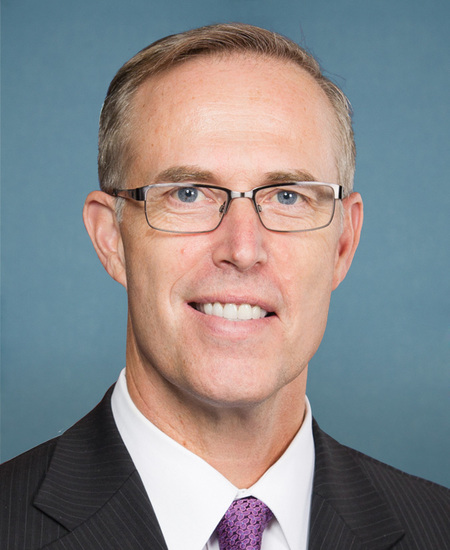
Rep. Jared Huffman
Sponsored bills
National Heritage Area Act of 2021 This bill establishes a National Heritage Areas System to recognize certain areas of the United States that tell nationally significant stories and to conserve, enhance, and interpret the areas' natural, historic, scenic, and cultural resources that illustrate significant aspects of U.S. heritage, and authorizes appropriations through FY2034 for each National Heritage Area. Through such system, the Department of the Interior may provide technical and financial assistance to local coordinating entities to support the establishment, development, and continuity of such areas. The bill extends the authority for the Erie Canalway National Heritage Corridor Commission and the Gullah/Geechee Cultural Heritage Corridor Commission until September 30, 2034. The local coordinating entity of a National Heritage Area, not later than three years after the area is included in the National Heritage Area System, shall submit to Interior a management plan for approval. Interior, not later than one year before the authorization for federal funding expires for a National Heritage Area, shall (1) conduct an evaluation of the accomplishments of that area, and (2) submit a report detailing the evaluation to specified congressional committees. Based upon the evaluation, Interior shall prepare a report with recommendations for the National Park Service's continued role, if any, with respect to the area. Interior may carry out or certify a study to assess the suitability and feasibility of designating a specific geographic area as a National Heritage Area to be included in the National Heritage Area System.
This resolution expresses support for the goals and ideals of PCOS Awareness Month. Polycystic ovary syndrome (PCOS) is caused by a hormone imbalance. Symptoms can include infertility, weight gain, excess hair growth, and acne.
This resolution (1) recognizes World Oceans Day and affirms the individual and collective duty, both nationally and internationally, to protect, conserve, maintain, and rebuild our oceans and its resources; and (2)expresses commitment to increasing the investment of federal funds into scientific research and monitoring to better understand the changing oceans and to accomplish the goals of the United Nations Decade of Ocean Science for Sustainable Development.
Stronger Communities through Better Transit Act This bill requires the Department of Transportation to establish a grant program to support operating projects for public transportation (e.g., service expansion) and related capital improvements, particularly in underserved communities and areas of persistent poverty.
Physical Therapist Workforce and Patient Access Act of 2021 This bill makes physical therapists eligible for the National Health Service Corps Loan Repayment Program. This program assists primary care, mental health, and dental providers in repaying eligible student loans in exchange for working in areas with shortages of such providers.
Nullifying Opportunities for Variants to Infect and Decimate Act or the NOVID Act This bill establishes the Pandemic Preparedness and Response Program to coordinate and carry out the U.S. government's global health response to COVID-19, its variants, and other pathogens with pandemic potential. As part of the program, the bill requires, within 30 days, the development of a comprehensive strategy to end the COVID-19 pandemic. The strategy must outline efforts to increase COVID-19 vaccinations worldwide, including through the immediate release of the COVID-19 vaccine doses that the United States committed to sending abroad. The bill also requires a long-term strategy for the program to prevent future pandemics.
Resilient Highways Act of 20 21 This bill addresses projects to improve the resiliency of federal-aid highways, bridges, and tunnels on and off the National Highway System. Specifically, the bill allows states to use up to 15% of funds apportioned under the national highway performance program for projects to mitigate the risk of recurring damage or the cost of future repairs from extreme weather, flooding, and other natural disasters on infrastructure that is part of the National Highway System; provides for a maximum federal cost-share of up to 100% for these projects; and authorizes emergency relief funds to be used to pay for these projects, including raising roadway grades, deepening channels to prevent flooding, improving drainage, and stabilizing slopes.
State-Based Universal Health Care Act of 20 21 This bill establishes the option for states, or groups of states, to apply to waive certain federal health insurance requirements and provide residents with health insurance benefits plans through a state-administered program. Such programs must cover 95% of the residents in the state within five years and plan benefits must be at least as comprehensive and affordable as the coverage under the equivalent federal program. State programs are supported with funds from the federal programs the state programs replace, which may include Medicare, Medicaid, the Children's Health Insurance Program, the Federal Employee Health Benefits program, certain federal tax credits, and premium-assistance funds, among others. The bill requires the Department of Health and Human Services to appoint an Independent Assessment Panel for Comprehensive Care to review and recommend whether to approve state applications. Each approved state program must be independently reviewed every five years to evaluate changes in health benefits access, quality, and coverage, including whether the state has met the 95% coverage requirement. The federal government must pay all health insurance costs for American Indians and Alaska Natives who enroll in a plan through a state insurance program.
Keep It in the Ground Act of 2021 This bill eliminates new fossil fuel production projects on federal public land and waters. Specifically, it prohibits the Bureau of Ocean Energy Management (BOEM) from issuing, renewing, reinstating, or extending any nonproducing lease, or issuing any authorization for the exploration or production of fossil fuel on the Outer Continental Shelf. BOEM must also cancel any lease issued in the Beaufort Sea, Cook Inlet, or Chukchi Sea (three of the five bodies of water that encompass the Alaska Outer Continental Shelf). Further, the Bureau of Land Management (BLM) may not issue, renew, reinstate, or extend any nonproducing lease for the exploration or production of any onshore fossil fuels on land subject to the Mineral Leasing Act. The bill provides for exceptions if there is an imminent national security threat that would be significantly reduced by granting an exception. In addition, BOEM and the BLM may allow a nonproducing lease to be renewed or extended if (1) the lease contract was signed before enactment of this bill, and (2) it is determined that giving effect to any provision of this bill is likely to lead to a judicial ruling that there was a material breach of the nonproducing lease contract.